

What You Need to Know About FAIR Plan Wraps California
California’s insurance market has shifted dramatically. Finding standard homeowners coverage is harder than ever, which is why FAIR Plan wraps have become essential for property owners across the state.
We at Cappuccino Insurance Agency see firsthand how these policies fill critical gaps left by the standard market. This guide breaks down everything you need to know about FAIR Plan wraps in California-from coverage options to costs.
What Is a FAIR Plan Wrap
Definition and Basic Structure
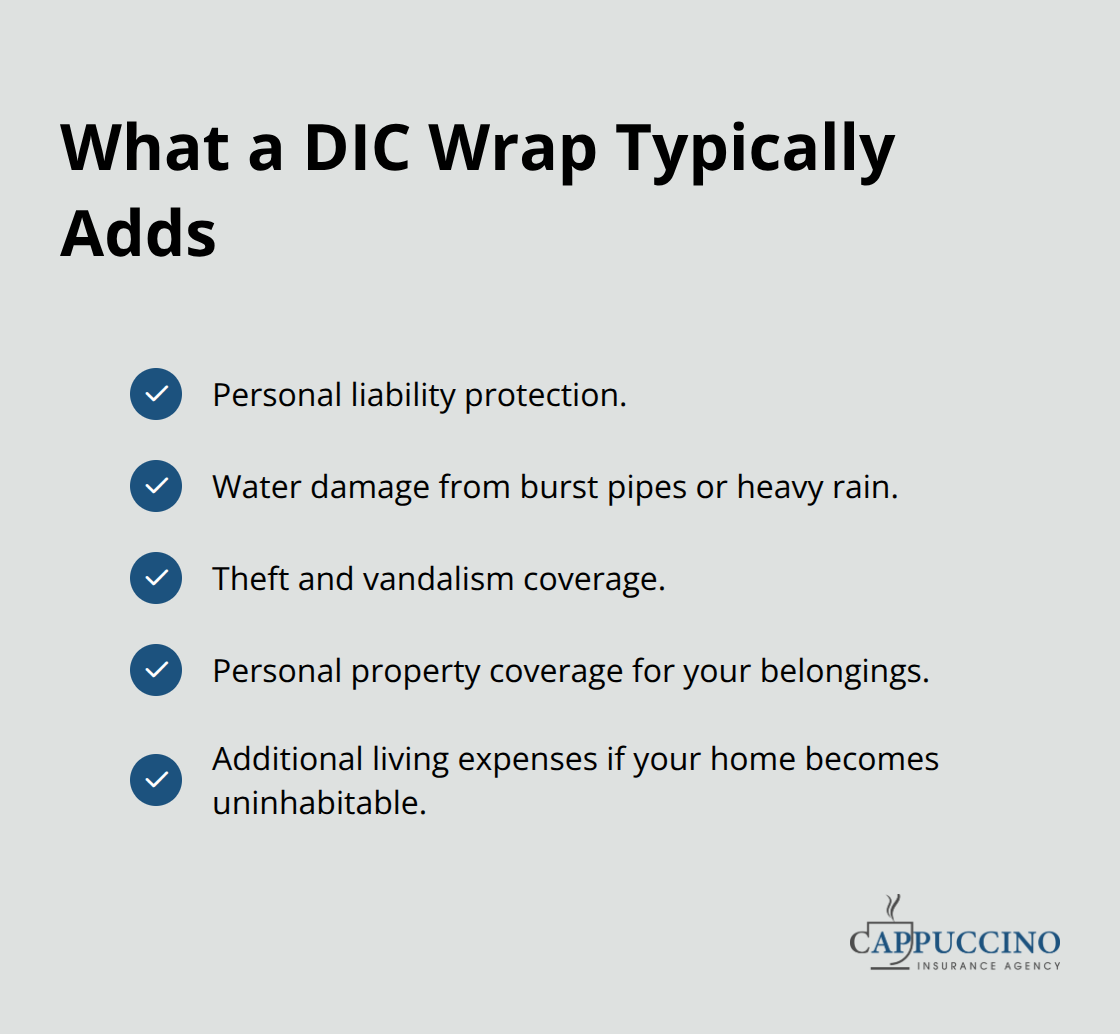
A FAIR Plan wrap, officially called a Difference in Conditions policy or DIC, is a standalone insurance product that fills the coverage gaps between a California FAIR Plan policy and what you’d get with standard homeowners insurance. The FAIR Plan covers only fire-related perils like fire, lightning, smoke, and internal explosion. A wrap policy adds the protections that standard policies include but the FAIR Plan excludes: personal liability, water damage, theft, vandalism, personal property coverage, and additional living expenses. You purchase these as two separate policies that work together, not as a single combined product.
Where You Obtain DIC Coverage
The FAIR Plan itself does not sell wraps. Instead, you obtain DIC coverage through private insurers that the California Department of Insurance lists. This two-policy structure exists because the FAIR Plan operates as an insurer of last resort, providing basic fire coverage only, while DIC policies bridge the gap to approximate the protection of a comprehensive homeowners policy.
The Real Cost of Dual Coverage
The cost of pairing these policies is significantly higher than standard homeowners insurance. Real-world examples show homeowners paying over $700 per month plus $8,000 or more annually for fire insurance alone when combining FAIR Plan and wrap coverage. This arrangement appeals to California property owners in high-risk wildfire zones, coastal areas, or other locations where private insurers have stopped writing policies.
Comparing DIC Quotes and Avoiding Gaps
The California Department of Insurance recommends obtaining at least two DIC quotes to compare value and avoid overpaying for overlapping or inadequate coverage. When selecting a provider, verify that the DIC policy language complements your FAIR Plan coverage, confirm there are no gaps in protection between the two policies, and check whether coinsurance requirements apply to your specific DIC policy. Two-thirds of disaster victims assisted through United Policyholders’ recovery programs are underinsured, which underscores how critical it is to align coverage limits and deductibles properly across both policies to avoid exposure at claim time.
Understanding these structural and cost factors sets the stage for exploring what specific protections a FAIR Plan wrap actually provides and where coverage falls short.
What Coverage Does a FAIR Plan Wrap Actually Provide
The Core Protections a DIC Policy Adds
A DIC policy fills specific gaps that the FAIR Plan leaves wide open. While the FAIR Plan covers fire, lightning, smoke, and internal explosion, a wrap policy adds personal liability protection, water damage from sources like burst pipes or heavy rain, theft and vandalism coverage, personal property protection for your belongings, and additional living expenses if your home becomes uninhabitable. Water damage accounts for 1.5 percent of insured homes having a loss, yet the FAIR Plan excludes it entirely. Liability protection matters equally: if someone is injured on your property and sues, the FAIR Plan provides zero protection. A DIC policy typically covers medical expenses and legal liability up to the policy limits you select, which usually range from $100,000 to $500,000 depending on the carrier and your property value.
How Two Policies Work Together
When you combine these two policies correctly, you approach the coverage level of a standard homeowners policy, though the structure remains split across two separate agreements with two separate deductibles and two separate claims processes. This dual arrangement requires careful coordination to avoid gaps or overlaps that could leave you exposed at claim time.
Identifying Hidden Exclusions and Gaps
The critical step is verifying that your DIC policy actually complements your FAIR Plan without creating gaps or overlaps. Many California property owners assume their wrap covers everything the FAIR Plan misses, but exclusions in DIC policies vary significantly by carrier. Some DIC policies exclude certain types of water damage, such as flooding from external sources, which the FAIR Plan also excludes. Others may limit theft coverage to specific items or require separate endorsements for high-value possessions. Coinsurance clauses appear in some DIC policies but not others; if your policy includes coinsurance and you underinsure your property, the insurer can reduce your claim payment proportionally.
What to Ask Before You Buy
The California Department of Insurance recommends comparing at least two DIC quotes specifically to identify these differences before you buy. When reviewing quotes, ask whether the DIC policy includes replacement cost or actual cash value for personal property, whether water damage exclusions match your FAIR Plan’s exclusions, and whether additional living expenses are capped at a percentage of dwelling coverage or offered as a separate limit. Getting these details aligned prevents the situation where a claim falls between the cracks because neither policy covers it-a problem that affects two-thirds of disaster victims assisted by United Policyholders’ recovery programs who end up underinsured.
Moving Forward with Your Coverage Selection
Once you understand what each policy covers and where the gaps exist, you can make an informed decision about which DIC carrier offers the best protection for your specific property and risk profile. The next section examines how to compare premium costs across carriers and select a provider that aligns with both your coverage needs and your budget.
Cost Comparison and Finding the Right Provider
The price difference between a FAIR Plan wrap and standard homeowners insurance reshapes your insurance budget significantly. Standard homeowners policies in California typically cost between $1,000 and $2,000 annually for average properties, though rates vary by location and risk profile. A FAIR Plan policy paired with a DIC wrap routinely exceeds $700 per month plus $8,000 or more annually when combined. This means you pay costs that are often three to five times higher than what homeowners in standard markets pay.
Why FAIR Plan Wraps Cost So Much More
The cost gap exists because DIC carriers price for risk in ways that reflect California’s wildfire exposure and the fact that traditional insurers have already declined you. When you obtain multiple DIC quotes, you can at least prevent overpaying within this higher-cost tier. The California Department of Insurance recommends getting at least two DIC quotes to compare value, and this step alone can save you hundreds or even thousands annually. Each carrier prices DIC coverage differently based on their risk assessment, underwriting guidelines, and the specific perils they’re willing to cover. A policy from one carrier might include water damage up to $50,000 while another caps it at $25,000, or one might offer replacement cost coverage for personal property while another only provides actual cash value. These differences directly affect your premium.
Selecting a Provider Based on Coverage, Not Just Price
Avoid the temptation to select solely on price. The cheapest DIC policy often carries exclusions or lower limits that create exactly the gaps discussed in the previous section. Instead, align your comparison around coverage limits and deductibles that match your FAIR Plan policy to eliminate coordination problems at claim time.
Coordinating Deductibles Across Both Policies
The deductible structure across your FAIR Plan and DIC policies determines how much you pay out of pocket when you file a claim, yet most property owners overlook this critical coordination point. Your FAIR Plan typically offers deductible options of $500, $1,000, or higher, while DIC policies usually start at $1,000 and go up from there.
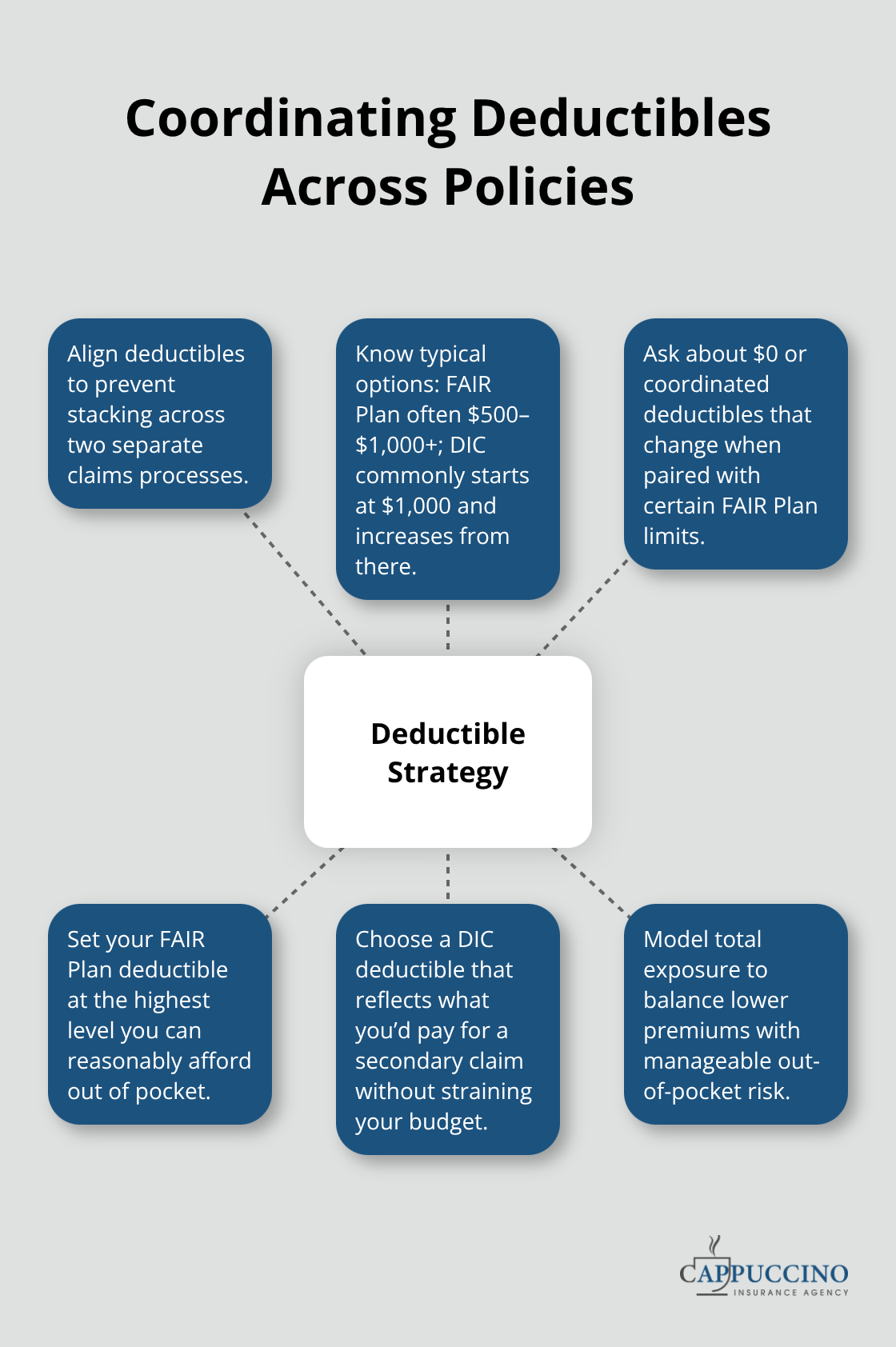
If your FAIR Plan has a $500 deductible and your DIC has a $2,500 deductible, a water damage claim of $3,000 means you pay $500 first under the FAIR Plan, then the DIC kicks in only after you pay its $2,500 deductible, leaving you responsible for $3,000 total. Coordinating these deductibles so they align or complement each other prevents this stacking effect. Some carriers offer DIC policies with $0 deductibles or deductibles that drop when paired with specific FAIR Plan limits, so ask explicitly whether the carrier has deductible coordination options. Set your FAIR Plan deductible at the highest level you can afford out of pocket, then select a DIC deductible that reflects what you’d reasonably pay for a secondary claim. This approach typically reduces your combined premiums while keeping your total out-of-pocket exposure manageable.
Questions That Matter When Comparing Carriers
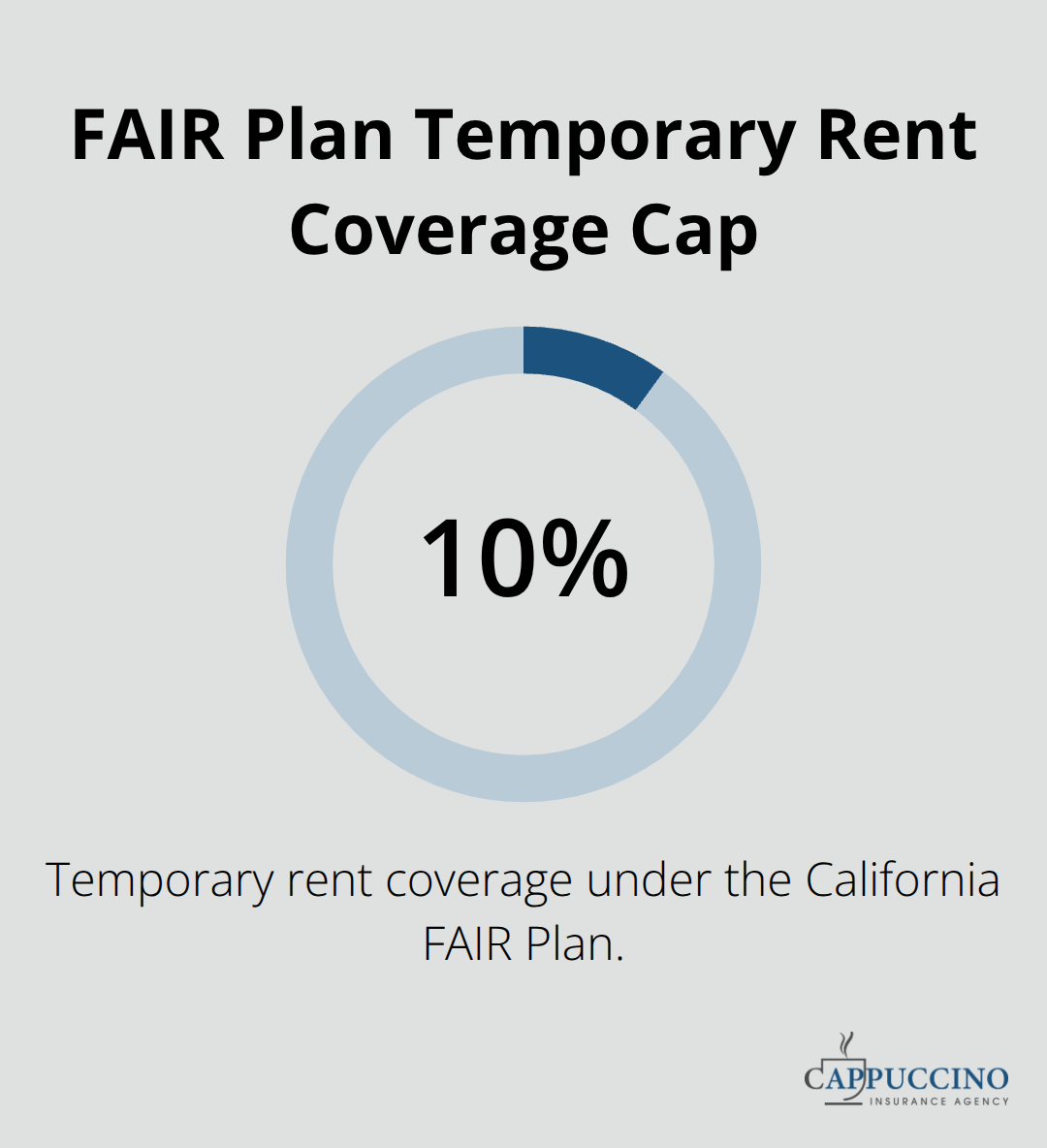
When you contact DIC carriers for quotes, move beyond asking only about premium and coverage limits. Ask whether the policy includes replacement cost or actual cash value for personal property, because replacement cost policies cost more but pay what it actually costs to replace items today, while actual cash value depreciates older belongings and pays less. Ask how the carrier defines water damage and what sources are excluded, since some carriers exclude water from external sources like flooding or rain while others include it. Ask whether the policy has coinsurance clauses and, if so, what percentage applies, because coinsurance can reduce your claim payment significantly if you underinsure your property. Ask what additional living expenses limits are available and whether they’re capped as a percentage of your dwelling coverage or offered as a separate limit, because the FAIR Plan typically covers temporary rent up to only 10 percent of your dwelling limit while a robust DIC policy should cover additional living expenses far more generously.
Ask whether the carrier offers any discounts for property hardening or wildfire mitigation, since the FAIR Plan itself offers a Safer from Wildfires discount that some DIC carriers may honor or match. Finally, ask about the claims process and whether the carrier has local adjusters in California, because when a wildfire or major loss occurs, having a carrier with established local presence and fast claims handling matters as much as the coverage itself.
Conclusion
FAIR Plan wraps in California solve a real problem when the standard insurance market won’t cover you. The two-policy structure fills gaps that the FAIR Plan alone leaves exposed, adding personal liability, water damage, theft, and additional living expenses protection. However, this coverage costs three to five times what standard homeowners insurance costs and requires careful coordination between your FAIR Plan policy and your DIC wrap to avoid gaps or overlaps at claim time.
Obtaining multiple DIC quotes isn’t optional-the California Department of Insurance recommends at least two quotes because carriers price these policies differently, and the cheapest option frequently carries exclusions that create exactly the protection gaps you’re trying to avoid. When you compare quotes, focus on how deductibles align across both policies, whether replacement cost or actual cash value applies to your personal property, and how each carrier defines water damage exclusions (these details determine whether a claim actually gets paid or falls between the cracks). Your independent agent should help you coordinate these details so neither policy leaves you exposed.
We at Cappuccino Insurance Agency work with multiple carriers to deliver specialty solutions for hard-to-place wildfire-risk properties, including comprehensive FAIR Plan and Difference-in-Conditions wrap strategies. Contact us for a free coverage assessment and let our team handle the complexity of coordinating your FAIR Plan wrap.
The information provided in this blog is for general informational purposes only and does not constitute legal, financial, or insurance advice. Coverage options, terms, and availability may vary. Please consult with a licensed professional for advice specific to your situation. Artificial intelligence may have been used to generate text and images in some blog articles and may contain inaccuracies.


