Specialty Wildfire Coverage California: Tailored Protection For Hotspots

California’s wildfire season grows more intense each year, putting homeowners in high-risk zones under constant pressure. Standard insurance policies often leave dangerous gaps in coverage when fires strike.

At Cappuccino Insurance Agency, we’ve helped countless property owners navigate specialty wildfire coverage in California to find protection that actually matches their exposure. This guide walks you through your real options.

California’s Wildfire Threat: What Homeowners Face Today

The Scale of California’s Fire Problem

California experienced 8,110 wildfires in 2024 alone, which burned over 1,077,711 acres according to CAL FIRE data. This represents a consistent upward trend over the past two decades, with the state averaging roughly 7,000 fires annually since 2015. The 2023 fire season produced particularly destructive megafires, and 2024 continued that pattern with multiple large incidents that destroyed thousands of homes. What makes this trend alarming is that fire seasons now extend year-round rather than peak in summer and fall-recent fires have ignited in winter months when homeowners historically felt safer.

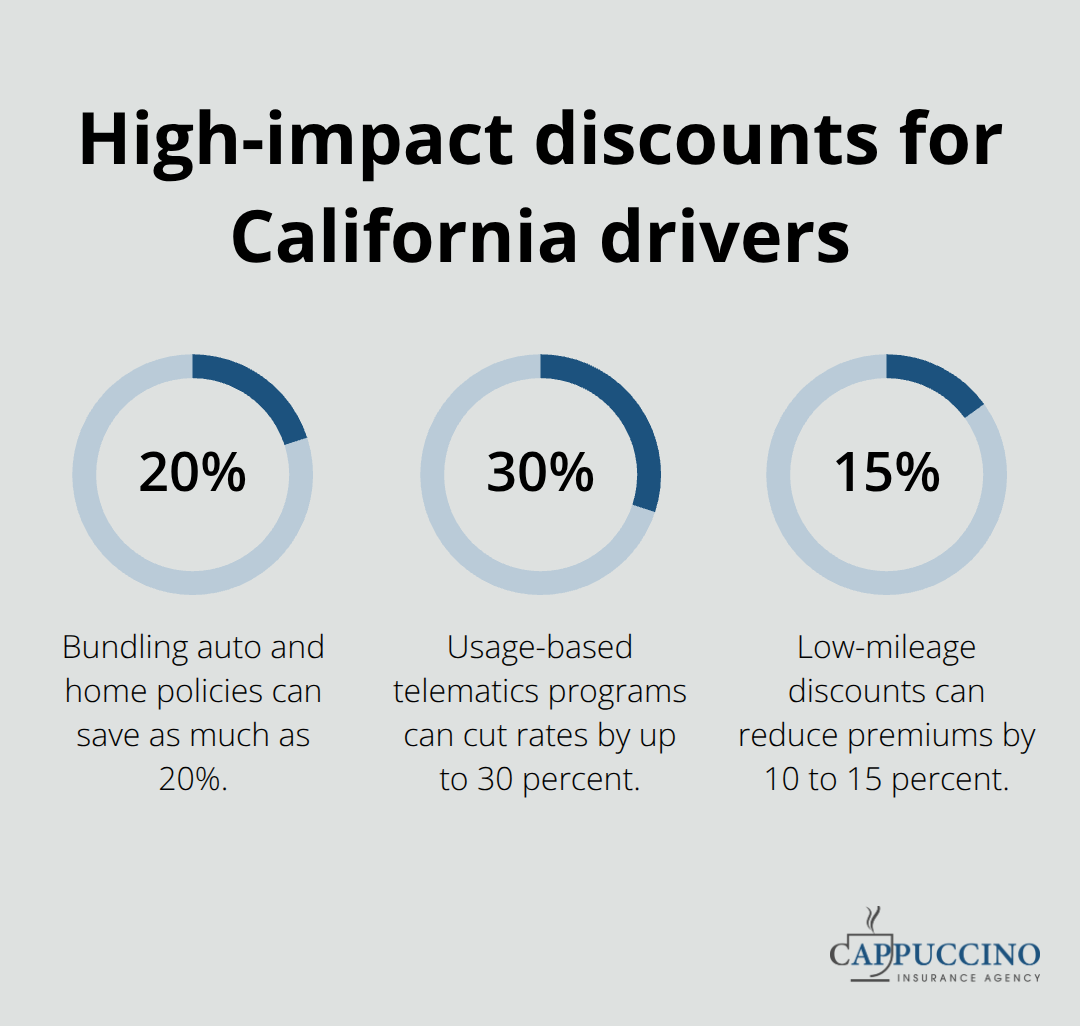
Key facts summarizing Californias recent wildfire activity and seasonality - Specialty wildfire coverage California

Your property faces wildfire exposure during months when many people drop their guard entirely.

How Climate Change Rewrites Fire Dynamics

Climate change has fundamentally altered California’s fire dynamics in ways that standard homeowner policies simply don’t account for. Rising temperatures dry out vegetation faster, which creates more combustible fuel across broader landscapes. According to research from the California Department of Insurance, the hazard assessment used to map fire risk zones covers a 30 to 50-year horizon and does not factor in mitigation measures like defensible space or home hardening. Official fire hazard severity zones classify your property’s danger based purely on physical conditions without considering any protective steps you have already taken.

Why Embers and Location Matter Most

Homes in State Responsibility Areas designated as Very High fire hazard severity zones face genuine exposure-embers alone can ignite buildings up to about a mile away from the main fire front (which is why exterior materials and clearance matter so critically). Properties in moderate to high hazard zones are not safe either; they simply face lower frequency but still catastrophic potential loss. The geographic pattern is stark: coastal mountain ranges, inland valleys, and foothill communities throughout Northern and Central California experience the highest concentration of destructive fires. Southern California’s San Diego County, Ventura County, and Los Angeles County areas have seen repeated major incidents.

Why Your Zip Code Determines Your Insurance Options

This geographic concentration means your zip code largely determines your wildfire insurance options and costs far more than your home’s construction quality or age. Understanding where your property sits within California’s fire hazard landscape is the first step toward securing adequate protection. The next section explores the specialty coverage options that actually address these regional and structural vulnerabilities.

Your Coverage Options When Standard Insurance Falls Short

Why the FAIR Plan Falls Short for Most Homeowners

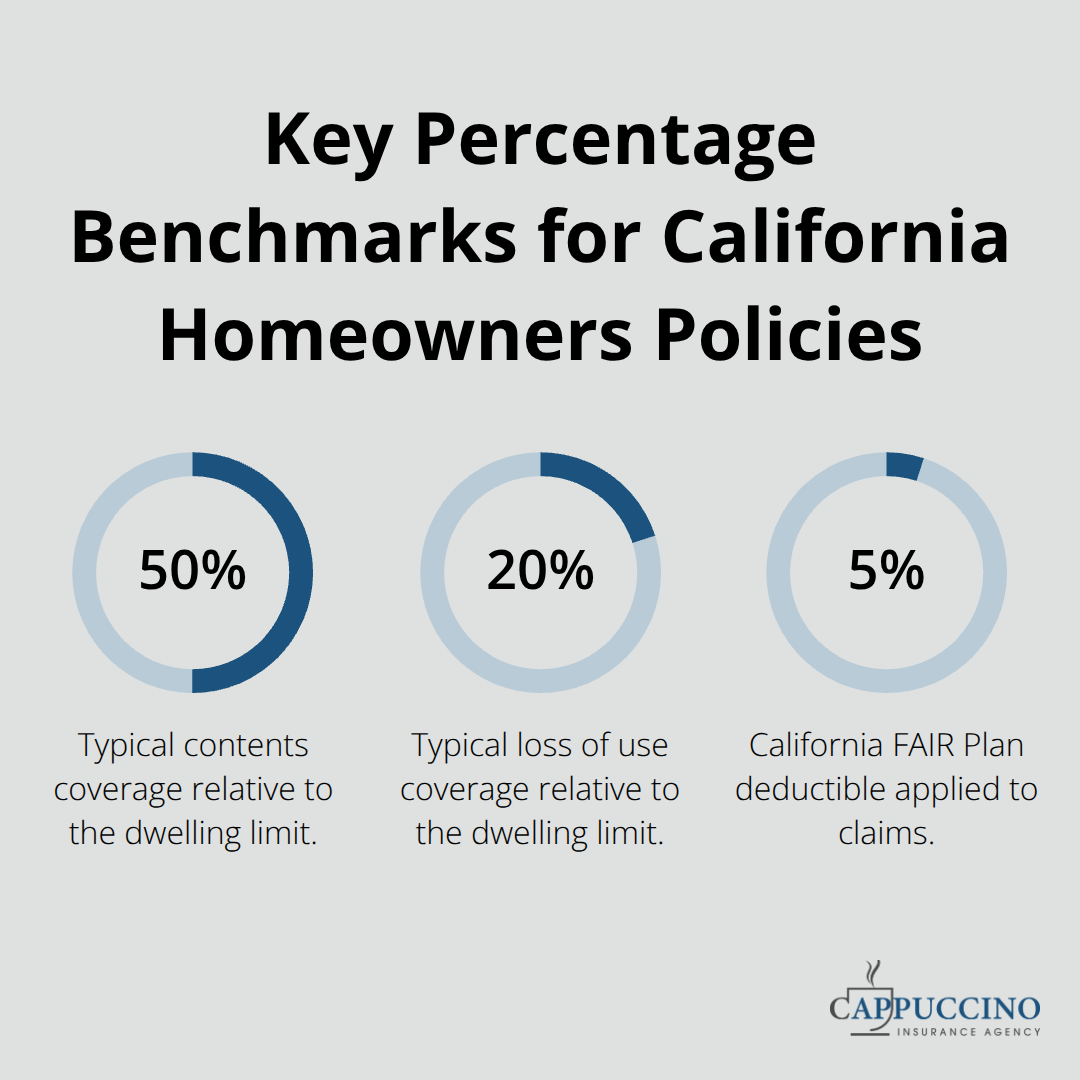
California’s FAIR Plan exists precisely because standard insurers have largely abandoned high-risk wildfire zones. The plan functions as a last-resort carrier of record, meaning if you cannot obtain coverage in the private market, you can access it through your state. However, we need to be direct: FAIR Plan coverage carries significant limitations that leave most homeowners dangerously underprotected. The plan covers dwelling, other structures, and personal property, but it excludes loss of use coverage entirely and caps personal property at 70 percent of dwelling coverage. For a home with a replacement cost of $1.5 million in a very high fire hazard severity zone, this creates a protection gap that could cost you hundreds of thousands out of pocket when a fire strikes.

Percentages showing FAIR Plan personal property cap and potential premium increases - Specialty wildfire coverage California

FAIR Plan premiums also tend to run 30 to 50 percent higher than standard market rates for comparable properties, and availability fluctuates based on state enrollment thresholds.

How Difference-in-Conditions Wraps Close Coverage Gaps

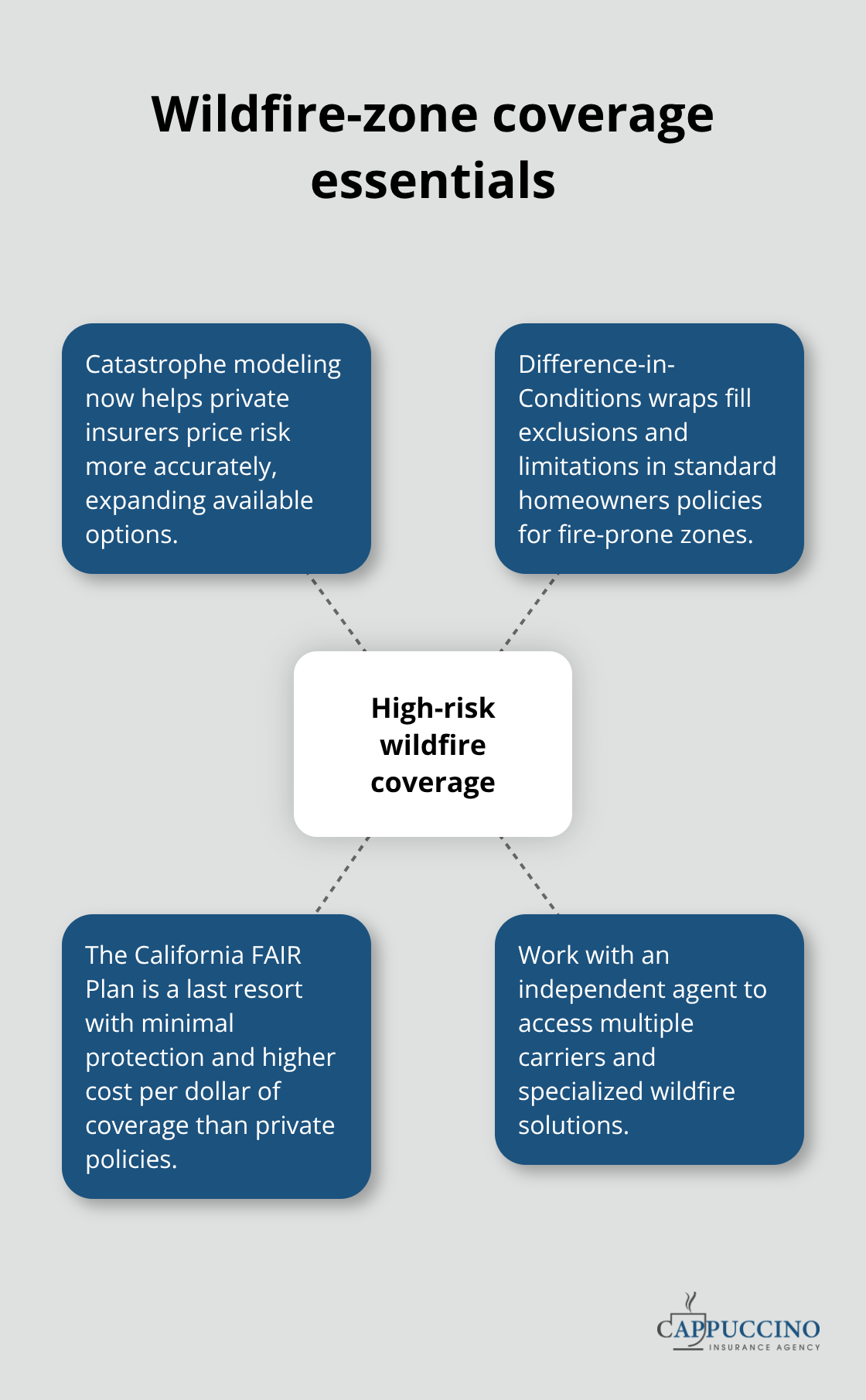
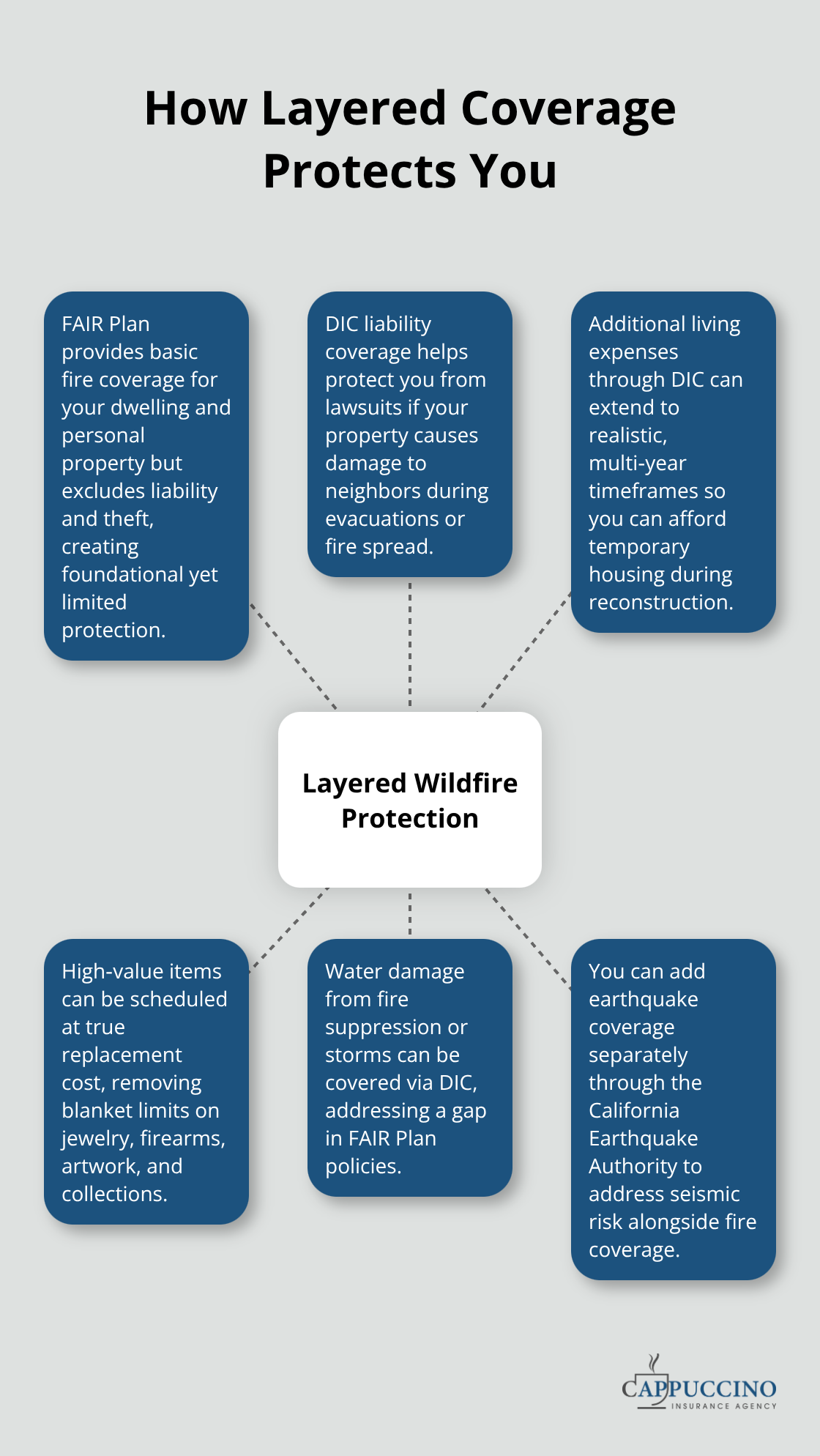
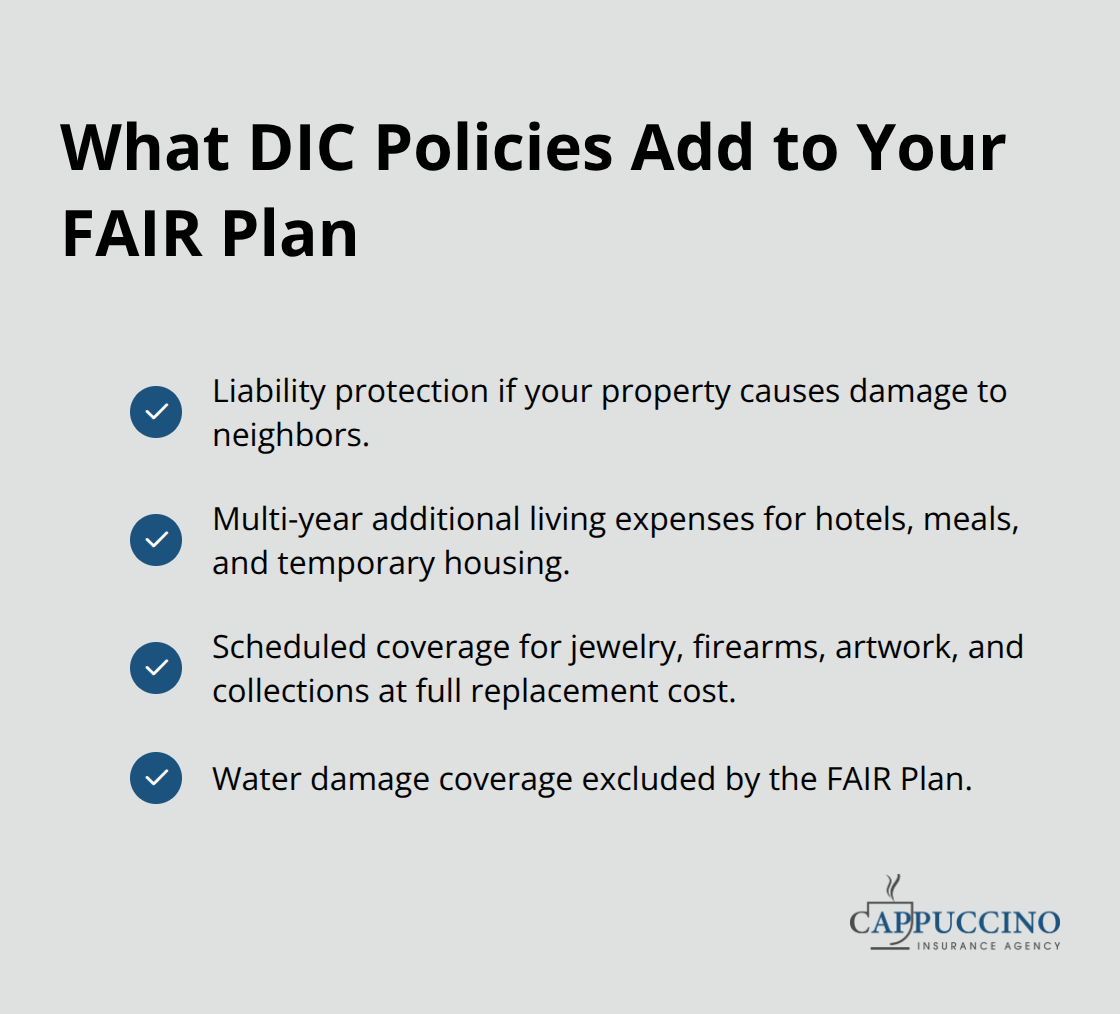
Difference-in-Conditions insurance wraps fill the exact gaps that FAIR Plan leaves open. These wraps add loss of use, additional living expenses, and enhanced personal property limits on top of your base FAIR coverage. They also typically include coverage for debris removal and other costs that standard FAIR policies exclude. A wrap transforms your FAIR Plan from a bare-minimum solution into actual protection that addresses the financial realities of wildfire displacement and recovery. The combination of FAIR Plan plus a quality wrap provides substantially better protection than either product alone, though the layered approach requires coordination between two separate policies.

Private Market Solutions for High-Value Properties

Private market solutions from carriers like PURE Programs offer broader coverage with granular pricing that rewards specific risk-reduction measures you implement. PURE targets homes with rebuilding costs exceeding $1.5 million and provides in-house claims adjusters, proactive wildfire mitigation assessments, and emergency response support during active fires. The Wildfire Mitigation Program component includes vulnerability inspections and up to $2,500 in loss prevention benefits to reduce future damage likelihood. These specialized carriers understand California’s specific wildfire dynamics in ways the FAIR Plan simply cannot accommodate.

How Your Property Profile Determines Available Options

Your property’s hazard zone classification, construction materials, defensible space compliance, and proximity to community hardening efforts all influence what coverage options remain available and at what cost. A home with Class-A fire-rated roofing, noncombustible exterior materials, and verified defensible space qualifies for better pricing and broader coverage terms than an identical home without these protections. Properties in moderate hazard zones typically access private market solutions more easily than those in very high zones, where FAIR Plan or specialty E&S carriers become your primary options. An independent agent who understands both the FAIR Plan’s limitations and the specialty market alternatives can identify which path makes financial sense for your specific situation. The next section walks you through the assessment process that determines your actual risk level and narrows your realistic coverage options.

How to Assess Your Property and Secure the Right Coverage

Identify Your Fire Hazard Severity Zone

Start by obtaining your property’s official fire hazard severity zone classification through the California Department of Insurance’s Fire Hazard Severity Zone map viewer. Enter your address at the FHSZ map tool to determine whether your home falls into Moderate, High, or Very High designation. This classification matters because it directly constrains which carriers will underwrite your property and at what price. Homes in Very High zones face genuine difficulty accessing private market coverage, pushing you toward FAIR Plan or specialty E&S carriers like PURE Programs. If you cannot access the map online, contact the California Department of Insurance hotline at 916-633-7655 or email FHSZinformation@fire.ca.gov for assistance.

Document Your Property’s Protective Features

Once you know your hazard zone, photograph your current exterior conditions: roof material and age, siding composition, vegetation clearance distances, and fence construction. These specifics determine whether you qualify for wildfire hardening discounts that can reduce your premium by 5 to 12.5 percent depending on the carrier. AAA Home Insurance now offers its My Home Hardening discount with up to 12.5 percent savings for policies effective after October 10, 2025, rewarding individual protective measures in 0.5 percent increments for items like Class-A fire-rated roofing, enclosed eaves, noncombustible vents, and defensible space compliance. Document any community hardening participation through Firewise USA or Fire Risk Reduction Community designation, as these can contribute additional discounts up to 5 percent. This documentation phase takes roughly two hours but directly influences your available options and costs.

Request Quotes from Specialized Carriers

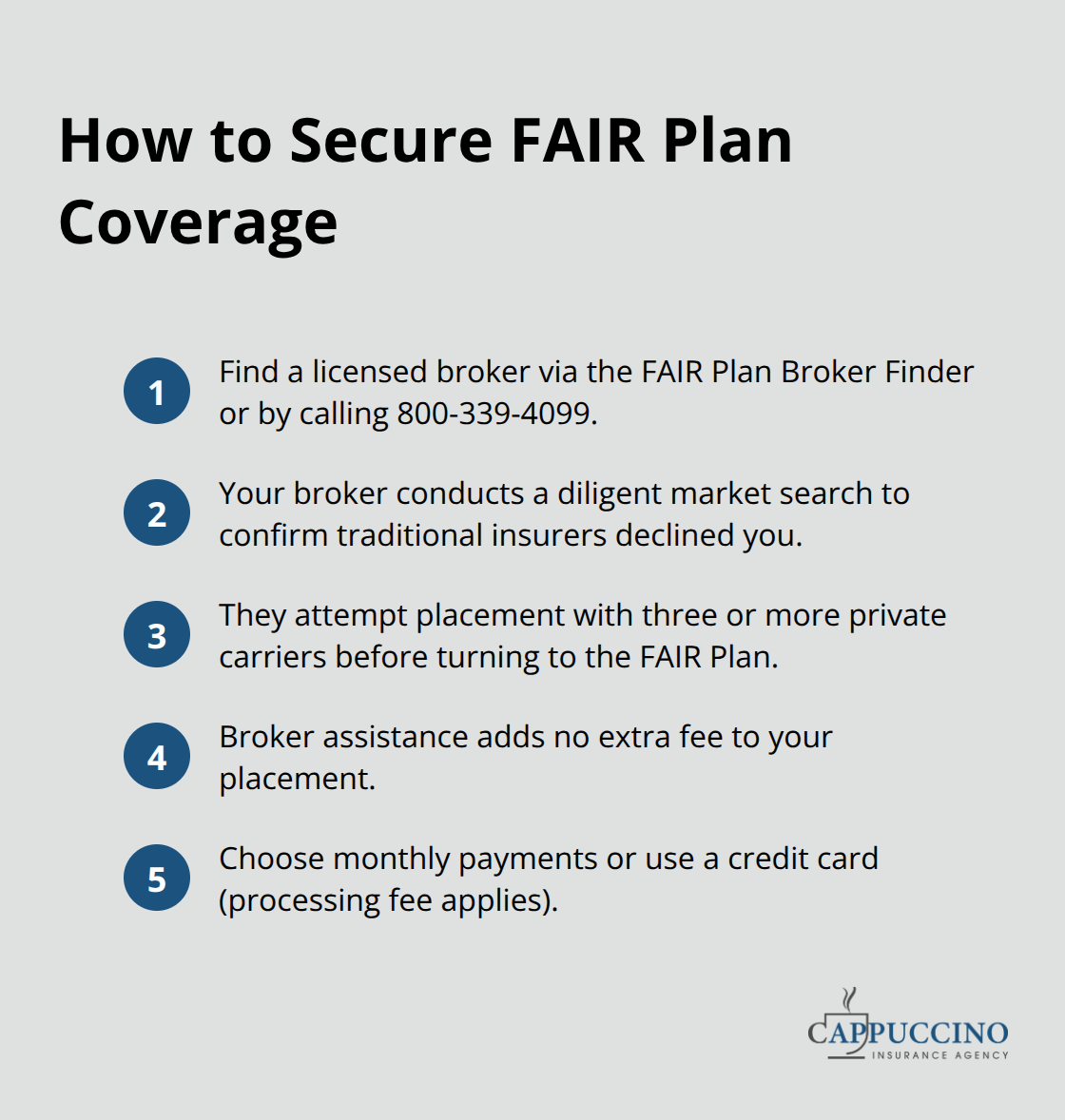
Next, request quotes from at least three carriers that serve your specific hazard zone rather than shopping broadly. PURE Programs specializes in homes exceeding $1.5 million rebuilding cost and offers granular pricing that rewards risk reduction, in-house claims adjusters, and $2,500 annual loss prevention benefits. Standard market carriers typically decline Very High zone properties entirely, making FAIR Plan your fallback with its higher premiums and limited coverage. An independent agent who understands both paths can access FAIR Plan plus difference-in-conditions wraps that add loss of use coverage, additional living expenses, and enhanced personal property limits that FAIR excludes entirely.

Compare Coverage, Not Just Price

The combination of FAIR plus a quality wrap costs roughly 30 to 50 percent more than standard market rates but delivers substantially better protection than FAIR alone. Compare not just premium cost but actual coverage limits, deductible structures, and exclusions across your quotes. A policy with lower premium but higher deductibles or missing loss of use coverage creates false economy when displacement costs run $50,000 to $150,000 during recovery.

Three key considerations for evaluating wildfire insurance quotes in California

Cappuccino Insurance Agency partners with 20+ carriers to deliver specialty solutions for hard-to-place wildfire properties, including FAIR Plan options and difference-in-conditions wraps, plus free coverage assessments that identify exactly which gaps exist in your current protection. Annual policy reviews before busy seasons allow you to adjust coverage as property improvements reduce risk or market conditions shift.

Final Thoughts

Wildfire protection in California demands that you move beyond standard insurance assumptions and confront your property’s actual exposure. If you live in a moderate, high, or very high fire hazard severity zone, your standard homeowner policy likely leaves dangerous gaps when fires strike. Specialty wildfire coverage California options exist specifically to address these gaps, but they require active engagement rather than passive policy holding.

The assessment process takes genuine effort-you need your hazard zone classification, documentation of protective features, and quotes from carriers that actually serve your risk profile. This work pays dividends because it reveals exactly which coverage options remain available and what each costs. FAIR Plan coverage provides a safety net when private markets close, but difference-in-conditions wraps transform that bare-minimum protection into actual financial security by adding loss of use coverage and enhanced personal property limits that FAIR excludes.

Local expertise matters enormously in high-risk areas because wildfire insurance operates differently than standard homeowner coverage. Carriers apply different underwriting standards, pricing models, and coverage terms based on California’s specific fire dynamics. Contact an independent agent who specializes in wildfire coverage, obtain your hazard zone classification, and request quotes from at least three carriers that serve your specific risk profile-then schedule your free coverage assessment with Cappuccino Insurance Agency to identify exactly which gaps exist in your current protection.

The information provided in this blog is for general informational purposes only and does not constitute legal, financial, or insurance advice. Coverage options, terms, and availability may vary. Please consult with a licensed professional for advice specific to your situation. Artificial intelligence may have been used to generate text and images in some blog articles and may contain inaccuracies.
California Annual Policy Review: Keep Your Home Insurance Up to Date

Your home insurance policy isn’t a set-it-and-forget-it document. California’s housing market, wildfire risks, and your personal circumstances shift constantly, which means your coverage should too.

A California annual policy review catches gaps before they become expensive problems. At Cappuccino Insurance Agency, we’ve seen homeowners discover they’re underinsured only after a claim-and by then it’s too late.

Why Your Coverage Needs to Change

California homeowners often assume their insurance policy remains adequate year after year, but this assumption costs thousands in uncompensated losses. Your home’s value doesn’t stay frozen in time, and neither do the risks surrounding it. Housing prices across California have climbed significantly, with median home values in many regions increasing 5–8% annually over the past five years. If your dwelling coverage limit was set three years ago, it likely falls short of what you’d actually need to rebuild today. Replacement costs for construction materials have surged due to supply chain pressures and labor shortages, meaning the square-foot rebuilding cost in your area may be substantially higher than when you last reviewed your policy.

Home Improvements Create Immediate Coverage Problems

Renovations, additions, and upgrades demand immediate notification to your insurer. A new roof, remodeled kitchen, added deck, or finished garage increases your home’s replacement cost, but your policy limit won’t automatically adjust. Many homeowners discover this gap only after a loss, when the insurance company denies claims for improvements that weren’t listed on the policy. You must report any significant work to your insurer so your dwelling limit reflects the current, post-improvement value. This isn’t optional paperwork-it’s the difference between full recovery and out-of-pocket repair costs that could reach tens of thousands of dollars.

Wildfire Risk Shifts Faster Than You Think

California’s wildfire patterns have intensified dramatically, and your property’s exposure may have changed even if you haven’t moved. Fire perimeters expand unpredictably, and areas considered lower-risk five years ago may now fall within high-risk zones. The California Department of Insurance provides an online tool to check whether your ZIP code falls within a wildfire moratorium perimeter, and this status shifts with each major fire event.

Hub-and-spoke visual showing key wildfire risk factors that influence insurance availability and pricing.

Additionally, new defensible space requirements and fire-resistant construction standards now influence insurance availability and pricing in ways they didn’t previously. Fire Hazard Severity Zone maps arose from major destructive fires, prompting the recognition of these areas and strategies to reduce wildfire risks. If your neighborhood has experienced a nearby fire or if CAL FIRE has updated evacuation zones, your insurer may reassess your risk profile, potentially affecting your renewal terms or available coverage options.

These shifts in home value, property improvements, and wildfire exposure form the foundation of why annual reviews matter-but knowing what to look for during that review separates homeowners who stay protected from those who face costly surprises.

What to Review in Your Policy This Year

Verify Your Dwelling Coverage Against Current Rebuild Costs

Your dwelling coverage limit is the single most important number in your entire policy, yet most California homeowners haven’t verified it matches current rebuilding costs in years. Pull your declaration page and write down your dwelling limit. Next, contact a local contractor or use online rebuild estimators to determine what it would actually cost to reconstruct your home from the ground up in today’s market. Construction costs in California have risen sharply due to labor availability and material expenses, with some regions seeing rebuilding costs increase 10–15% annually. If your dwelling limit falls more than 5% below the estimated rebuild cost, you face significant underinsurance. The deductible matters equally-a $2,500 deductible sounds reasonable until you face an $8,000 roof claim and realize you pay the first $2,500 yourself. Evaluate whether your deductible aligns with your emergency savings.

Compact checklist of key steps to verify dwelling limits, rebuild costs, and deductibles for California homeowners. - California annual policy review

If you have $15,000 in accessible savings, a $2,500 deductible is manageable. If you have $3,000 in savings, that same deductible creates financial stress after a claim.

Higher deductibles lower your premium, but only if the savings don’t force you to skip coverage you actually need. The math matters: a $500 annual premium reduction sounds attractive until a water damage claim forces you to choose between your deductible and your rent payment.

Report Home Improvements Immediately

Home improvements create coverage gaps faster than almost any other factor. Any renovation, addition, or structural upgrade requires immediate notification to your insurer-don’t wait for renewal. A finished basement, new deck, roof replacement, or kitchen remodel increases your home’s value but doesn’t automatically increase your policy limit. Your insurer won’t know about these changes unless you tell them, and that silence can invalidate claims for the improved areas. Contact your agent within 30 days of completing major work so your dwelling limit reflects the current, post-improvement value. This step prevents the painful discovery after a loss that your insurance company denies claims for improvements that weren’t listed on the policy.

Assess Wildfire Risk Changes in Your Area

Wildfire risk factors shift dramatically across California, making this review critical for anyone in or near high-risk zones. Check the California Department of Insurance’s online tool to confirm whether your ZIP code currently falls within a wildfire moratorium perimeter. These perimeters change with each major fire event, and your property’s risk classification may have shifted since your last review. If your area experienced a nearby fire within the past three years or if CAL FIRE updated evacuation zones for your neighborhood, inform your insurer immediately. Insurance carriers actively reassess risk exposure in these areas, and failing to disclose changes can jeopardize your coverage when you need it most.

Protect High-Value Items With Scheduled Coverage

Standard homeowners policies cap specialty items like fine art, jewelry, antiques, or high-value electronics at $2,500 to $5,000 total-far below replacement value for most collections. Scheduled personal property endorsements cost $50–$150 annually but protect items worth thousands. If you own valuable possessions (inherited jewelry, collectibles, or expensive electronics), verify that your policy includes adequate coverage. Without scheduled endorsements, you face significant out-of-pocket losses after a claim. These gaps in specialty coverage represent some of the most common and costly oversights we see among California homeowners, and addressing them now prevents financial devastation later.

The next step involves understanding which coverage gaps appear most frequently across California properties and how to identify whether your specific situation includes these blind spots.

Common Coverage Gaps California Homeowners Miss

Dwelling coverage falls short of actual rebuild costs

Most California homeowners discover their coverage shortfalls only after a loss occurs, and by then the financial damage is irreversible. Dwelling coverage underinsurance represents the most widespread problem we encounter. According to a recent survey, 18% of American homeowners say they’re “underinsured” because of the rising cost of home insurance, and California homeowners face this risk acutely because reconstruction costs have accelerated dramatically.

Percentage of American homeowners who report being underinsured due to rising home insurance costs. - California annual policy review

A dwelling limit set five years ago may cover only 70–80% of actual rebuild costs today, leaving homeowners responsible for significant uninsured losses.

The problem intensifies because many policies use replacement cost value rather than actual cash value, yet the limit itself hasn’t been updated to reflect current market conditions. You need to verify your dwelling limit against actual rebuilding costs in your specific area, not against what your policy cost when you purchased it. Contact a local contractor, request a detailed rebuild estimate, and compare that number directly to your declaration page. If the gap exceeds 5%, you’re significantly underinsured, and closing that gap should be your immediate priority.

Wildfire Risk Requires Specialized Coverage

Wildfire risk creates a second critical gap that shifts faster than most homeowners realize. Properties in or near high-risk zones require specialized coverage that standard homeowners policies either exclude or severely limit. California’s Sustainable Insurance Strategy now allows catastrophe models to assess wildfire risk more accurately than the 30-year-old methods previously used, which means insurers actively reprice properties based on updated fire exposure data. If your home falls within a Fire Hazard Severity Zone or if nearby fires have expanded evacuation perimeters into your area within the past three years, your standard policy may not provide adequate wildfire-related coverage.

The solution involves two components: first, verify your current risk classification through CAL FIRE’s online mapping tools and confirm whether your property qualifies for standard market coverage or whether you need supplemental wildfire protection. Second, if your property requires specialty wildfire coverage, explore options including the California FAIR Plan for basic protection and difference-in-conditions wraps that fill gaps between standard policies and catastrophe coverage.

High-Value Items Need Scheduled Personal Property Coverage

High-value items like fine art, jewelry, collectibles, and expensive electronics represent a third massive gap. Standard homeowners policies cap personal property coverage at $2,500 to $5,000 total for all specialty items combined, yet a single inherited necklace or art collection often exceeds this limit substantially. Scheduled personal property endorsements cost remarkably little (typically $50 to $150 annually per item) but provide full replacement coverage without depreciation. If you own valuables worth more than $5,000, you’re almost certainly missing critical coverage unless you’ve specifically added scheduled endorsements to your policy.

Final Thoughts

Skipping your annual policy review costs far more than the hour it takes to complete one. Homeowners who neglect this step face underinsurance gaps that result in tens of thousands of dollars in uncompensated losses after a claim. A single major loss without adequate coverage wipes out years of premium payments and leaves you responsible for reconstruction costs that exceed your policy limits.

We at Cappuccino Insurance Agency partner with you to identify coverage gaps before they become financial disasters. Our team works with multiple carriers across California, which means we find solutions for properties that standard insurers reject, including hard-to-place wildfire-risk homes through the California FAIR Plan and difference-in-conditions wraps. Your free coverage assessment removes the guesswork from protection by reviewing your dwelling limits against current rebuild costs, verifying your wildfire risk classification, and identifying specialty coverage gaps.

Contact Cappuccino Insurance Agency today to start your California annual policy review. One conversation now prevents costly surprises later, and many clients discover they can lower premiums while increasing coverage at the same time.

The information provided in this blog is for general informational purposes only and does not constitute legal, financial, or insurance advice. Coverage options, terms, and availability may vary. Please consult with a licensed professional for advice specific to your situation. Artificial intelligence may have been used to generate text and images in some blog articles and may contain inaccuracies.
Commercial Auto Insurance California: Competitive Quotes From Local Experts

Running a business in California means your vehicles face real risks on the road. Commercial auto insurance California isn’t optional-it’s a legal requirement that protects your company from accidents, liability claims, and financial disaster.

We at Cappuccino Insurance Agency help California business owners find competitive quotes that actually fit their budget and coverage needs. This guide walks you through what you need to know to make the right choice.

Why Commercial Auto Insurance Matters in California

Rising Accident Rates and Liability Costs

California’s accident rates and liability costs have reached levels that make commercial auto insurance non-negotiable for business owners. Nearly 1 in 5 California drivers is uninsured or underinsured, which means if one of your vehicles is hit, you cannot rely on the other driver’s policy to cover your losses. Repair costs have skyrocketed due to advanced vehicle technology like sensors and cameras that are now standard on most vehicles. A minor fender-bender that costs $2,000 to repair a decade ago now runs $5,000 or more because of ADAS systems and electronic components.

Key factors increasing commercial auto insurance necessity in California - Commercial auto insurance California

Medical costs for injuries have climbed even faster, with emergency response, hospitalization, and ongoing rehabilitation pushing per-claim costs higher every year.

Legal Requirements and DMV Compliance

California’s liability minimums recently increased to $30,000 per person and $60,000 per accident, but this baseline is inadequate for most businesses. A single serious accident involving your vehicle can easily exceed these limits, leaving your company personally liable for thousands or even hundreds of thousands of dollars in damages, legal fees, and settlements. State law requires liability coverage on all business vehicles, and the California DMV electronically verifies this insurance starting in 2023. If your insurer does not report your coverage to the DMV, your vehicle registration will be suspended until you submit proof of insurance.

Protection Beyond the Minimum

Beyond legal compliance, commercial auto insurance protects your assets when accidents happen. Collision and comprehensive coverage safeguard your vehicles against theft, weather damage, and accidents caused by your drivers. Uninsured motorist protection covers your drivers if they are hit by someone without adequate insurance, which is a real concern given that one in five California drivers lacks proper coverage. The cost of not carrying adequate coverage is catastrophic: a single claim exceeding your liability limits can bankrupt a small business. Your coverage must match both legal requirements and the actual risks your business faces on the road, not just the minimum threshold required by law.

Understanding what you need is only the first step. The next section covers the specific coverage types that California businesses should evaluate when shopping for quotes.

Coverage Types California Businesses Actually Need

Liability Coverage: Why State Minimums Fall Short

Liability coverage forms the foundation of any commercial auto policy, but California’s $30,000 per person and $60,000 per accident minimums expose your business to serious financial risk. A single serious injury claim easily exceeds these limits-medical costs alone for hospitalization and rehabilitation run $50,000 to $150,000. Most contracts and client agreements require you to carry $1,000,000 in combined single limit liability, which is standard across industries from construction to delivery services. Federal FMCSA rules push that requirement even higher for interstate work, mandating $750,000 or more in combined single limits. The gap between state minimums and real-world exposure is massive, and underinsuring creates personal liability for your company’s assets.

Essential commercial auto coverages for California businesses

Evaluate your specific business activities and contract requirements before selecting limits-do not default to the minimum.

Physical Damage Protection: Collision and Comprehensive

Collision and comprehensive coverage protect the vehicles themselves, not just third-party liability. Collision covers damage from accidents regardless of fault, while comprehensive handles theft, weather, vandalism, and natural disasters. For financed or leased vehicles, your lender will require both coverages. The cost of vehicles and repair work has climbed sharply due to advanced technology like sensors and cameras that now appear standard on most models; a $1,000 deductible on a modern vehicle means you absorb significant repair costs out of pocket. Light-duty commercial vehicles typically cost $130 to $185 monthly for basic coverage, while cargo vans run $160 to $265 monthly-these benchmarks help you evaluate whether quotes are competitive.

Uninsured Motorist Coverage: Protection Against Underinsured Drivers

Uninsured motorist coverage is non-negotiable in California, where nearly one in five drivers lacks adequate insurance. If your driver gets hit by an uninsured or underinsured motorist, this coverage pays for injuries and vehicle damage up to your selected limits. California law allows you to decline uninsured/underinsured motorist coverage in writing, but doing so exposes your drivers and company to serious financial risk. This protection matters because you cannot control whether other drivers carry sufficient insurance.

Telematics Programs: Lower Premiums Through Safety Monitoring

Telematics programs from carriers like Travelers and Nationwide reduce premiums by 10 to 15 percent by monitoring driver behavior and rewarding safe practices. These programs track acceleration, braking, speeding, and distracted driving patterns, then translate that data into measurable savings. Implementing telematics makes practical sense-you lower costs while improving safety outcomes simultaneously. When you shop for quotes, ask carriers about their specific telematics offerings and discount percentages, since programs vary significantly across insurers.

Getting the right coverage mix protects your business, but finding competitive quotes requires knowing how to compare carriers effectively and identify which options actually fit your budget.

How to Get Competitive Quotes and Save Money

Request Quotes From Multiple Carriers

Multiple quotes from different carriers are non-negotiable if you want competitive pricing. Most California businesses accept the first quote they receive, which is a costly mistake-premium differences between carriers for identical coverage regularly exceed 40 percent. When you request quotes, have your vehicle information ready: VINs, gross vehicle weight ratings, years in operation, driver details, and your complete business description.

Checklist of actions to secure competitive commercial auto insurance quotes - Commercial auto insurance California

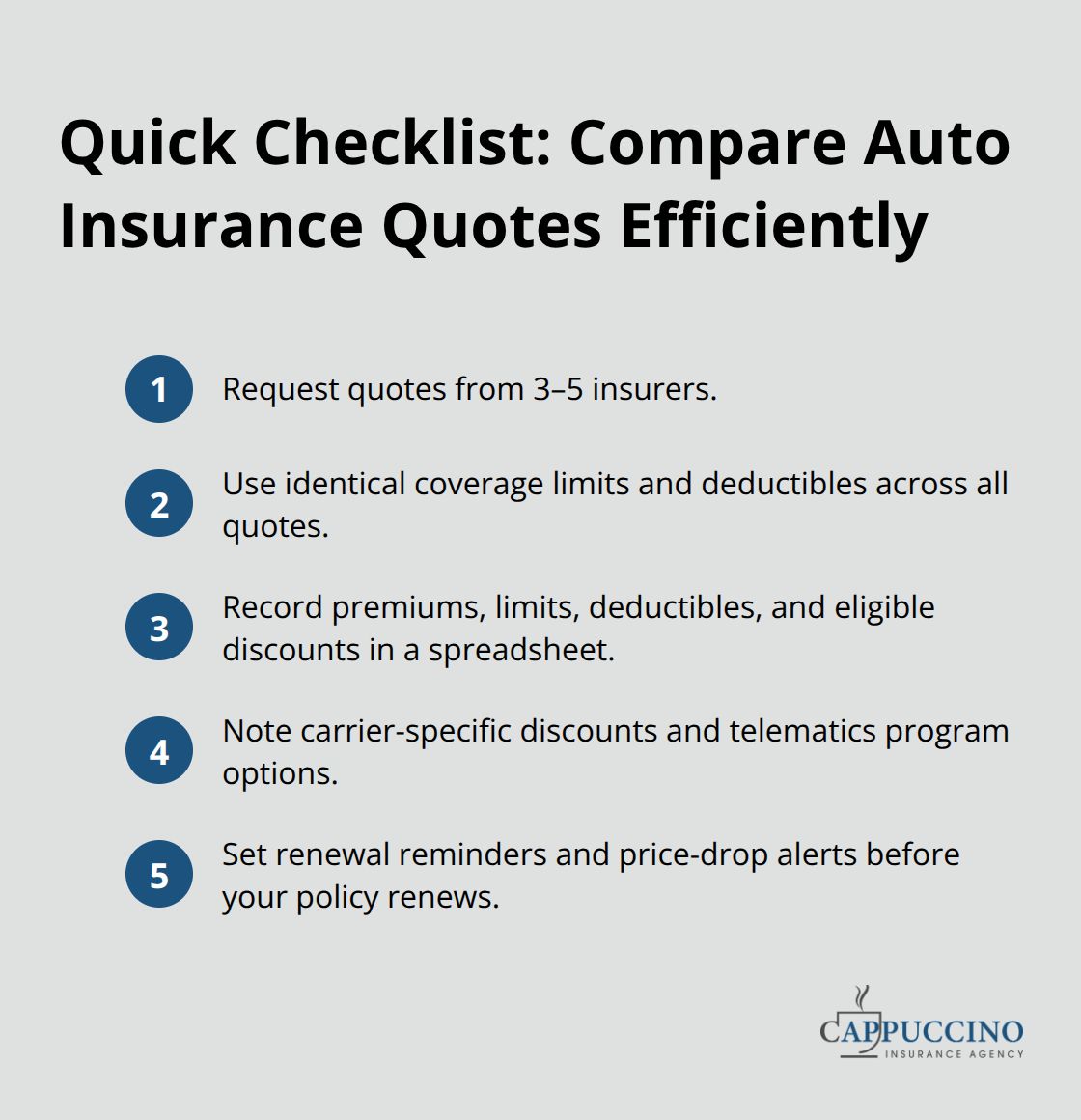
Carriers price commercial auto coverage based on specific risk factors, and incomplete information forces them to use default assumptions that inflate quotes. Request quotes from at least three carriers before making a decision.

Progressive, ERGO NEXT, and biBERK can generate certificates of insurance within minutes of binding, which matters if you need coverage quickly for a new vehicle or contract requirement. Travelers and Erie Insurance excel at competitive pricing for established fleets with clean loss histories. When comparing quotes, ensure you’re evaluating identical coverage: same liability limits, matching deductibles, and equivalent covered auto symbols. A $500 difference in premium might reflect lower collision deductibles or reduced uninsured motorist limits, not better pricing.

Bundle Policies to Unlock Discounts

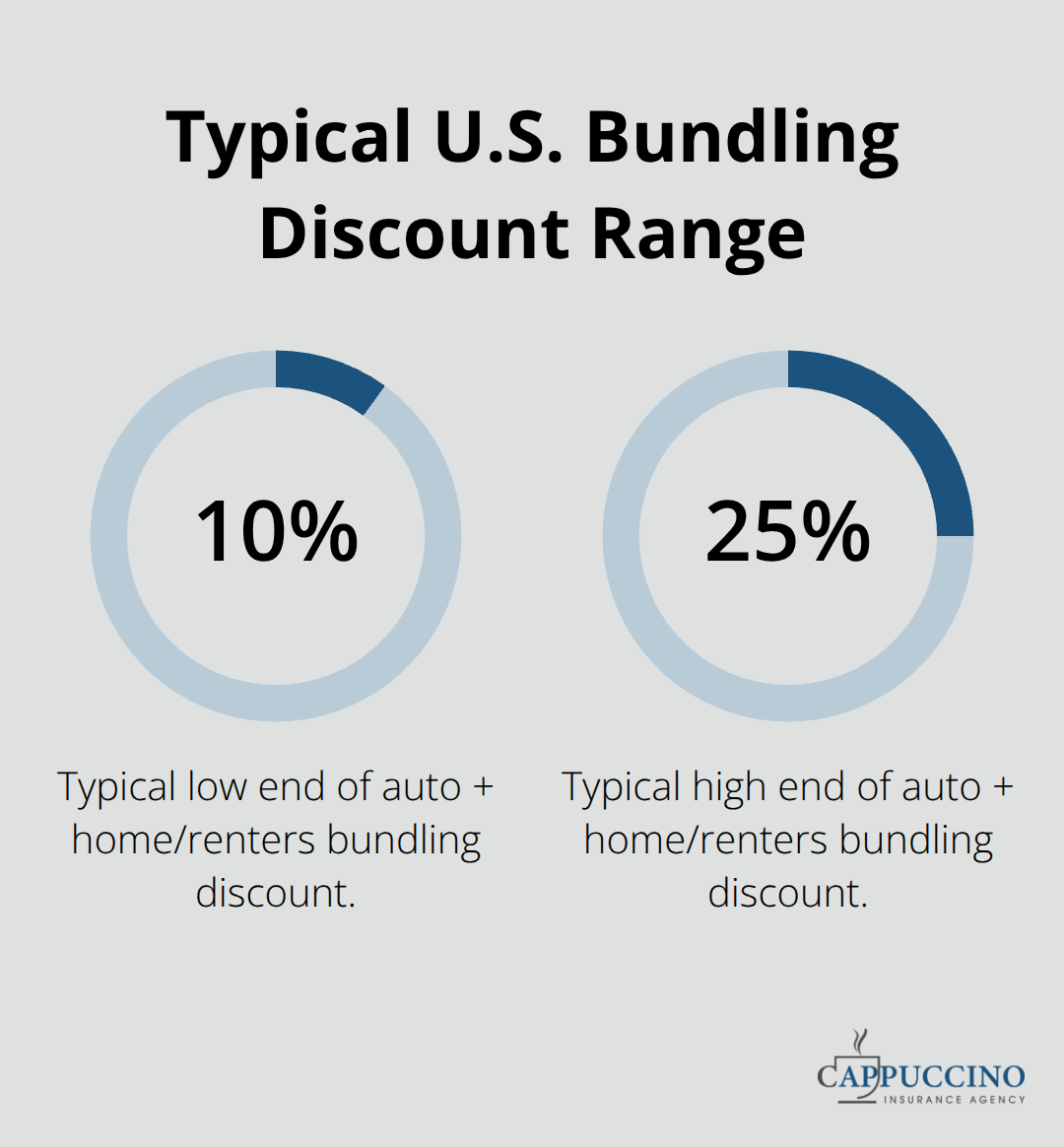
Bundling your commercial auto policy with general liability, inland marine, or workers’ compensation coverage typically yields multi-policy discounts of 10 to 25 percent depending on the carrier and your claims history. This approach simplifies your coverage structure and reduces your overall premium burden. Cappuccino Insurance Agency partners with 20+ carriers to deliver bundled solutions and specialty coverage for hard-to-place risks, plus we conduct annual policy reviews to help you capture discounts you might miss otherwise.

Strengthen Your Risk Profile

Implementing a fleet safety program directly influences your renewal rates and future quotes. Carriers favor businesses that demonstrate genuine risk control through written safety policies, annual defensive driving training, and consistent driver monitoring. Telematics programs reduce premiums by 10 to 15 percent-Travelers, Nationwide, and Progressive all offer measurable savings for monitoring driver behavior. Regularly screen drivers and review motor vehicle records annually to catch violations or accidents early.

Maintain detailed records of vehicle maintenance, driver training completion, and safety incidents, then share this information when requesting quotes and during renewal discussions. Prompt claims reporting also matters; delaying notification signals poor risk management to insurers, which affects your renewal pricing. Resources like driver safety templates and training programs strengthen your risk profile when you apply for quotes.

Review Coverage Annually

Review your coverage annually because your business activities, fleet size, and liability exposures change over time. A policy that fit your needs two years ago may leave you underinsured today. California commercial auto premiums are rising due to increased repair costs from advanced vehicle technology, higher medical expenses, and more severe crashes driven by risky driving behaviors. Your annual review should address whether your liability limits still match your contract requirements and whether new vehicles or service lines require additional endorsements.

Final Thoughts

Commercial auto insurance in California protects your business from accidents, liability claims, and financial collapse when serious incidents occur. State minimums of $30,000 per person and $60,000 per accident leave you exposed, and nearly one in five California drivers lacks adequate coverage, which means your policy must exceed legal minimums to match your actual business risks and contract requirements (typically $1,000,000 in combined single limit liability). Collision, comprehensive, and uninsured motorist coverage complete your protection, while telematics programs reduce premiums by 10 to 15 percent through driver monitoring and safety incentives.

Getting competitive quotes requires requesting coverage from multiple carriers with identical limits and deductibles so you can compare actual pricing differences. Implementing a fleet safety program, maintaining vehicles properly, and reviewing coverage annually strengthen your risk profile and improve renewal rates. California premiums continue rising due to advanced vehicle technology, higher medical costs, and more severe crashes, making annual reviews essential to prevent underinsurance.

We at Cappuccino Insurance Agency understand that finding the right commercial auto insurance California coverage at a competitive price takes time and expertise. As an independent agency partnering with 20+ carriers, we deliver local expertise and bundle discounts across California. Contact us to request quotes from multiple carriers and explore specialty solutions tailored to your fleet’s specific needs.

The information provided in this blog is for general informational purposes only and does not constitute legal, financial, or insurance advice. Coverage options, terms, and availability may vary. Please consult with a licensed professional for advice specific to your situation. Artificial intelligence may have been used to generate text and images in some blog articles and may contain inaccuracies.
Property Risk Mitigation Tips for Safer Homes

Your home is one of your biggest investments, yet most homeowners underestimate the risks it faces daily. Weather, fire, theft, and other hazards can strike without warning and leave you with devastating losses.

We at Cappuccino Insurance Agency know that property risk mitigation tips work best when combined with the right insurance coverage. This guide walks you through the risks you face, the steps you can take to reduce them, and how to protect yourself with proper policies.

What Threats Put Your Home at Greatest Risk

Weather events cause the most expensive damage to U.S. homes. The National Oceanic and Atmospheric Administration reported that the United States experienced 28 billion-dollar weather disasters in 2023 alone, with hurricanes, severe storms, and flooding destroying homes and forcing costly repairs. Homeowners in wildfire-prone regions face even sharper risk-California experienced over 5,000 fires in 2023, many destroying entire neighborhoods. If you live in a coastal or fire-prone area, this is not a theoretical concern but a real threat that demands action. You need to assess your specific location’s hazard profile rather than relying on national statistics. Check your local county emergency management office or FEMA’s hazard maps to identify which disasters threaten your address most directly. Once you know your actual risks, you can prioritize your defenses and insurance coverage accordingly.

Roofs and foundations fail without regular maintenance

Roofs fail first during storms because many homeowners delay repairs until visible leaks appear. Inspect your roof annually and after heavy weather, checking for missing or curled shingles, compromised flashing around chimneys and vents, and debris-clogged gutters that trap water. Gutters backed up with leaves and twigs direct water toward your foundation instead of away from it, causing cracks that lead to basement flooding and structural rot. Foundation cracks wider than one-eighth inch warrant professional evaluation because water penetration worsens quickly and costs thousands to remediate. Trim tree branches hanging over your roof so heavy limbs cannot snap during storms and puncture your home. Standing water in landscaping or around your foundation indicates poor drainage-reroute downspouts to discharge at least six feet from your house.

Vegetation fuels wildfire spread near your home

Defensible space stops fire from reaching your structure if you live within a mile of wildland areas. The principle is straightforward: remove dead trees, dead branches, and dead vegetation within 30 feet of your home, thin trees so crowns do not touch, and clear leaves and needles from gutters and roof surfaces monthly during fire season. Dense vegetation acts as fuel; spacing trees 10 feet apart slows fire spread significantly. Remove climbing vines from walls and fences because they carry flames upward toward your roof. Use fire-resistant plants like native shrubs with low sap and moisture content rather than ornamental junipers that ignite easily. Mulch made from wood chips retains moisture and resists ignition better than bark mulch; keep mulch at least five feet from your home’s exterior walls.

Infographic showing core defensible space practices to reduce wildfire risk around a home.

Lighting and landscaping deter burglars

Burglars spend seconds evaluating whether entry is quick and unobserved. Dark entry points and overgrown landscaping blocking windows make your home attractive to criminals. Install motion-activated lighting on all sides of your home and keep exterior lights on during evening hours so no entrance sits in shadow. Trim shrubs below window height so intruders cannot hide while attempting entry. Doors with visible deadbolts and reinforced frames deter break-ins far more effectively than cheap locks.

Checklist of simple home security steps that discourage burglars. - Property risk mitigation tips

Visible security system signage reduces burglary attempts (creating the perception of monitoring, even if a system is basic). Gaps in window coverings at night reveal whether you are home and what valuables sit inside-close curtains after dark in rooms with electronics or jewelry.

Your insurance coverage must match your location’s hazards

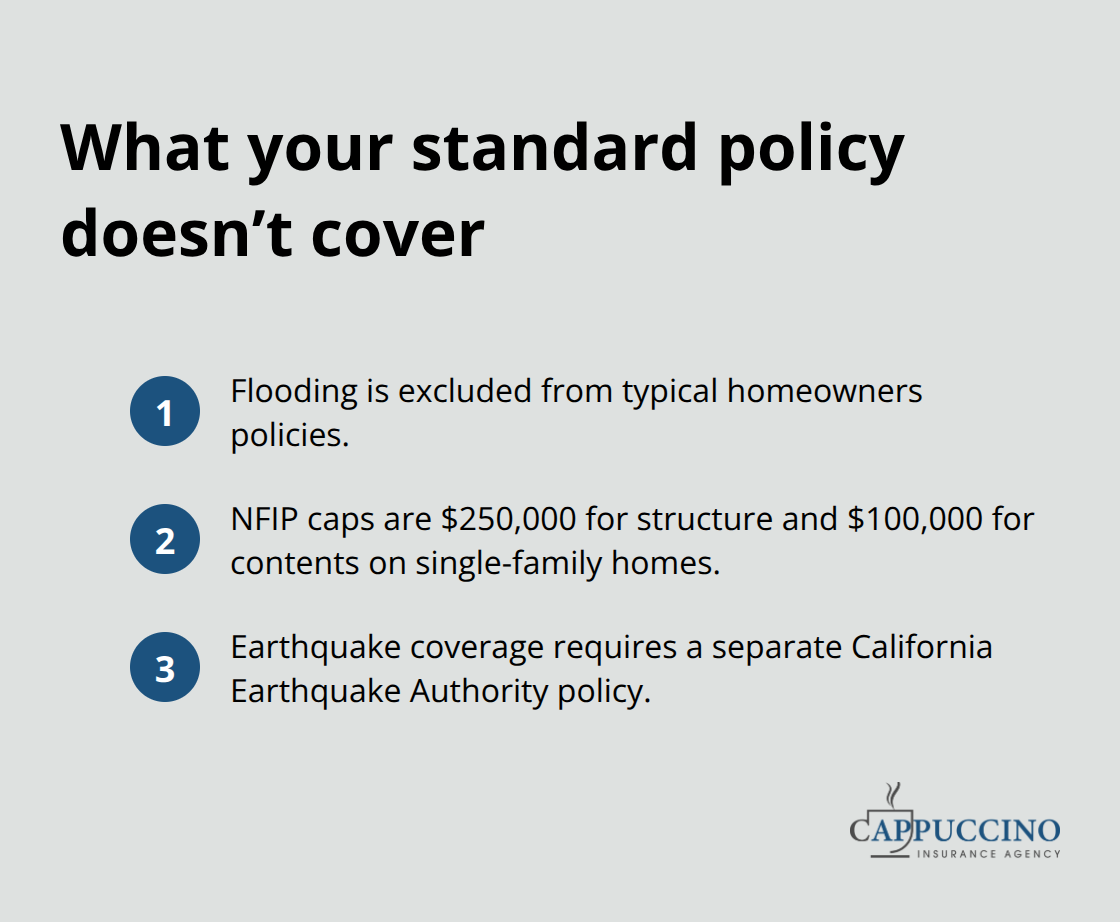
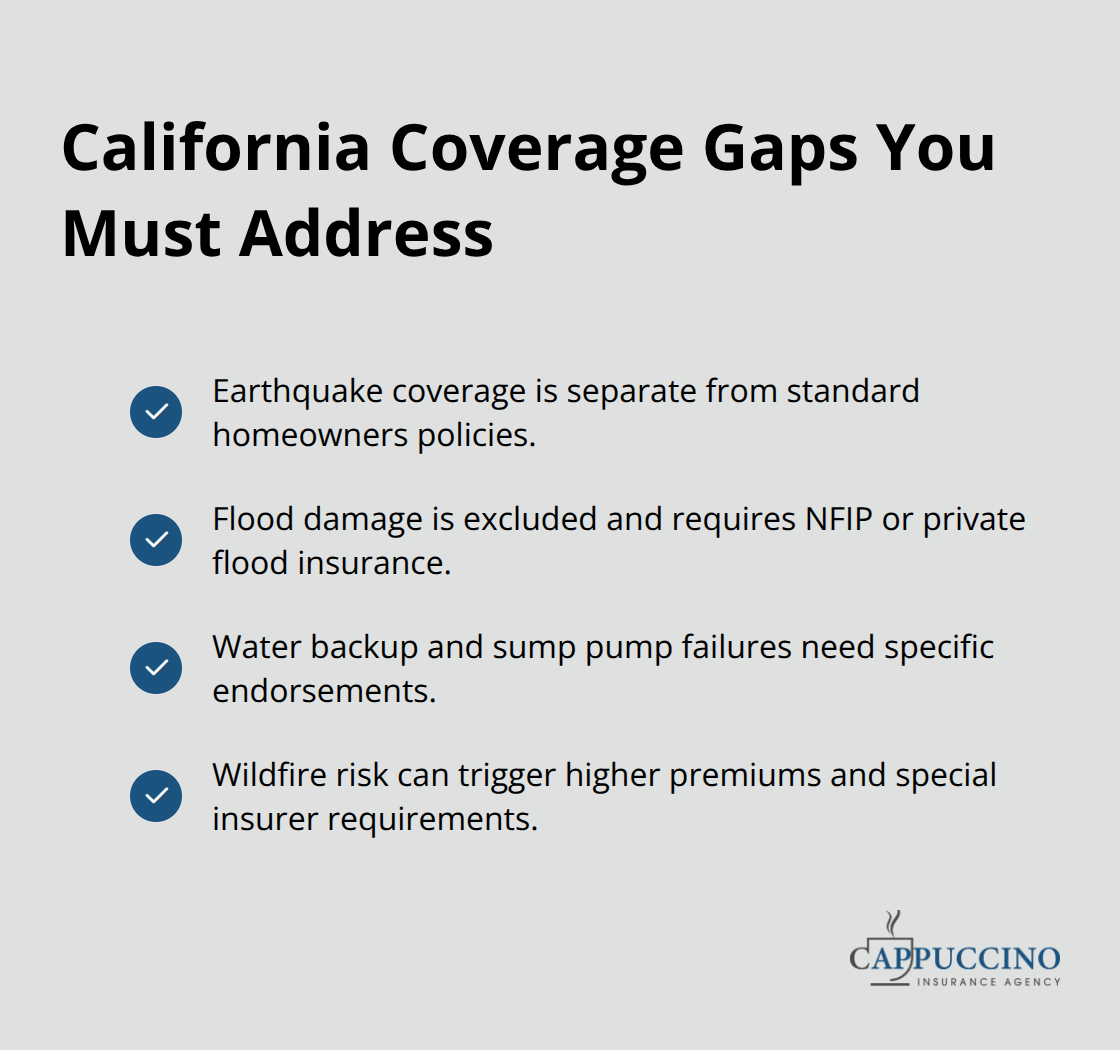
Standard homeowners policies exclude flood and earthquake damage, yet these events strike thousands of homes annually. If you live in a flood zone or earthquake-prone area, you need separate policies to avoid catastrophic financial loss. Wildfire risk presents another challenge-standard policies may exclude or limit coverage in high-risk zones. We at Cappuccino Insurance Agency specialize in hard-to-place wildfire properties across California, offering solutions like the California FAIR Plan and Difference-in-Conditions wraps that fill coverage gaps. A free coverage assessment identifies which hazards threaten your specific address and which policies you actually need rather than what insurers push as standard.

How to Protect Your Home Before Disaster Strikes

Secure Entry Points Against Intruders

Burglary happens year-round and costs the average victim $2,661 in stolen goods according to FBI crime statistics, yet motion-activated lighting cuts attempted break-ins sharply. Install lights on all sides of your home, particularly above doors and garage entrances where burglars test entry points. Reinforce exterior doors with deadbolts and strike plates rated for security use-quality hardware forces intruders to invest time and noise that attracts attention, while cheap locks fail in seconds. Visible security system signage matters more than most homeowners realize; the appearance of monitoring deters criminals faster than an alarm that only sounds after entry. Test your system monthly to confirm sensors function and backup batteries hold charge, because a silent system provides zero protection when you need it most.

Maintain Roofs and Foundations Before Water Damage Strikes

Roof and foundation maintenance prevents water damage that costs far more than routine inspections and repairs. Inspect your roof twice yearly and after storms, looking for missing shingles, cracked flashing, and debris-clogged gutters that trap water against your home. Gutters backed with leaves direct water toward your foundation instead of away from it, causing cracks that lead to flooding and structural rot costing thousands to fix. Foundation cracks wider than one-eighth inch warrant immediate professional evaluation because water penetration accelerates quickly. Trim tree branches hanging over your roof so heavy limbs cannot snap during storms and puncture your home or damage shingles. Reroute downspouts to discharge at least six feet from your house and grade landscaping so water flows away from your foundation, not toward it.

Eliminate Fire Fuel Through Vegetation Management

Wildfire preparedness demands aggressive vegetation management within 30 feet of your home if you live near wildland areas. Dead trees, dead branches, and dead vegetation act as fuel that fire spreads through rapidly; removing them stops fire progression at your property line rather than allowing it to climb toward your roof. Thin trees so crowns do not touch each other-fire spreads through touching vegetation like water flowing downhill. Space trees at least 10 feet apart to force fire to jump gaps rather than travel continuously. Clear leaves and needles from gutters and roof surfaces monthly during fire season because accumulated debris ignites easily and carries flames to your structure. Remove climbing vines from walls and fences because they carry fire upward toward your roof where it penetrates vents and ignition-prone materials. Use fire-resistant native plants with low sap and moisture content rather than ornamental junipers and similar plants that ignite at low temperatures. Wood-chip mulch resists ignition better than bark mulch because it retains moisture; keep mulch at least five feet from your home’s exterior walls.

These specific actions reduce your property loss risk substantially. The next step involves selecting insurance coverage that matches your location’s actual hazards rather than accepting generic policies that leave critical gaps unprotected.

What Insurance Coverage Your Home Actually Needs

Replacement Cost Limits Must Match Your Home’s Real Value

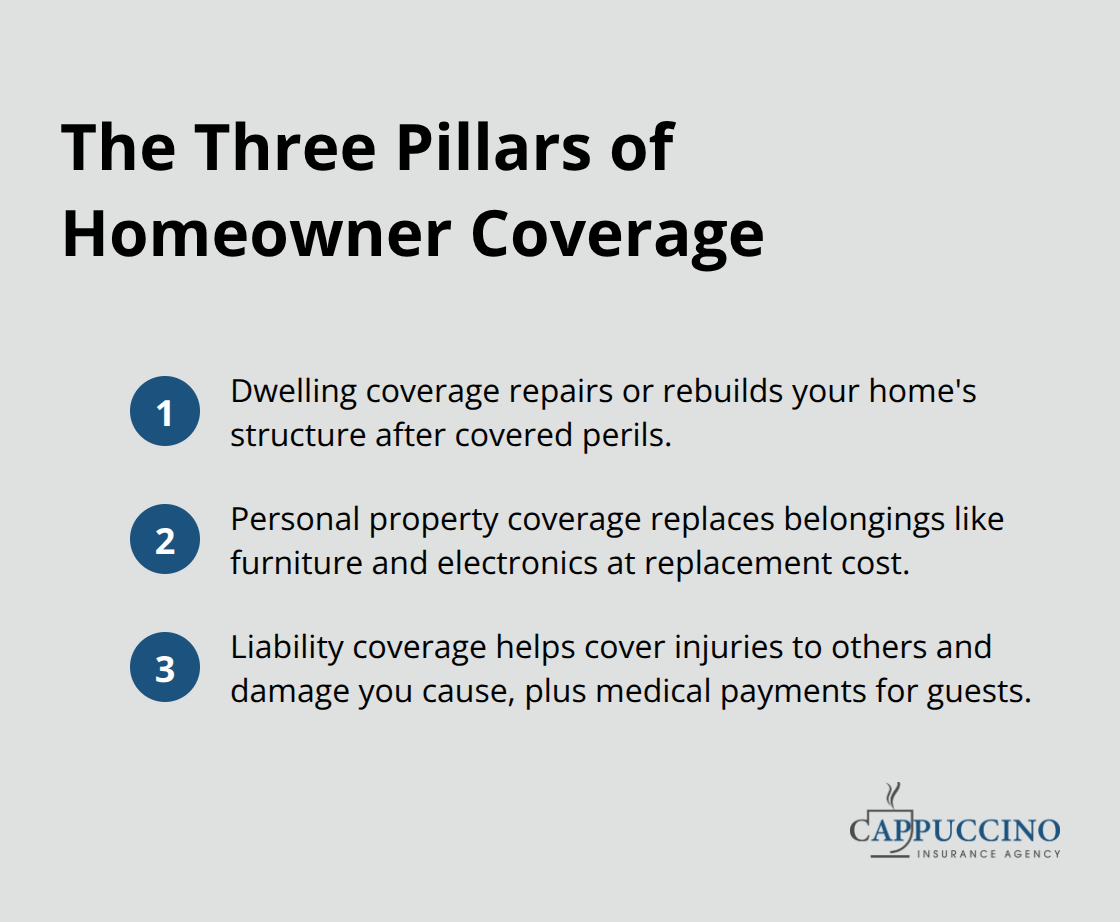
Standard homeowners insurance covers dwelling damage, personal property, liability, and additional living expenses, but coverage limits and exclusions matter far more than the policy name. Most policies cap dwelling coverage at replacement cost, meaning insurers pay what it costs to rebuild your home today, not what you paid for it years ago. If your home would cost $450,000 to rebuild but your policy limits sit at $350,000, you absorb the $100,000 gap out of pocket. A replacement cost estimate from a contractor reveals what your home actually costs to rebuild before you select coverage limits, preventing underinsurance that leaves you financially devastated after total loss.

Personal Property Coverage Leaves High-Value Items Exposed

Personal property coverage typically maxes out at 50-70% of your dwelling limit, which sounds reasonable until you inventory your actual possessions and realize clothes, electronics, furniture, and kitchen items add up far faster than expected. High-value items like jewelry, art, and collectibles hit sub-limits of $1,000-$2,500 per item, forcing you to purchase scheduled personal property riders if you own anything valuable. This gap between standard coverage and what you actually own creates a false sense of protection that evaporates when loss occurs.

Liability Coverage Needs Umbrella Protection for Serious Injuries

Liability coverage protects you if someone is injured on your property and sues, yet most policies start at $100,000-$300,000 limits that evaporate instantly in serious injury cases where medical costs and lost wages exceed $500,000. Umbrella policies costing $150-$300 annually for $1 million in additional liability coverage are inexpensive relative to the financial destruction a major lawsuit creates. This additional layer of protection costs far less than the risk it eliminates.

Flood and Earthquake Coverage Require Separate Policies

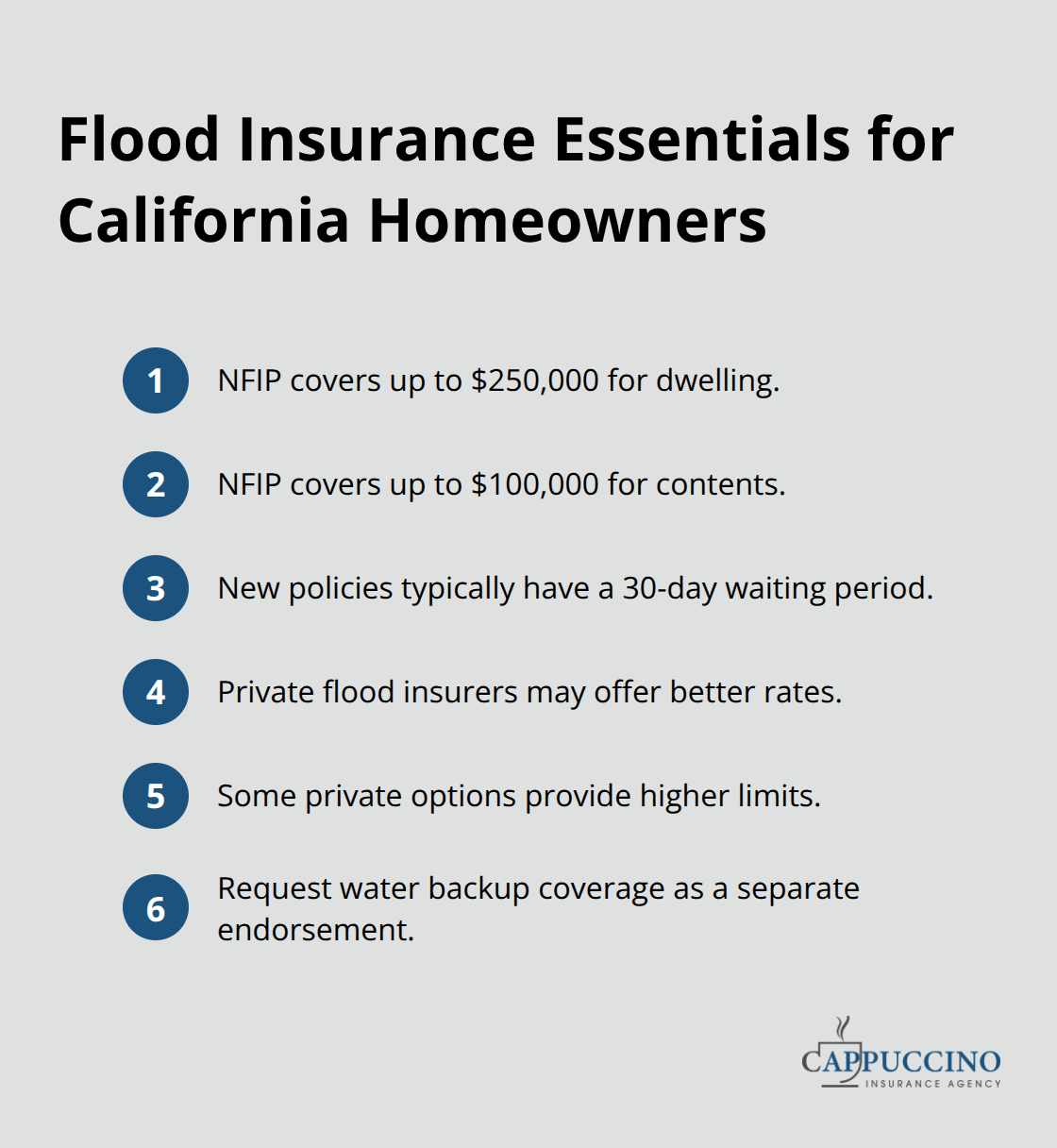
Standard policies exclude flood and earthquake damage entirely, a reality that catches homeowners off-guard when disaster strikes. Flood insurance requires a 30-day waiting period before coverage activates, meaning you cannot buy it after storm warnings appear. If you live in a designated flood zone, your mortgage lender mandates flood insurance anyway, so obtaining it voluntarily before lender requirements apply gives you time to shop rates across multiple carriers.

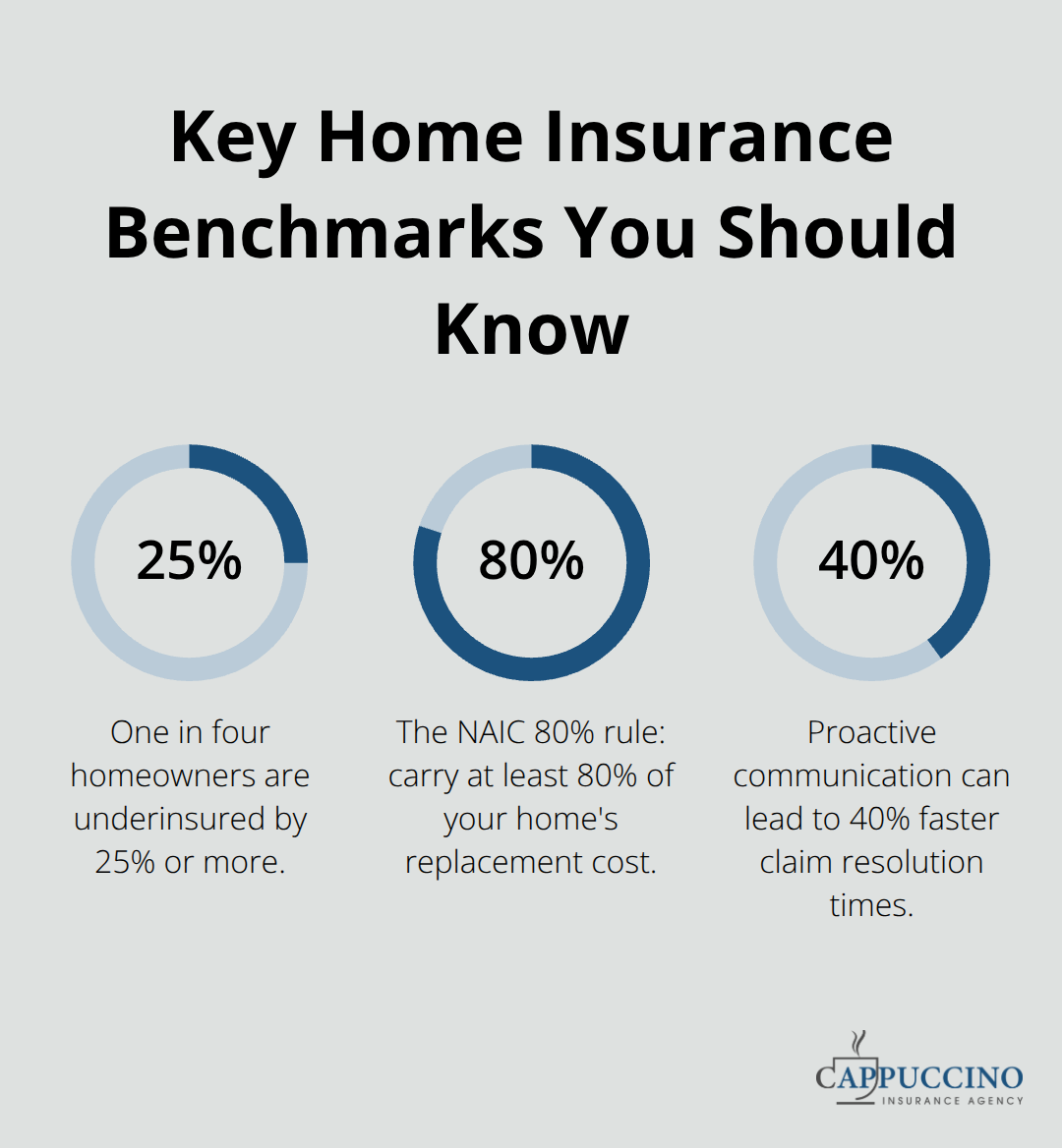
Chart summarizing key home insurance percentages for U.S. homeowners. - Property risk mitigation tips

Earthquake coverage runs $300-$600 annually depending on your home’s construction and location, with deductibles typically set at 15-20% of the coverage limit rather than fixed dollar amounts, meaning a $300,000 home with 15% deductible requires you to absorb $45,000 in losses before insurance pays anything.

Wildfire Risk Demands Specialized Coverage Solutions

Wildfire risk presents the most complex coverage challenge in California because standard carriers are withdrawing from high-risk zones and raising rates dramatically for properties within one mile of wildland. The California FAIR Plan provides a last-resort option for wildfire-prone properties that cannot obtain coverage elsewhere, but FAIR Plan policies cost 40-60% more than standard market rates and offer narrower coverage. Difference-in-Conditions wraps fill the gaps that FAIR Plan policies leave exposed, protecting your home against losses standard policies exclude. Annual policy reviews catch coverage gaps before disaster exposes them, yet most homeowners never review their policies unless they purchase a new home or switch insurers. Cappuccino Insurance Agency partners with 20+ carriers to deliver specialty solutions for hard-to-place wildfire-risk properties across California, including the California FAIR Plan and Difference-in-Conditions wraps, plus free coverage assessments that identify which hazards threaten your specific address and which policies actually protect you.

Conclusion

Property risk mitigation tips only work when paired with accurate insurance coverage that matches your home’s actual hazards. The steps you take to secure entry points, maintain your roof, and eliminate fire fuel reduce loss probability significantly, but they cannot prevent every disaster. Insurance fills the gap between what you can prevent and what strikes despite your best efforts.

Professional assessments reveal coverage gaps that standard policies hide. Most homeowners discover these gaps only after loss occurs, when it’s too late to add protection. A contractor’s replacement cost estimate shows whether your dwelling limits match what rebuilding actually costs, while a hazard assessment identifies which disasters threaten your specific address rather than relying on national statistics that may not apply to your location.

We at Cappuccino Insurance Agency provide free coverage assessments that identify which hazards threaten your address and which policies actually protect you. Our team partners with multiple carriers to deliver specialty solutions for hard-to-place wildfire-risk properties across California, including the California FAIR Plan and Difference-in-Conditions wraps that fill coverage gaps standard policies leave exposed. Schedule a free assessment to confirm your coverage matches your home’s real risks.

The information provided in this blog is for general informational purposes only and does not constitute legal, financial, or insurance advice. Coverage options, terms, and availability may vary. Please consult with a licensed professional for advice specific to your situation. Artificial intelligence may have been used to generate text and images in some blog articles and may contain inaccuracies.
California Commercial Auto Quotes: Fast, Local Options

Running a business fleet in California means navigating strict insurance requirements and rising accident costs. Getting California commercial auto quotes shouldn’t be complicated, yet many business owners waste time comparing options or end up underinsured.

We at Cappuccino Insurance Agency help California businesses find coverage that actually fits their needs. This guide walks you through getting fast quotes, avoiding costly mistakes, and understanding what protection your fleet really requires.

Why Commercial Auto Insurance Isn’t Optional in California

California requires any business operating vehicles for work to carry commercial auto insurance, and this isn’t a suggestion. A personal auto policy simply won’t cover work-related driving, whether that’s deliveries, client visits, or moving equipment. The California Department of Insurance is clear: without proper commercial coverage, your business faces serious consequences. Penalties start at $350 and escalate to $1,800 for repeat violations, plus vehicle impoundment and license suspension up to four years. Beyond legal trouble, one accident without coverage could bankrupt your operation. Medical bills, property damage claims, and lost wages from a single incident can easily exceed $100,000. California law sets minimum liability limits at $30,000 per person and $60,000 per incident for bodily injury, plus $15,000 for property damage, but these minimums barely scratch the surface of real-world claim costs. The average cost of California commercial auto insurance runs about $154 per month according to Insureon’s data, a small price compared to the financial devastation of an uninsured accident.

Fleet Accidents Cost Far More Than You Think

Claim severity in commercial auto has climbed sharply due to advanced vehicle repair costs and rising medical expenses after accidents. A single serious injury claim can easily exceed your minimum liability limits, leaving your business personally liable for the difference. Higher liability limits-such as $500,000 or $1,000,000 combined single limits instead of the bare minimum-protect both current assets and future earnings. Driver shortages and inexperience have pushed claim frequency higher across the industry, meaning more accidents occur than before. Distracted driving remains the leading cause of accidents, and that risk sits directly in your fleet’s hands. Proactive fleet safety programs, regular driver training, and telematics monitoring reduce both accident frequency and severity, which translates into better quotes over time. Carriers now actively reward businesses that demonstrate strong risk management practices with lower premiums and broader coverage options.

Coverage That Protects Beyond Legal Minimums

Uninsured and underinsured motorist coverage protects your drivers when the other party lacks sufficient insurance, a real concern on California roads. Medical payments coverage handles medical expenses for your drivers regardless of fault, keeping them healthy and your business operational. Collision and comprehensive coverage protect your vehicles from accidents, theft, and weather damage. Hired and non-owned auto coverage is essential if your team uses personal vehicles or rental cars for work-a gap that catches many businesses off guard. The right combination of coverages depends entirely on how your business operates and what vehicles your team drives.

Checklist of essential commercial auto coverages that extend protection beyond California’s legal minimums

Understanding these options before you request quotes helps you compare apples to apples across carriers and avoid paying for protection you don’t need while missing coverage you do.

Getting Fast Quotes From California Carriers That Actually Compete

Work With Licensed Agents Who Access Multiple Carriers

The fastest way to get California commercial auto quotes is to work with an independent agent who accesses multiple carriers simultaneously rather than calling insurers one by one. California Department of Insurance guidance emphasizes that licensed broker-agents specializing in commercial coverages pull quotes from multiple carriers at once, saving you weeks of phone calls. You can verify an agent’s license status with the California Department of Insurance before proceeding.

Professional associations like the Insurance Brokers and Agents of the West connect you with qualified local brokers who know California’s specific requirements. When you meet with an agent, come prepared to discuss your vehicle count, vehicle types, how you use them, and your driving history. The agent will review your current policy if you have one and identify coverage gaps that new quotes should address.

Understand How Exposure Factors Shape Your Quote

Auto quotes price using exposure factors that include number of vehicles, vehicle type, usage patterns, and territory. A food truck operating in Los Angeles will quote differently than the same truck in Bakersfield due to claim frequency and costs in each area. Agents who understand your specific territory and industry often negotiate better terms than generic online platforms can offer.

Hub-and-spoke diagram showing key exposure factors that influence California commercial auto insurance pricing - California commercial auto quotes

Territory matters significantly because insurers track claim history and accident rates by location. Los Angeles typically carries higher premiums than smaller cities like Bakersfield for identical vehicles and coverage. Your travel radius also affects pricing-local city routes present lower risk than regional routes covering broader areas.

Match Coverage Exactly When Comparing Quotes

Comparing quotes accurately requires matching coverage exactly across proposals, not just looking at the lowest premium number. Ensure each quote uses the same liability limits (California minimum is 30/60/15, but most businesses need higher limits like $500,000 or $1,000,000 combined single limits), the same deductible levels, and the same coverage symbols for each vehicle. A $1,000,000 limit quote will always cost more than a $500,000 limit, so premium differences only matter when protection matches.

Digital-first carriers like ERGO NEXT and biBERK issue certificates of insurance in minutes online, which matters enormously if you need same-day COI proof for job sites.

Leverage Bundle Discounts and Local Expertise

Bundling commercial auto with general liability, workers compensation, or property insurance typically yields around 12% average savings on auto premiums according to industry data. This combination simplifies billing, reduces administrative overhead, and often qualifies you for additional discounts that single-policy carriers cannot match.

Percentage graphic highlighting average savings from bundling commercial auto with other business policies - California commercial auto quotes

Local independent agencies like Cappuccino Insurance Agency partner with 20+ carriers to help you find the exact combination of coverage and price that fits your operation. Working with a local partner means someone understands California’s unique regulatory landscape and can navigate territory-specific pricing without the delays of national call centers. The next step involves understanding which coverage options actually protect your specific business model and which ones you can safely skip.

Common Mistakes When Shopping for Commercial Auto Insurance

Most California business owners make three critical errors when shopping for commercial auto insurance, and each one drains money from your operation. The first mistake is purchasing minimum liability limits and treating that as sufficient protection. California’s legal minimum of 30/60/15 covers almost nothing in a serious accident, yet many owners stop there because it’s the cheapest option. One claim that exceeds your limit leaves your business personally liable for the difference, which can total hundreds of thousands of dollars. A $1,000,000 combined single limit costs more upfront but protects your actual assets when real accidents happen.

Underinsuring Your Fleet Leaves You Exposed

The gap between minimum coverage and adequate protection is where most businesses fail. You might think the extra premium for higher limits isn’t worth it, but that assumption costs you money in the long run. Request quotes with higher liability limits like $500,000 or $1,000,000 combined single limits and compare them against minimum coverage to see the actual dollar difference. That difference is often smaller than you expect, especially when you add bundled coverages into the equation. A serious injury claim can easily exceed your minimum liability limits, leaving your business personally liable for the remainder. Advanced vehicle repair costs and rising medical expenses after accidents have pushed claim severity sharply higher across the industry. One accident without adequate coverage could bankrupt your operation faster than any other business risk.

Ignoring Bundle Discounts Across Your Policies

The second mistake is treating each insurance policy as a separate purchase instead of combining them strategically. Most business owners carry general liability, workers compensation, and property insurance separately, paying full price for each one. Bundling commercial auto with these policies yields around 12% average savings on auto premiums according to industry data, plus it simplifies billing and reduces administrative headaches. That 12% savings compounds year after year, and the administrative simplification frees your time for actual business operations. Digital carriers like ERGO NEXT and biBERK make it easy to request quotes online with customized limits, but local agents who understand your specific industry and territory often negotiate better terms than automated systems can offer.

Failing to Review Your Policy Annually

The third mistake is treating your policy as a set-it-and-forget-it purchase instead of reviewing it annually. Your business changes, your vehicle mix evolves, your claims history shifts, and your coverage needs expand or contract accordingly. A policy that made sense three years ago may be costing you thousands in unnecessary premiums or leaving dangerous gaps today. Schedule a policy review every 12 months with your agent to catch coverage gaps, eliminate redundant protection, and capitalize on discounts you may have missed. Many California businesses discover during their first annual review that they were either drastically overinsured on certain coverages or dangerously underinsured on others.

Choosing the Right Carrier and Coverage Match

The carriers you work with matter less than ensuring your coverage actually matches your risk, your limits protect your assets, and your premiums reflect every discount you qualify for. Local independent agencies partner with multiple carriers to help you find the exact combination of coverage and price that fits your operation. Working with a local partner means someone understands California’s unique regulatory landscape and can navigate territory-specific pricing without the delays of national call centers. Your business insurance should evolve with your operation, not stagnate in place while your actual risks change.

Final Thoughts

Getting California commercial auto quotes fast requires you to work with someone who accesses multiple carriers, match your coverage to your actual risk, and review your protection annually. The cheapest quote fails you if it leaves your business exposed to liability that exceeds your limits, so request quotes with liability limits that actually protect your assets rather than just California’s legal minimum. Territory, vehicle type, driving history, and claims experience all shape your premium, which means generic online quotes often miss the specific factors that affect your California business.

Gather information about your vehicle count, vehicle types, how your team uses them, and your driving history, then contact an independent agent who accesses multiple carriers simultaneously. Ask about bundle discounts across your policies and whether your current coverage has gaps you haven’t noticed. Digital carriers can issue certificates of insurance in minutes if you need same-day proof, while local agents often negotiate better terms for your specific territory and industry.

Contact Cappuccino Insurance Agency to start your California commercial auto quotes process today. We partner with multiple carriers to help you find coverage that fits your operation and budget, and we provide free coverage assessments to catch gaps and eliminate unnecessary premiums.

The information provided in this blog is for general informational purposes only and does not constitute legal, financial, or insurance advice. Coverage options, terms, and availability may vary. Please consult with a licensed professional for advice specific to your situation. Artificial intelligence may have been used to generate text and images in some blog articles and may contain inaccuracies.
Property Owner Insurance California: Protecting Investment Properties

California property investors face unique insurance challenges that standard homeowners policies simply don’t address. Property owner insurance in California is built specifically for rental properties and investment real estate, covering risks that typical policies ignore.

At Cappuccino Insurance Agency, we’ve helped countless property owners navigate these coverage gaps. The right policy protects your investment from liability claims, lost rental income, and California’s specific hazards like wildfires and earthquakes.

What Property Owner Insurance Actually Covers

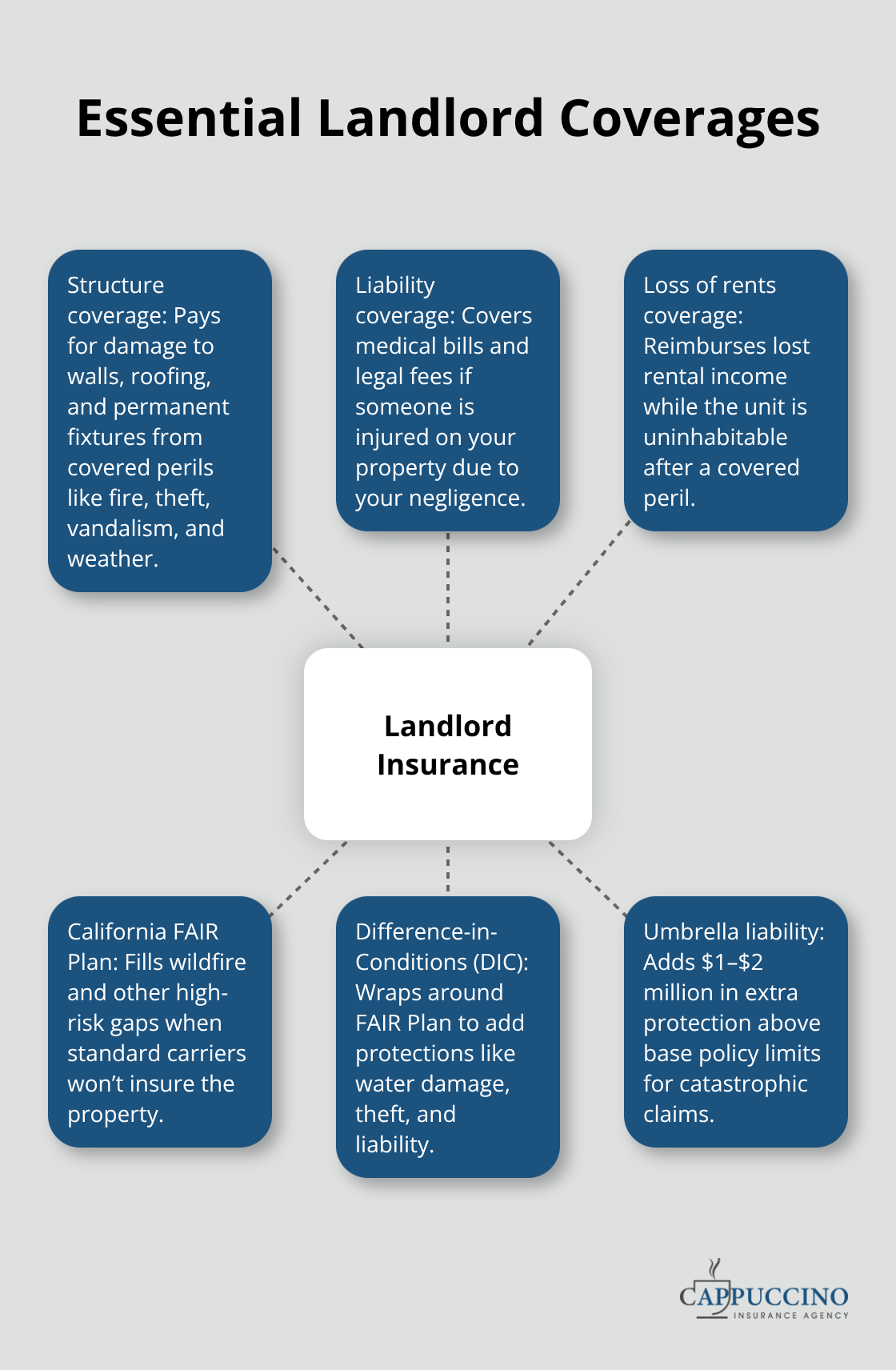
Property owner insurance covers the physical structure of your rental property, liability claims from tenants or visitors, and lost rental income when a unit becomes uninhabitable. The dwelling coverage protects the building itself against fire, wind, hail, vandalism, and theft. This differs fundamentally from a standard homeowners policy, which assumes you live in the property. When you rent out a home, condo, or apartment, insurers recognize that tenant-related risks and income protection become priorities that traditional policies ignore.

California’s Wildfire and Earthquake Exposure

California property owners face wildfire exposure that directly impacts insurance availability and cost. The Terner Center at UC Berkeley found that fire-related loss claims accounted for approximately 42 percent of total premiums across all California homeowner policy types between 2018 and 2021.

Chart showing 42% of premiums tied to fire losses and ZIP code distribution of wildfire losses in California.

Wildfire losses concentrate heavily in specific ZIP codes-52 percent of California ZIP codes reported no wildfire losses at all, yet 4 percent experienced ratios above 1, meaning losses exceeded premiums. Your location determines whether you pay standard market rates or face significant premium increases.

Earthquake coverage does not come standard in any landlord policy in California and requires a separate earthquake policy through the California Earthquake Authority. Flood coverage also sits outside standard policies and must be purchased separately through the National Flood Insurance Program. If your property sits in a high-risk fire zone or flood area, these gaps become expensive realities that renters insurance-which covers tenants, not property owners-completely misses.

The Income Protection Gap

Standard homeowners policies exclude the income protection that landlords need when a covered event makes a unit uninhabitable. You absorb lost rent while still paying mortgage, taxes, utilities, and maintenance costs. Property owner insurance includes loss of rental income coverage that homeowners policies simply do not offer because insurers assume you occupy the property yourself.

Why Homeowners Policies Leave Rental Properties Exposed

Your existing homeowners policy was written for owner-occupied properties and contains exclusions that leave rental properties exposed. Landlord liability coverage differs significantly from homeowner liability because tenant injuries on rental property carry different legal exposure than injuries at your primary residence. A tenant’s guest who slips on your rental property’s stairs creates liability that your homeowners policy may not adequately address.

Property owner insurance covers the dwelling structure, attached structures like garages and sheds, and essential systems-plumbing, electrical, HVAC-that renters cannot repair themselves. When a water heater fails or an electrical panel malfunctions, your policy covers the cost to restore habitability, whereas homeowners policies treat rental properties as non-insurable under their terms. Understanding these specific protections sets the foundation for evaluating which coverage types matter most for your investment strategy.

Key Coverage Types for Investment Properties

Dwelling Coverage: Getting the Numbers Right

Dwelling coverage forms the financial backbone of any property owner insurance policy, and setting this number correctly matters far more than most investors realize. Your dwelling limit must reflect the actual cost to rebuild your rental structure to current California building codes, not its market value. The Terner Center at UC Berkeley found that homes built after 2009 show significantly lower per-$100,000 insured costs than older properties, suggesting that building safety updates reduce replacement expenses. If your 1970s rental property needs a complete roof replacement or electrical system upgrade to meet current code, your policy must cover those modernization costs or you absorb the difference yourself. Obtain a detailed rebuild estimate from a licensed contractor specific to your property type and location before you set dwelling limits. NREIG, a California-focused investment property insurer, requires minimum dwelling coverage of at least $75 per square foot with no coinsurance penalty-a practical baseline that prevents underinsurance traps.

Attached structures like garages, sheds, and detached units require explicit coverage limits since they represent separate loss exposures. Essential systems coverage for plumbing, electrical, and HVAC protects you when these fail and tenants cannot legally occupy the unit until repairs are complete.

Liability Coverage: Protecting Against Catastrophic Claims

Liability coverage shields you from the financial devastation of tenant or visitor injury claims, and California’s tenant-friendly legal environment makes robust protection non-negotiable. Standard property owner policies include $1 million per occurrence and $2 million aggregate premises liability, but this baseline understates actual exposure for most California rental properties. A single slip-and-fall claim resulting in a permanent injury judgment can easily exceed $1 million in damages, leaving you personally liable for amounts above policy limits. Consider umbrella liability coverage that extends protection beyond your standard policy limits, particularly if you own multiple rental units or properties in high-traffic areas.

Document every safety upgrade you make-exterior lighting installation, secure lock replacements, allowed smart security cameras in common areas-because these investments reduce both actual risk and your insurance premiums. California’s habitability standards require landlords to maintain rental properties in safe condition, and insurers increasingly deny claims when deferred maintenance contributed to injuries. Liability coverage also covers defense costs and legal settlements, so even a baseless claim can cost thousands in attorney fees if your policy doesn’t pick up those expenses. Your policy should specify whether liability covers both bodily injury and property damage claims, as some carriers limit one or the other.

Loss of Rental Income: Protecting Your Cash Flow

Loss of rental income coverage separates serious property owner insurance from stripped-down policies that leave cash flow exposed. When a covered event like a fire or water damage makes your rental unit uninhabitable, this coverage replaces the rent you would have collected while repairs happen, protecting your mortgage payment, property taxes, and maintenance obligations.

Hub-and-spoke graphic explaining triggers, duration, calculations, and protections for loss of rental income coverage. - Property owner insurance California

The coverage period typically extends 12 to 24 months depending on your policy and carrier, giving you breathing room during extended reconstruction.

California’s median annual home insurance cost sits around $1,728 for landlord policies according to Policygenius data, yet many property owners skip loss of rent coverage to save $200 to $400 annually-a false economy that evaporates immediately after a single claim. Verify exactly how your carrier calculates lost rent, whether they account for seasonal vacancy patterns, and how they handle renovations that extend beyond immediate repairs. Some policies reimburse actual rent lost, while others use a fixed daily amount, creating dramatically different outcomes for high-value rentals. Ordinance or law coverage deserves equal attention because California building codes change constantly, and your policy must cover the cost to bring damaged structures into compliance with current standards rather than simply restoring them to pre-damage condition.

Understanding these three pillars positions you to evaluate additional coverage options that address California-specific exposures and your individual property risks.

Factors Affecting Property Owner Insurance Costs in California

California’s insurance market punishes property owners in high-risk areas while rewarding those who invest in maintenance and risk reduction. Your premium reflects your exact property’s exposure to wildfire, your building’s age and systems, and your track record as an investor-not a statewide average. The Terner Center at UC Berkeley analyzed California Department of Insurance data from 2018 to 2021 and found that fire-related loss claims consumed approximately 42 percent of total premiums across all homeowner policy types, yet this burden concentrated heavily in specific ZIP codes. Fifty-two percent of California’s ZIP codes reported zero wildfire losses, but 4 percent experienced loss ratios above 1, meaning claims exceeded all premiums collected. This extreme geographic variation explains why your neighbor five miles away pays $400 less annually than you do.

Location and Wildfire Risk Zones

Insurers now price climate risk aggressively, and properties in high-fire-exposure zones face rate increases exceeding 10 percent annually. If your rental property sits in an identified wildfire zone, underwriters scrutinize roof age, vegetation clearance, and exterior materials with intensity that standard homeowners policies never required.

Checklist of factors underwriters review for properties in California wildfire zones. - Property owner insurance California

Your location determines whether you pay standard market rates or face significant premium increases that compound over time.

Building Age and System Condition

Properties built after 2009 benefit from modern building codes that reduce replacement costs, translating to lower per-square-foot insurance expenses compared to 1970s and 1980s stock. Older properties with original electrical panels, aging plumbing, or outdated HVAC systems trigger higher premiums because insurers recognize that these systems fail more frequently and create both property damage and liability exposure. A property with deferred maintenance-cracked roof shingles, overgrown vegetation, deteriorated exterior walls-faces non-renewal threats alongside premium increases, because underwriters now tie insurability directly to property condition rather than treating it as a secondary factor.

Claims History and Regional Factors

Your claims history shapes future premiums more than most investors realize, and a single water damage claim can increase your costs for five to seven years. California’s Inland Empire and High Desert markets face additional scrutiny because extreme heat accelerates system failures, aging property stock concentrates in these regions, and repair costs run 15 to 20 percent higher than coastal areas. Each claim you file creates a record that carriers reference for years, making prevention and maintenance investments far more cost-effective than accepting claims as inevitable.

Coverage Limits and Underinsurance Risk

Coverage limits directly impact premiums, but underinsurance creates far greater financial exposure than premium savings justify. NREIG requires minimum dwelling coverage of $75 per square foot with no coinsurance penalty, establishing a practical floor that prevents you from absorbing rebuild costs above your policy limit. Setting your liability limit at the standard $1 million per occurrence leaves you exposed in California’s tenant-friendly legal environment where a single permanent injury judgment regularly exceeds that amount. Higher limits cost more upfront but protect your personal assets from catastrophic claims.

An independent agent familiar with your specific property can compare multiple carriers and identify which companies offer competitive rates for your exact risk profile-something generic online quotes cannot accomplish because they fail to account for local construction types, neighborhood crime rates, and carrier-specific underwriting preferences. Annual policy reviews before busy rental seasons allow you to adjust coverage as rent increases, property improvements reduce risk, or market conditions shift, transforming insurance from a static expense into a dynamic risk management tool.

Final Thoughts

Property owner insurance in California protects your investment from financial exposure that standard homeowners policies completely ignore. The right coverage combines dwelling protection, liability defense, and loss of rental income into a comprehensive strategy that keeps your cash flow stable when disasters strike. Your specific property’s location, age, and condition determine which coverages matter most and what you’ll actually pay, making generic policies inadequate for serious investors.

Finding the right policy requires working with an agent who understands California’s unique rental market and can compare multiple carriers on your behalf. Online quotes miss critical details like your property’s exact rebuild cost, local wildfire exposure, and carrier-specific underwriting standards that dramatically affect both availability and price. An independent agency identifies which companies offer competitive rates for your risk profile and structures coverage that matches your investment strategy rather than forcing you into a one-size-fits-all package.

Contact Cappuccino Insurance Agency to evaluate your current exposure and identify gaps in your existing protection. We help property owners across California secure property owner insurance that reflects their actual risk and income protection needs through carrier comparisons and free coverage assessments. Document your property’s rebuild cost, review your liability limits against California’s legal environment, and confirm that loss of rental income coverage extends long enough to protect your mortgage payments during extended repairs.

The information provided in this blog is for general informational purposes only and does not constitute legal, financial, or insurance advice. Coverage options, terms, and availability may vary. Please consult with a licensed professional for advice specific to your situation. Artificial intelligence may have been used to generate text and images in some blog articles and may contain inaccuracies.
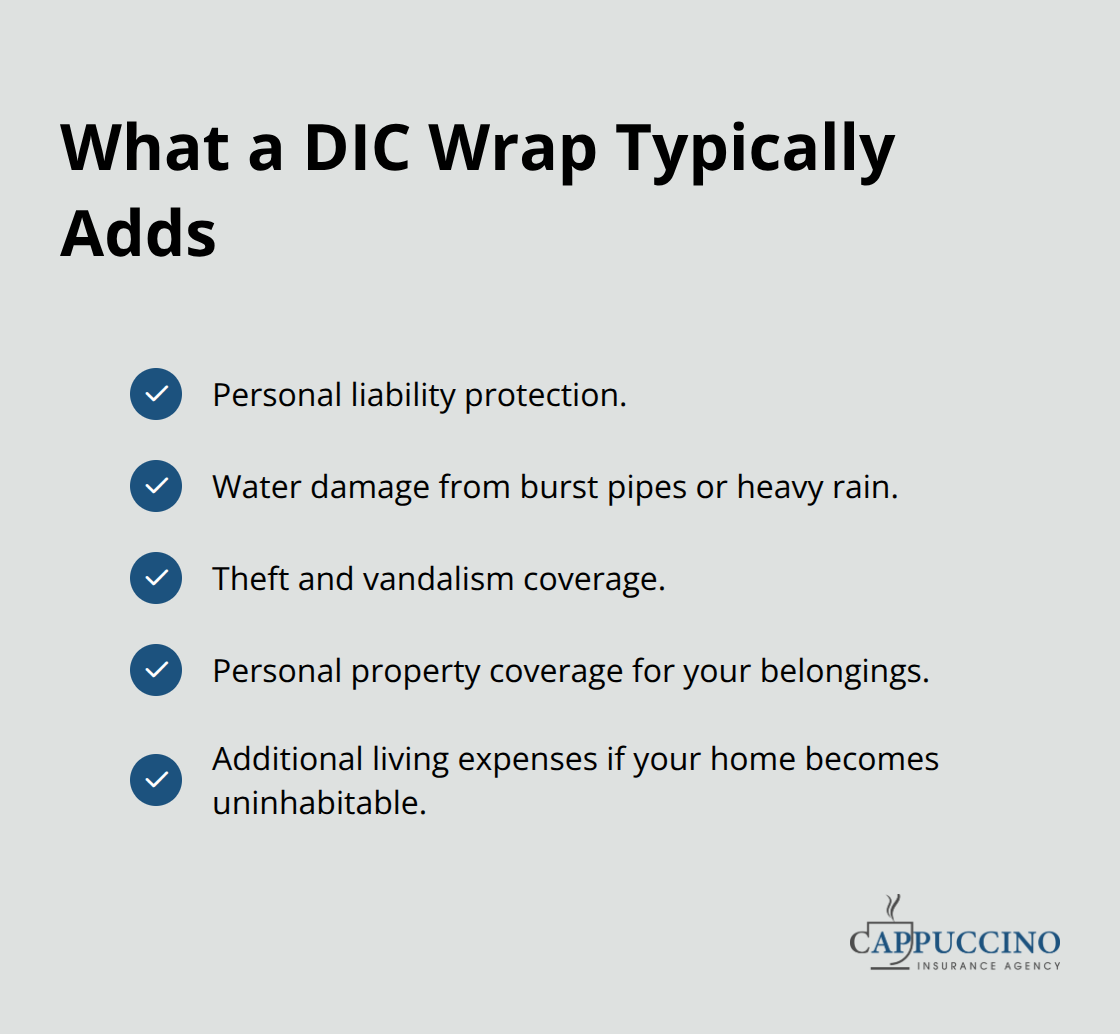
Apartment Building Insurance California: Coverage For Investment Properties

Apartment building owners in California face unique insurance challenges that most residential property owners never encounter. We at Cappuccino Insurance Agency see firsthand how many investors overlook critical coverage gaps that lead to expensive claim denials.

This guide walks through the specific protections your multi-unit property needs, the factors that drive your premiums, and the common mistakes that leave investors exposed.

What Coverage Does Your Apartment Building Actually Need

Property Coverage Protects Your Building Structure and Systems

Property coverage protects the physical structure of your apartment building, but most California investors misunderstand what this actually covers. Standard property coverage includes the walls, roof, and permanent fixtures, but you need to verify that electrical systems, plumbing, HVAC units, and elevators are explicitly covered. Many policies have separate limits for these systems, and if your building has older equipment, insurers often require documentation of recent upgrades or replacements.

According to Trepp’s analysis of commercial mortgage-backed securities data from 2019 to 2024, per-unit property insurance costs for multifamily buildings jumped from approximately $39 per month to $68 per month in real terms-a 75% increase. This surge reflects not just rate hikes but also increased replacement costs for materials and labor. Your coverage limit must match your building’s actual replacement value, not its market value. An underinsured property creates a coinsurance penalty, meaning the insurer reduces your claim payout proportionally if your coverage falls short of the replacement cost.

Chart showing a 75% real-terms increase in per‑unit property insurance costs for multifamily buildings from 2019 to 2024. - Apartment building insurance California

Liability Coverage Stops Tenant and Visitor Claims

Liability protection is non-negotiable for multi-unit properties because tenant injuries, visitor accidents, and third-party claims happen regularly in apartment buildings. General liability coverage pays for medical expenses, legal defense costs, and settlements if someone is injured on your property due to negligence. California law requires landlords to maintain habitable premises under Civil Code sections 1940–1954, and insufficient liability coverage exposes you to personal liability beyond policy limits.

Many owners carry only $300,000 to $500,000 in general liability limits, which is dangerously low for a multi-unit building. A single serious injury claim can exceed these limits within months of legal defense alone. Excess liability or umbrella coverage provides additional protection after your primary policy limits are exhausted. Try minimum umbrella limits of $1 million to $2 million for apartment buildings with five or more units. If your building has employees, workers’ compensation is mandatory in California and covers job-related injuries regardless of fault. Employment practices liability insurance protects you against discrimination, harassment, and wrongful termination claims, which are increasingly common in California’s strict regulatory environment.

Rental Income Coverage Protects Cash Flow During Repairs

Loss of rents coverage is the coverage most investors regret not having after a fire, major water damage, or other event forces tenants to vacate. This coverage reimburses the rental income you would have collected while the building is uninhabitable and undergoing repairs. Without it, you still owe your mortgage, property taxes, and maintenance costs while receiving zero tenant income.

A typical claim for a 20-unit building losing rent for three months due to fire damage results in a claim of $60,000 to $90,000, depending on your market rent. California property owners often assume their lender’s hazard insurance covers rental income loss, but it doesn’t-this protection must be added separately to your policy. The coverage usually includes a waiting period of 30 days before payments begin, so you absorb the initial month of lost rent. Earthquake and flood damage are the most common triggers for extended vacancy in California, so if your building is in a seismic zone or flood-prone area, rental income coverage becomes critical. Try coverage limits equal to at least six months of gross rental income, though three months is the practical minimum for most investors.

The specific coverage limits you select depend on your building’s location, age, and tenant profile-factors that also shape your premium costs and underwriting requirements.

What Drives Your Apartment Building Insurance Premiums in California

Building Age and System Condition Set Your Baseline Cost

Your building’s age is the single biggest factor determining your insurance cost, and California insurers have become ruthless about older properties. Buildings constructed before 1980 typically pay 40% to 60% higher premiums than newer construction because aging electrical systems, plumbing, and roofs create claim risk. Insurers now demand detailed documentation of any upgrades to your electrical panel, plumbing lines, HVAC system, and roof before they’ll even quote your property.

If your building still has original Zinsco, Stab-Lok, or Federal Pacific electrical panels, many carriers will simply decline coverage or require replacement as a condition of the policy. The replacement cost for these panels runs $3,000 to $8,000 depending on the building size, but it’s non-negotiable with most insurers. Roof age matters equally-anything over 20 years old triggers immediate premium increases or coverage restrictions. The real cost hit comes when you combine building age with location risk.

Location Risk and Wildfire Exposure Drive Regional Premiums

Properties in California’s high-wildfire zones pay substantially more because insurers have absorbed massive losses from recent fire seasons. A building in Santa Rosa or Paradise faces premiums 30% to 50% higher than an identical building 50 miles away in lower-risk areas. Wildfire exposure stands as the dominant reason properties face rejection in California’s standard insurance market, making location one of your least controllable cost factors. Crime rates in your neighborhood also affect your liability and theft coverage costs. Properties in high-crime zip codes see higher premiums because claim frequency data shows more tenant injuries, break-ins, and property damage in those areas.

Insurers pull detailed loss history for your specific property, so even one major claim in the past five years will increase your renewal premium by 15% to 25%. Your occupancy rate directly impacts your premium because vacant units represent higher risk for theft, vandalism, and liability exposure. Insurers view a building with 70% occupancy very differently than one at 95% occupancy.

Hub-and-spoke diagram highlighting major factors that influence apartment building insurance premiums in California. - Apartment building insurance California

Tenant Screening and Maintenance History Lower Your Rates

Tenant screening practices matter more than you’d think because insurers know that properties with rigorous screening have fewer claims. If you can document that you conduct background checks, verify income at three times the rent, and check references, you have leverage to negotiate lower rates at renewal. Trepp’s 2019–2024 analysis showed that per-unit insurance costs rose 75% in real terms, but this increase wasn’t uniform across all properties.

Buildings with documented maintenance histories, recent roof replacements, and updated electrical systems saw smaller increases than poorly maintained properties. This means your renewal premium next year depends partly on decisions you make today about building upkeep. Start collecting documentation now: photos of recent roof work, electrical panel replacements, HVAC maintenance records, and security improvements like cameras or controlled entry systems.

Competing Quotes Reveal Significant Premium Variations

When you contact carriers for quotes, your documentation becomes your negotiating advantage. Many property owners assume they’re stuck with whatever premium their current insurer quotes, but competing quotes from multiple carriers typically reveal significant premium variations for identical properties. The carrier that rates your building lowest depends on their specific appetite for your risk profile-some specialize in older buildings while others focus on newer construction.

An independent insurance agency partners with multiple carriers across California, which means you can see how different carriers price the same building risk. This competitive approach exposes the real market value of your coverage instead of accepting a single insurer’s assessment. The differences between carriers often exceed the cost of obtaining multiple quotes, making this step essential before your renewal date arrives.

What’s Actually Missing From Your Current Policy

Most apartment building owners discover coverage gaps only after filing a claim, and by then it’s too late. Standard apartment building policies systematically undercover three critical exposures that leave investors exposed to significant out-of-pocket losses.

Underinsured Property Values Create Coinsurance Penalties

The first gap appears when your property coverage limit falls below your building’s true replacement cost. Many owners base their coverage on the property’s market value or what they paid for it years ago, but replacement cost is fundamentally different. If you own a 40-unit building constructed in 1975 with original systems, the cost to rebuild it today with modern electrical, plumbing, and HVAC far exceeds what you paid for the property.

Construction and labor costs have risen dramatically alongside insurance premiums, meaning your coverage limit probably covers only a portion of actual replacement cost today. When you file a claim, insurers apply a coinsurance penalty that reduces your payout proportionally if coverage falls short. A $500,000 fire claim on a building with $3 million in actual replacement cost but only $2 million in coverage results in the insurer paying just $333,000, leaving you responsible for $167,000 out of pocket.

An updated replacement cost appraisal every two to three years prevents this penalty. Don’t accept your insurer’s suggested limits without verification-request an independent appraisal that accounts for current material and labor costs in your market.

Earthquake and Water Damage Require Separate Coverage

The second major gap involves earthquake and water damage, which California insurers either exclude entirely or limit severely in standard policies. Earthquake coverage requires a separate endorsement or policy through the California Earthquake Authority, yet most apartment owners skip this because they assume their general property coverage handles seismic damage. It doesn’t.

Water damage from burst pipes, roof leaks, or foundation cracks falls under your standard property policy, but flood damage from heavy rain or overflowing rivers does not. If your building sits in a 100-year flood zone or even a moderate-risk flood area, standard coverage leaves you exposed to total loss. Many California properties experienced significant water damage during the 2023 atmospheric river events, and owners discovered their policies covered nothing because the damage qualified as flood, not water damage.

Properties in seismic zones or flood-prone areas need both earthquake and flood coverage added to their policies. Contact your agent to determine your building’s specific exposure and obtain separate quotes for these coverages before your next renewal.

Liability Limits Fall Short for Multi-Unit Operations

The third critical gap involves liability limits that fail to match your actual exposure as a multi-unit property operator. A $300,000 general liability limit might work for a small commercial space, but a 30-unit apartment building with common areas, parking lots, pools, or fitness facilities generates substantially higher injury risk. A single serious injury claim involving a tenant, guest, or delivery person can exhaust basic liability limits within the first year of legal defense costs alone.

California’s wage and hour laws, fair housing regulations, and tenant protection ordinances create additional liability exposure that standard policies address only partially. Employment practices liability coverage protects against discrimination and wrongful termination claims and should accompany any policy for buildings with maintenance or security staff, yet many owners carry none. Try minimum liability limits of $1 million for buildings with five or more units, with umbrella coverage of $2 million or higher for added protection.

Final Thoughts

Your apartment building insurance in California requires three non-negotiable components: property coverage that matches your actual replacement cost, liability protection with umbrella limits of at least $2 million for multi-unit properties, and loss of rents coverage equal to six months of gross rental income. The 75% increase in per-unit insurance costs since 2019 makes this review urgent because your current coverage limits were likely set years ago when replacement costs were substantially lower. Without these three layers, you absorb risk that insurance exists to transfer.

Compact list summarizing the three essential coverages for California apartment buildings.

Start your policy review by collecting your building’s documentation: the year constructed, square footage, recent upgrades to electrical systems, roof age, and your five-year loss history. Request this information from your current agent in writing, then contact multiple carriers to see how they rate your specific property. The variation between carriers often exceeds $5,000 annually for identical buildings, meaning competitive quotes directly impact your bottom line.

Cappuccino Insurance Agency partners with multiple carriers across California, giving you access to specialized underwriters who understand your building’s specific risk profile. A professional review typically takes two hours and costs nothing, yet it frequently reveals $3,000 to $8,000 in annual savings or identifies critical gaps that would cost far more to address after a claim. Contact your agent now to schedule a comprehensive apartment building insurance California policy review before rates increase again.

The information provided in this blog is for general informational purposes only and does not constitute legal, financial, or insurance advice. Coverage options, terms, and availability may vary. Please consult with a licensed professional for advice specific to your situation. Artificial intelligence may have been used to generate text and images in some blog articles and may contain inaccuracies.
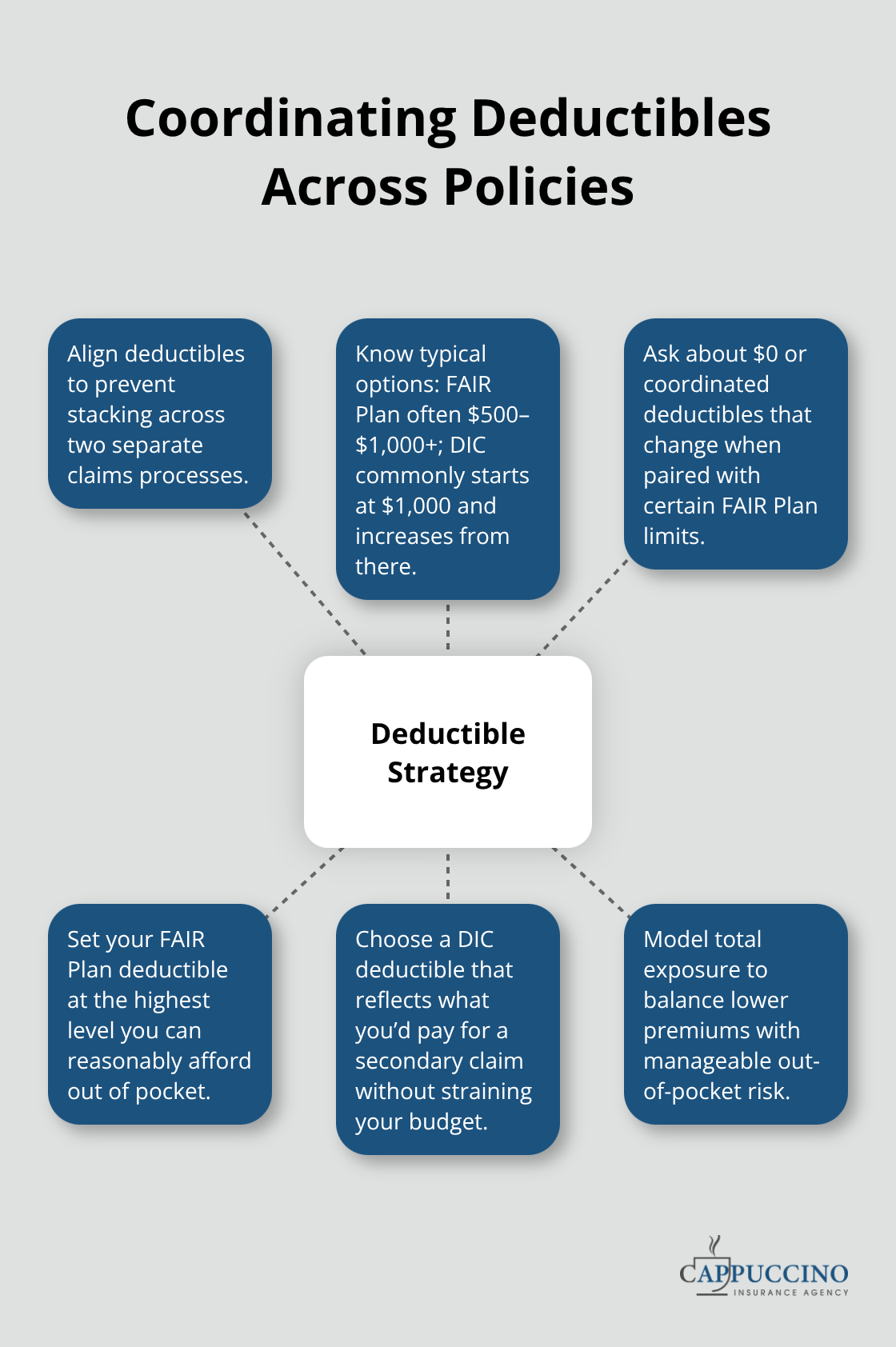
Low Premium California Homeowners: How to Get Great Coverage on a Budget

California homeowners paying too much for coverage don’t have to accept it. We at Cappuccino Insurance Agency know that low premium California homeowners can still get solid protection-it just takes strategy.

This guide walks you through exactly how insurers price policies, which discounts actually work, and how to compare quotes without settling for weak coverage.

What Actually Drives Your California Homeowners Premium

Insurance companies calculate rates using specific data points about your property and location. In California, wildfire risk dominates the pricing conversation, but it’s far from the only factor. According to data from the Terner Center analyzing California Department of Insurance records from 2018 to 2021, fire-related losses accounted for approximately 42 percent of total premiums across all loss types, with dwelling-fire policies hitting 73 percent. This concentration explains why your zip code matters so much. If you live in Elizabeth Lake, you pay around $2,273 per year for standard coverage, while Los Osos homeowners pay roughly $1,265-an 80 percent difference driven primarily by wildfire exposure. The geographic concentration is stark: 52 percent of California zip codes reported zero wildfire losses during that period, yet insurers still price in the risk across broader regions. Your home’s age and construction type hit your premium hard as well. Older homes built before 2009 cost roughly $200 per $100,000 of covered value, while newer construction runs about $150 per $100,000-a 33 percent premium for age alone. Mobile homes face the steepest costs at approximately $483 per $100,000 of covered value, making them dramatically more expensive to insure than single-family homes at $182 per $100,000.

Roof Age and Building Materials Shape Your Rate

Your roof’s age and material rank among the first things insurers examine. A Class-A fire-rated roof qualifies for discounts with most carriers because it demonstrably reduces wildfire risk. If your roof exceeds 20 years old, expect your rates to reflect that vulnerability-insurers view older roofing materials as higher risk regardless of condition.

Diagram showing home hardening upgrades that can reduce California homeowners insurance premiums.

Double-pane windows, enclosed eaves, and updated electrical systems all lower your premium because they reduce both fire and water damage exposure. A home inspection will confirm these details before your policy issues, and insurers won’t hesitate to require upgrades or adjust your coverage if major components don’t meet their standards. If you’re considering renovations, prioritize your roof and windows first, then notify your insurer about completed work so your policy reflects the reduced risk.

How Location and Fire Risk Models Affect Your Quote

Insurers use detailed wildfire risk models that go far beyond simple zip code proximity to past fires. They examine fire hydrant access, defensible space around your property, local vegetation density, and historical fire patterns specific to your neighborhood. Los Angeles premiums run roughly 21 percent above the state average, not just because of wildfire but also because of higher rebuild costs and urban density. Rural properties in high-risk areas sometimes struggle to find coverage at any price, which is why the California FAIR Plan exists as the insurer of last resort. If you’re in a challenging location, an independent agent can assess whether private market options still exist or whether the FAIR Plan becomes necessary. Rate increases at renewal often signal that insurers have updated their risk models for your area-these moments are ideal times to shop around, as new carriers may price your risk differently than your current insurer.

How to Actually Cut Your California Homeowners Premium

Bundle Your Policies for Immediate Savings

Bundling your home and auto policies remains the most straightforward way to lower your overall insurance costs. Most California carriers offer multi-policy discounts ranging from 10 to 25 percent, though the actual savings depend on which insurer you choose and what coverage levels you select. If you currently insure your car and home separately, consolidating with one carrier typically saves between $200 and $400 annually. The math works because insurers reward customer loyalty and reduce their acquisition costs when they write multiple policies.

However, bundling only makes financial sense if the combined rate beats what you’d pay shopping each policy independently. Run quotes for both bundle and standalone options before committing, since a cheaper auto rate elsewhere might outweigh the bundling discount.

Raise Your Deductible Strategically

Your deductible choice directly controls your premium. Raising your deductible from $500 to $1,000 typically reduces your premium by 6 percent, while jumping to $2,000 can cut costs by 16 percent and $3,000 by 20 percent depending on your carrier and location. The catch is straightforward: you pay more out of pocket when you file a claim.

This strategy only works if you have liquid savings to cover the higher deductible without financial stress. California homeowners in stable housing situations with solid emergency funds should seriously consider the $1,500 or $2,500 deductible tier, since most claims involve smaller amounts that fall within your coverage anyway.

Bar chart of premium reductions from higher homeowners insurance deductibles in California. - Low premium California homeowners

Install Security and Fire-Resistant Upgrades

Home security and fire-resistant upgrades deliver measurable premium reductions that most homeowners overlook. Installing a monitored security system typically qualifies for a 5 to 15 percent discount, while upgrading to a Class-A fire-rated roof can lower your premium by 10 to 25 percent depending on your current risk profile. Enclosing eaves, installing double-pane windows, and clearing vegetation within five feet of your home all reduce wildfire exposure and often trigger discounts with carriers.

The challenge is that not every upgrade qualifies for discounts with every insurer, so contact your carrier directly before spending money on renovations and ask which specific improvements they reward. After completing work, notify your insurer so your policy reflects the upgrades and you actually receive the discount. Some homeowners invest in improvements without ever mentioning them to their carrier, which means they pay the same premium for a lower-risk home.

Document your completed work with photos and keep receipts, then request a policy review to capture the savings. For wildfire-prone areas, these physical improvements sometimes matter more to insurers than your claims history, making them worth the upfront investment if you plan to stay in your home long-term.

Compare Quotes Across Multiple Carriers

Shopping around separates homeowners who overpay from those who secure genuine value. Different insurers price California risk differently based on their own loss data and underwriting models, which means your quote from one carrier can vary significantly from another. Visit multiple insurers’ websites and gather online quotes using identical coverage amounts and deductibles so you can compare apples to apples.

An independent agent can accelerate this process by accessing quotes from 20+ carriers simultaneously, saving you hours of individual website visits. These agents also understand which carriers reward specific improvements in your area and can identify discounts you might miss on your own. The effort pays off immediately-homeowners who compare quotes typically find savings of $300 to $600 annually compared to their current premium.

Getting the Right Coverage at the Best Price

Knowing your actual coverage needs separates smart shoppers from those who waste money on unnecessary protection or face gaps when claims arrive. Start by calculating your home’s replacement cost, not its market value-these are fundamentally different numbers. A home worth $800,000 on the market might cost $1.2 million to rebuild if labor and materials spike during a widespread disaster. The 80 percent rule matters here: insure your home for at least 80 percent of its replacement cost to avoid penalties when you file a claim. If you insure for less, insurers reduce claim payouts proportionally, which defeats the entire purpose of carrying coverage.

Three key steps to right-size coverage and avoid gaps for California homeowners. - Low premium California homeowners

Request a professional replacement-cost estimate from your insurer or hire an independent appraiser if you’re uncertain.

Calculate Your Personal Property Coverage Accurately

For personal property coverage, most California homeowners dramatically underestimate what they own-furniture, electronics, clothing, and kitchen equipment add up fast. The Personal Property Coverage Calculator helps you itemize belongings and reach an accurate coverage amount rather than guessing. This exercise often reveals that homeowners need 30 to 50 percent more coverage than they initially thought. Taking time to list what you actually own prevents the frustration of discovering you’re underinsured after a loss occurs.

Address Coverage Gaps Standard Policies Exclude

Standard homeowners policies exclude flood damage and earthquake damage, leaving two major California risks unprotected. Earthquake coverage through the California Earthquake Authority costs roughly $1,770 annually for $500,000 in coverage, while separate flood insurance through the National Flood Insurance Program or private carriers becomes essential if you’re in a flood zone or near drainage patterns that create risk. These gaps matter more in California than most states because wildfire, earthquake, and flood risks concentrate in specific regions. Skipping these coverages to save money on your base premium often backfires when a loss occurs.

Compare Quotes Using Identical Coverage Levels

Different carriers price identical coverage differently because they weight California’s specific risks through their own loss data and underwriting models. Gathering quotes from at least three carriers using the same coverage limits and deductibles reveals genuine price differences-not variations based on different protection levels. An independent agent accessing 20+ carriers simultaneously accelerates this process and identifies discounts you’d miss shopping individually. Agents know which carriers reward fire-resistant upgrades in your specific zip code, whether your home’s age triggers penalties with certain insurers, and which companies actively write policies in wildfire-prone areas when major carriers have stopped accepting new business.

Shop at Renewal to Capture Rate Reductions

The savings materialize quickly: homeowners comparing quotes typically find $300 to $600 in annual savings compared to their current premium. Rate increases at renewal signal that your current insurer has adjusted their risk models for your area, making that renewal notice the perfect moment to shop rather than automatically renewing. This timing advantage means you can switch carriers before your rate spike takes effect, locking in better pricing with a new company. Many homeowners miss this opportunity simply because they assume renewal rates are non-negotiable.

Final Thoughts

Low premium California homeowners secure affordable coverage by taking three concrete actions: understanding what drives your premium, implementing cost-cutting strategies that actually work, and reviewing your policy annually to stay ahead of rate increases. Comparing quotes across multiple carriers typically saves $300 to $600 annually, while bundling home and auto policies cuts another $200 to $400 off your total costs. These savings compound year after year when you stay disciplined about shopping at renewal instead of accepting automatic rate increases.

Your next step is immediate: gather replacement-cost estimates for your home, calculate your actual personal property coverage needs, and confirm you’re not carrying gaps in earthquake or flood protection. Request quotes from at least three carriers using identical coverage levels and deductibles so you can compare genuine price differences rather than variations based on different protection amounts. If you’re in a wildfire-prone area or have struggled to find coverage, an independent agent can access 20+ carriers simultaneously and identify options you’d miss shopping alone.

Annual policy reviews prevent the slow creep of overpayment that catches most homeowners off guard. Rate increases at renewal signal that your insurer has adjusted their risk models for your area-that’s your signal to shop rather than renew automatically. Each year, ask your carrier which new discounts you qualify for based on completed home improvements, and request a policy review to confirm your coverage still matches your home’s current replacement cost.

The information provided in this blog is for general informational purposes only and does not constitute legal, financial, or insurance advice. Coverage options, terms, and availability may vary. Please consult with a licensed professional for advice specific to your situation. Artificial intelligence may have been used to generate text and images in some blog articles and may contain inaccuracies.
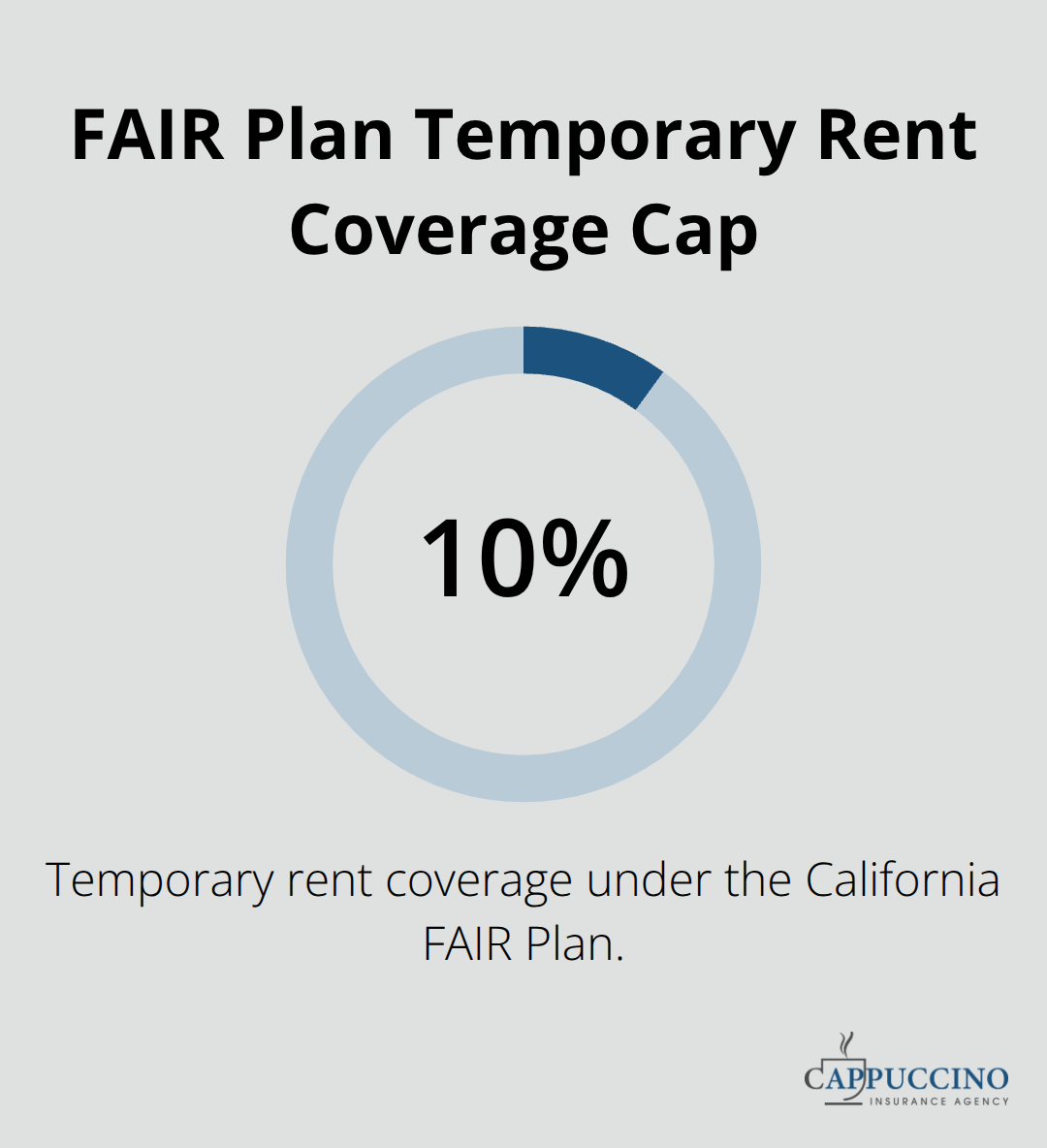
Homeowner Coverage California: Ensuring Adequate Protection And Value

California homeowners often buy insurance without understanding what they actually need. The gap between what you have and what protects you can be expensive.

We at Cappuccino Insurance Agency help homeowners navigate homeowner coverage in California to avoid costly mistakes. This guide shows you what coverage matters, where gaps hide, and how to get real value from your policy.

What California Actually Requires You to Carry

California doesn’t mandate homeowner insurance by state law, but your mortgage lender absolutely will. If you borrowed money to buy your home, your lender requires dwelling coverage (the structure itself) and typically asks for liability protection as well. The California Department of Insurance sets no minimum coverage amounts for owner-occupied homes, which means you and your lender negotiate what’s adequate.

Lender Requirements Fall Short of Reality

Most lenders demand dwelling coverage equal to at least the loan amount, though this often falls short of what you actually need to rebuild. Construction costs in California run significantly higher than the national average, and rebuilding your home after a total loss costs far more than your purchase price. The Terner Center found that California’s median home insurance cost was about $1,200 per year in 2023, but this varies dramatically by property type and location. Mobile homes carry the highest per-dollar cost at roughly $483 per $100,000 of covered value, while single-family homes average around $182 per $100,000. Dwelling-fire policies, common in high-risk areas, jumped from about $150 to $230 per $100,000 between 2018 and 2021, reflecting the state’s wildfire exposure. Your mortgage lender’s minimum requirement protects their investment, not yours.

Standard Policies Leave Critical Gaps

Standard homeowner policies include dwelling coverage, other structures (typically 10% of your dwelling limit), personal property (usually 50% to 70% of dwelling coverage), liability, and additional living expenses. The California Department of Insurance emphasizes that personal property has sub-limits for jewelry, fine arts, and collectibles, meaning scheduled items often need separate endorsements to avoid severe underinsurance. A $500,000 dwelling limit might sound adequate, but if your home requires $750,000 to rebuild due to current labor and material costs, you’re underinsured by a quarter million dollars.

Excluded Perils You Must Address Separately

Earthquake damage isn’t covered by standard policies in California, and neither is flood damage unless you purchase separate coverage through the California Earthquake Authority or the National Flood Insurance Program. NFIP flood coverage maxes out at $250,000 for the structure and $100,000 for contents on single-family homes, which many California properties exceed. From 2018 to 2021, fire-related losses accounted for roughly 42% of all premiums paid in California, according to the California Department of Insurance, yet many homeowners carry inadequate fire coverage limits.

Share of California homeowners premiums tied to fire-related losses from 2018 to 2021. - Homeowner coverage California

The Protection Gap Matters More Than You Think

Your lender’s requirement protects their claim against your property-you need additional coverage that protects your ability to rebuild your life. This distinction shapes everything about how you should structure your policy and what conversations you need to have with your insurance professional. Understanding where lender requirements end and your actual protection begins reveals why so many California homeowners face financial devastation after a covered loss.

Where Your Coverage Actually Fails

Underinsurance Drains Your Finances After a Loss

Underinsurance is the silent killer in California homeowner policies. You think you’re protected until a loss happens and your dwelling limit covers only 70% of what rebuilding actually costs. The California Department of Insurance has released annual counts of new, renewed, and non-renewed homeowners and dwelling-fire policies in each ZIP code in California. This happens because homeowners set coverage limits based on outdated home values or lender minimums rather than current construction costs. A home purchased for $600,000 in 2015 might need $850,000 to rebuild today due to labor shortages, material inflation, and California’s stricter building codes.

If you haven’t adjusted your dwelling coverage in three years or more, you’re almost certainly underinsured. Request a replacement cost estimate from your insurer and compare it against your current dwelling limit. If the gap exceeds 10%, increase your coverage immediately. Construction costs don’t stabilize in California, and waiting for your next renewal could cost you hundreds of thousands of dollars out of pocket.

Water Damage and Flood Exclusions Leave You Exposed

Water damage and flood exclusions create a second major gap that catches homeowners off guard. Standard policies exclude flood damage entirely, which means storm surge, heavy rainfall, and overflow from rivers or streams receive zero coverage unless you purchase separate flood insurance through the National Flood Insurance Program. NFIP coverage maxes out at $250,000 for the structure and $100,000 for contents on single-family homes, leaving many California properties underprotected.

The California Department of Insurance emphasizes that standard policies also exclude certain types of water damage like seepage and gradual leaks, so a pipe that slowly damages your foundation over months won’t trigger coverage. These exclusions apply regardless of how comprehensive your policy appears on paper.

Earthquake Coverage Remains Your Biggest Blind Spot

Earthquake coverage presents a third critical gap. California requires insurers to offer earthquake insurance as a separate endorsement, but most homeowners skip it because they focus only on standard premium costs. Between 2018 and 2021, fire-related claims dominated California’s loss landscape, but a single moderate earthquake could exceed the total fire losses from that entire period. Earthquake coverage through the California Earthquake Authority typically costs 10 to 15% of your standard premium but protects your entire dwelling and personal property against seismic damage.

Diagram showing the three major homeowner coverage gaps in California. - Homeowner coverage California

The decision to skip these coverages isn’t about saving money today-it’s about gambling with your financial security. Your next step involves reviewing flood and earthquake options with your agent before renewal, because waiting until after a disaster means paying out of pocket for losses that separate policies would have covered. These three gaps (underinsurance, water exclusions, and earthquake exposure) shape how you should structure your complete protection strategy moving forward.

How to Cut Insurance Costs Without Cutting Protection

Bundle Your Policies to Unlock Real Savings

Bundle your policies with the same insurer to unlock significant savings on premiums, but most California homeowners never ask about it. Before you renew, request quotes for bundled coverage from at least three insurers and compare the total cost, not just the home insurance line item. Some carriers offer deeper discounts for bundling than others, and the savings compound when you add life insurance or umbrella coverage to the mix. One critical mistake homeowners make is accepting their current insurer’s renewal quote without shopping around.

Shop Around Before Your Renewal Date

California’s market has shifted dramatically since 2021, with new carriers entering certain ZIP codes while others have pulled back. Your renewal quote might be 15 to 30 percent higher than what a competing carrier charges for identical coverage, especially if your insurer has tightened underwriting in your area due to wildfire exposure or claims history. An independent agent can access multiple carriers and find combinations that work for your specific situation rather than forcing you into one company’s mediocre rates.

Checklist of ways to reduce premiums without reducing protection.

Increase Dwelling Coverage to Match Current Costs

Your dwelling coverage should increase annually to reflect California’s rising construction costs, which have outpaced inflation significantly. If you set your coverage limit three years ago based on a contractor estimate, that estimate is now obsolete. Request an updated replacement cost analysis from your insurer before each renewal and adjust your dwelling limit upward if the gap exceeds 10 percent of your current coverage. Construction costs don’t stabilize in California, and waiting for your next renewal could cost you hundreds of thousands of dollars out of pocket.

Address High-Risk Properties With Specialty Coverage

High-risk properties in wildfire zones or flood-prone areas need specialty endorsements that standard policies simply don’t include. The California FAIR Plan serves as a backstop for homeowners who can’t obtain private coverage, but FAIR Plan premiums run 40 to 60 percent higher than standard policies, making it a last resort rather than a permanent solution. If you’re in a high-risk area, ask your agent about Difference-in-Conditions policies that wrap around FAIR Plan coverage to provide additional protection at lower cost than FAIR Plan alone.

Schedule Annual Policy Reviews to Stay Current

Annual policy reviews keep your coverage aligned with your actual needs and home value. Schedule a review every 12 months with your agent to discuss any home improvements, additions, or changes in your personal property that might affect your limits. A kitchen renovation that increased your home’s value by $75,000 should trigger a corresponding increase in your dwelling and personal property limits, yet most homeowners never mention these improvements to their insurer.

Final Thoughts

Adequate homeowner coverage in California requires three concrete actions: stop relying on your lender’s minimum requirement, address the three major gaps that standard policies leave exposed, and review your coverage annually against current construction costs. Your lender protects their investment in your property, not your ability to rebuild your life after a total loss. Underinsurance, water damage exclusions, and missing earthquake coverage represent the real threats to your financial security, and ignoring them costs far more than the premiums you’d pay for complete protection.

Start by requesting a replacement cost estimate from your current insurer and comparing it against your dwelling limit. If the gap exceeds 10 percent, increase your coverage before your next renewal. Next, verify that you have separate flood insurance through the National Flood Insurance Program and earthquake coverage through the California Earthquake Authority or a private carrier (these aren’t optional add-ons in California, they’re essential components of real protection).

Shopping around matters more now than ever because California’s insurance market has shifted dramatically, with new carriers entering certain areas while others have pulled back from high-risk zones. Your current renewal quote might be significantly higher than what competing insurers charge for identical coverage. Contact Cappuccino Insurance Agency to schedule your homeowner coverage California evaluation and ensure your policy actually protects what matters most.

The information provided in this blog is for general informational purposes only and does not constitute legal, financial, or insurance advice. Coverage options, terms, and availability may vary. Please consult with a licensed professional for advice specific to your situation. Artificial intelligence may have been used to generate text and images in some blog articles and may contain inaccuracies.

Independent Agent Westlake Village: Local Service For Your Insurance Needs

Westlake Village residents face unique insurance challenges, from wildfire exposure to coastal property risks. Big insurance companies treat you like a policy number, but an independent agent in Westlake Village takes the time to understand your specific situation.

At Cappuccino Insurance Agency, we believe local expertise and personalized service beat one-size-fits-all coverage every time. This guide shows you why working with an independent agent makes a real difference for your family and business.

Why Independent Agents Matter in Westlake Village

Big Insurance Companies Prioritize Volume Over Your Situation

The insurance industry has fundamentally changed over the past decade. Major carriers have consolidated their operations, reduced local staff, and shifted toward digital-only interactions that prioritize speed over understanding. When you call a big insurance company, you reach a call center representative who pulls up your file and reads from a script. They have no stake in whether your coverage actually fits your life. They meet their quota and move to the next caller. This approach leaves gaps. Roughly 38% of homeowners are underinsured, meaning they would face significant out-of-pocket costs after a major loss. That statistic did not happen by accident-it happened because volume-driven companies process policies without truly evaluating what each client needs.

Chart showing 38% of U.S. homeowners are underinsured and vulnerable to out-of-pocket costs after major losses - Independent agent Westlake Village

Local Knowledge Beats Generic Algorithms

Westlake Village sits in a region where insurance decisions require understanding specific exposures that algorithms miss. Wildfire risk has reshaped property insurance across California, with insurers either pulling out entirely or dramatically raising rates. An independent agent who knows the area recognizes which neighborhoods face higher risk, which carriers still write in those zones, and which specialty solutions like the California FAIR Plan or difference-in-conditions wraps actually solve the problem. A national company’s underwriting system may simply decline your application. An independent agent picks up the phone and finds a solution.

We also understand local market conditions that affect your rates and coverage options year to year. California’s regulatory environment, the state’s building code updates, and regional loss history all influence what you pay and what remains available. An agent embedded in Westlake Village tracks these shifts and adjusts your coverage accordingly. Big insurers apply statewide or national formulas that ignore local nuance.

Hub-and-spoke diagram of local factors that influence insurance coverage and pricing in Westlake Village, CA - Independent agent Westlake Village

That’s why annual policy reviews matter-your coverage should not remain static if your home’s risk profile or California’s insurance landscape has changed.

Independent Agents Provide Access to Multiple Carriers

An independent agent works with 20+ carriers instead of pushing one company’s products. That freedom matters enormously when wildfire risk, coastal exposure, or specialty properties enter the picture. A captive agent selling for a single insurer simply cannot offer you alternatives when standard policies do not fit your situation. You gain access to multiple options and the ability to compare coverage and cost across carriers that actually compete for your business.

Relationships Create Real Accountability

When you work with an independent agent, you have a person who remembers your situation, knows your family’s needs, and takes responsibility for getting things right. That agent’s reputation depends on your satisfaction. If your claim gets denied, your agent advocates for you because they are invested in your outcome. With a large insurer, you are one of thousands handled by a claims adjuster who works for that company, not for you. The relationship dynamic shifts entirely.

Insurance is not transactional-it is protective. Clients work with independent agents when they buy a home, start a business, or retire, and agents adjust coverage as their lives change. That continuity prevents the gaps that create financial disasters. You are not a policy number. You are a neighbor who deserves coverage that actually protects what matters. This personalized approach is exactly what separates independent agents from the one-size-fits-all model, and it’s why the next step-understanding how to access the right coverage without overpaying-becomes so much simpler when you have an agent who knows your situation inside and out.

How an Independent Agent Serves Westlake Village

Multiple Carriers Mean Real Solutions for Hard-to-Place Properties

An independent agent in Westlake Village operates differently than a remote representative in a call center three states away. We at Cappuccino Insurance Agency work with 20+ carriers, which means when you face a coverage problem, we have actual options to solve it. A client with a home in a high-wildfire zone might receive a decline from one carrier, but we know which insurers still write in that area and which specialty solutions like the California FAIR Plan or difference-in-conditions wraps fill the gap. That flexibility exists only because we represent multiple companies. A captive agent selling for a single insurer cannot offer this range of solutions, no matter how hard they try. Your coverage options expand dramatically when your agent has relationships with carriers that compete for your business.

Local Market Conditions Shape Your Coverage and Rates

Local market conditions shift constantly in California, and an agent who knows Westlake Village tracks these changes year to year. Building code updates, regional loss history, and shifts in carrier appetite all influence your rates and available coverage. We review your policy annually because your home’s risk profile or the insurance landscape may have changed since last year. A national company applies statewide formulas that ignore whether your neighborhood experienced new development, whether your property’s wildfire risk rating shifted, or whether a carrier pulled out of your zone entirely. That annual conversation catches gaps before they become expensive problems.

Claims Advocacy Requires a Local Relationship

When you call with a claim, you reach someone who knows your situation, not a claims adjuster processing 200 files who works for the insurance company, not for you. That relationship accountability matters when your coverage gets questioned or a claim gets denied. Your agent advocates because their reputation depends on your satisfaction. This personal stake in your outcome separates independent agents from national carriers that treat claims as transactions to process quickly and cheaply. The difference becomes clear the moment you need help most-when a loss occurs and you need someone in your corner who understands your policy and your property.

Avoiding Coverage Gaps While Keeping Costs Down

Bundle Discounts Work Better With Real Competition

Bundling home, auto, and life insurance across multiple policies saves money, but only if you bundle with an agent who actually compares rates across carriers instead of locking you into one company’s bundle. Independent agents work with multiple carriers, which means your bundle discount comes from genuine competition between insurers fighting for your business, not from a single company offering a modest discount to keep all your policies in-house. A homeowner in Westlake Village who bundles auto and home with a captive agent might save 10-15%, but that same homeowner bundling across multiple carriers through an independent agent often saves 20-25% because carriers compete aggressively when they know you have real alternatives. The difference matters: on a $2,000 annual home and auto premium, that extra savings reaches $200-300 per year.

Compact list highlighting bundle savings ranges, annual dollar impact, and steps to keep insurance costs down

Annual policy reviews catch rate increases before they stick. Many clients discover their bundled rate drifts upward after two or three years as carriers adjust their pricing, but they never notice because they assume the bundle is locked in. It is not. An independent agent reviews your coverage annually, shops your bundle across the carrier network, and moves your policies if another insurer offers better rates for the same protection. This competitive pressure keeps your costs honest year after year.

Specialty Solutions for Wildfire-Risk Properties

Specialty coverage for wildfire-risk properties requires solutions that standard policies simply do not offer, and this is where an independent agent’s carrier relationships become irreplaceable. A home in a high-risk wildfire zone faces denial or non-renewal from standard carriers, leaving owners with the California FAIR Plan as their only option-a state insurer of last resort that costs 30-50% more than private market rates and offers minimal coverage. Difference-in-conditions wraps layer additional protection over a FAIR Plan policy, filling gaps in coverage that the state program leaves exposed, but not every agent knows these products exist or how to structure them properly.

An independent agent identifies which carrier partners still write in your specific zone, evaluates whether a FAIR Plan wrap makes financial sense, and assembles the most cost-effective combination of coverage and price for your situation. A client with a $1.2 million home in a Wildland-Urban Interface zone might avoid the FAIR Plan entirely through the right private market solution, or if FAIR Plan coverage becomes necessary, a wrap fills critical gaps for a fraction of what standard homeowners coverage would cost elsewhere.

Free Coverage Assessments Reveal Hidden Gaps

Most people never review their policies unless something changes, which means they carry gaps they do not know exist. A comprehensive assessment of your home’s replacement cost, your auto’s actual value, your liability exposure, and your life insurance adequacy identifies exactly where your current coverage falls short. This assessment costs nothing and takes about 30 minutes, but it typically reveals one or two significant gaps that would cost tens of thousands of dollars to fix after a loss.

One homeowner discovered their policy capped water damage at $10,000 while their basement renovation alone was worth $80,000-a gap that would have created a financial disaster after a flood. Another client’s auto policy had outdated liability limits that exposed them to significant risk given their net worth. These gaps do not announce themselves; they surface only through deliberate review by someone who knows what to look for.

Final Thoughts

Working with an independent agent in Westlake Village means choosing personalized protection over generic policies. You gain an advocate who knows your neighborhood, understands California’s shifting insurance landscape, and takes responsibility for your coverage year after year. That relationship accountability matters most when you need it-during a claim, when your home’s risk profile changes, or when you buy a property that standard carriers won’t touch.

The financial case is equally clear. Bundle discounts through genuine carrier competition save you 20-25% compared to single-company bundles, and annual policy reviews catch rate increases and coverage gaps before they become expensive problems. Free assessments reveal hidden exposures that could cost tens of thousands after a loss, and these advantages compound over time, delivering both better protection and lower costs than the one-size-fits-all approach.

Westlake Village residents face real insurance challenges-wildfire exposure, coastal property risks, and a regulatory environment that shifts constantly. You deserve an independent agent in Westlake Village who understands these local conditions and has the carrier relationships to solve problems that national companies simply decline. Contact Cappuccino Insurance Agency today for a personalized assessment and quote.

The information provided in this blog is for general informational purposes only and does not constitute legal, financial, or insurance advice. Coverage options, terms, and availability may vary. Please consult with a licensed professional for advice specific to your situation. Artificial intelligence may have been used to generate text and images in some blog articles and may contain inaccuracies.