

Homeowner Coverage Options California: Tailor Your Protection
California homeowners face unique risks that demand tailored protection. Wildfires, earthquakes, and flooding aren’t theoretical concerns-they’re real threats that standard policies often don’t cover adequately.
We at Cappuccino Insurance Agency help homeowners navigate homeowner coverage options in California by breaking down what’s available, what you actually need, and how to avoid paying for protection gaps. This guide walks you through the coverage types, specialized options, and practical steps to build a policy that matches your home’s specific risks.
What Coverage Types Actually Protect California Homeowners
The HO-3 Foundation and Dwelling Coverage
Standard homeowners policies in California rely on the HO-3 special form, which covers your dwelling, other structures, personal property, loss of use, liability, and medical payments to others. Most California homeowners depend on this structure because it protects a broad range of perils for your home itself while personal property follows a named-perils approach. Your dwelling coverage must reflect actual rebuild cost, not your home’s purchase price or market value, since land isn’t insured and reconstruction depends on current labor and materials. Request a formal replacement cost estimate from your insurer and document these discussions in writing to protect yourself if a dispute arises later.
Personal Property and Liability Limits
Contents coverage typically runs around 50% of your dwelling limit, but this frequently underinsures valuable items like jewelry, art, and collectibles that carry sublimits on standard policies. Schedule high-value items with riders to reflect their actual worth and guarantee full reimbursement after a loss.
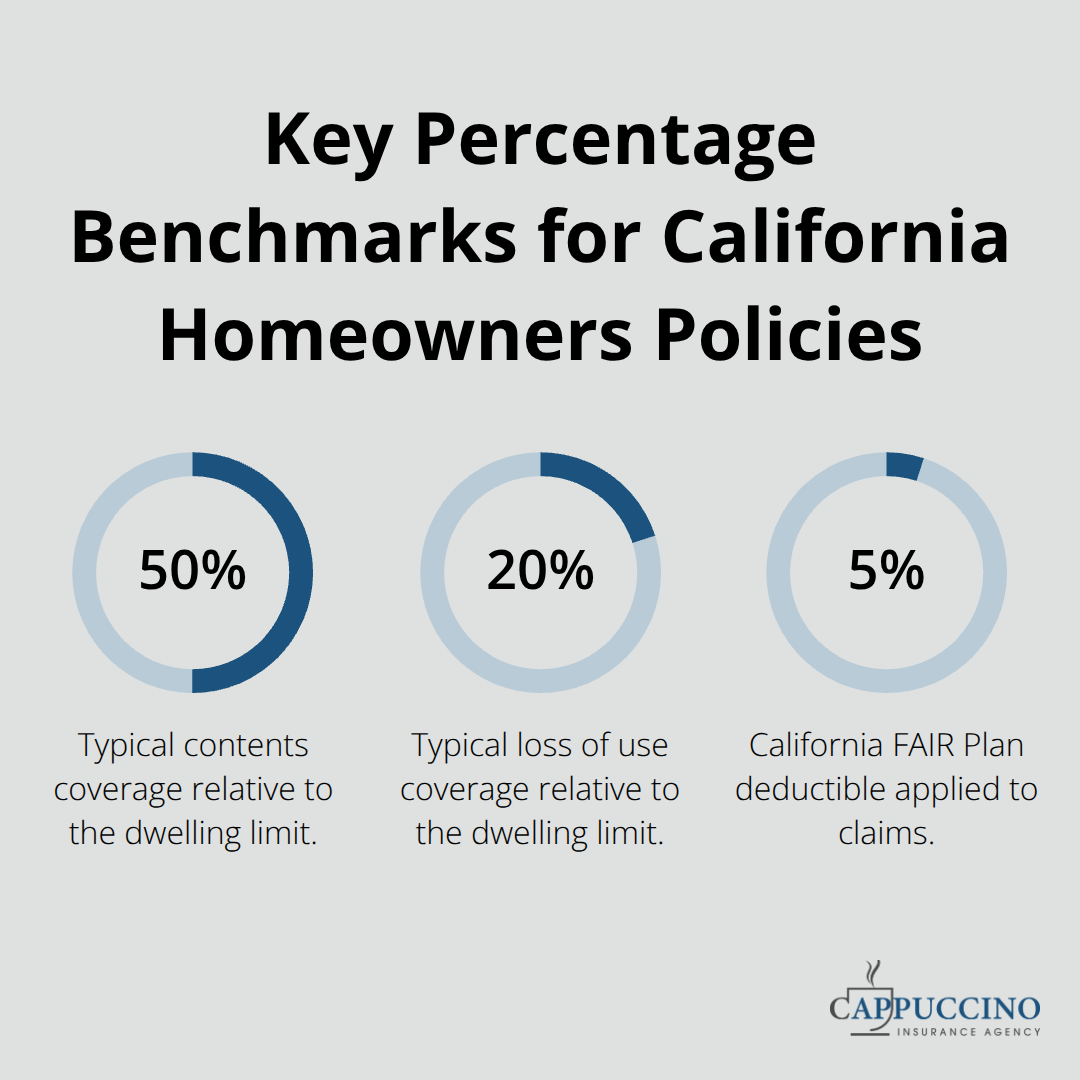
Personal liability coverage commonly starts at $300,000 to $500,000, which many California homeowners find insufficient given the state’s litigation environment and property values. Loss of use coverage, which typically equals about 20% of your dwelling limit, pays for temporary housing, meals, and related expenses if a covered loss makes your home unlivable.
California-Specific Threats Reshape Coverage Needs
Wildfire risk affects about 1.3 million homes across the state according to Cal Fire data, and this exposure often triggers higher premiums and specialized requirements from insurers. Earthquake coverage remains entirely separate from standard homeowners policies in California-available only through the California Earthquake Authority or private insurers for an additional premium-and many homeowners skip this protection despite living in a seismically active region. Flood damage isn’t covered by any standard policy; you must obtain separate coverage through the National Flood Insurance Program or private flood insurers if you’re in or near a flood-prone area.
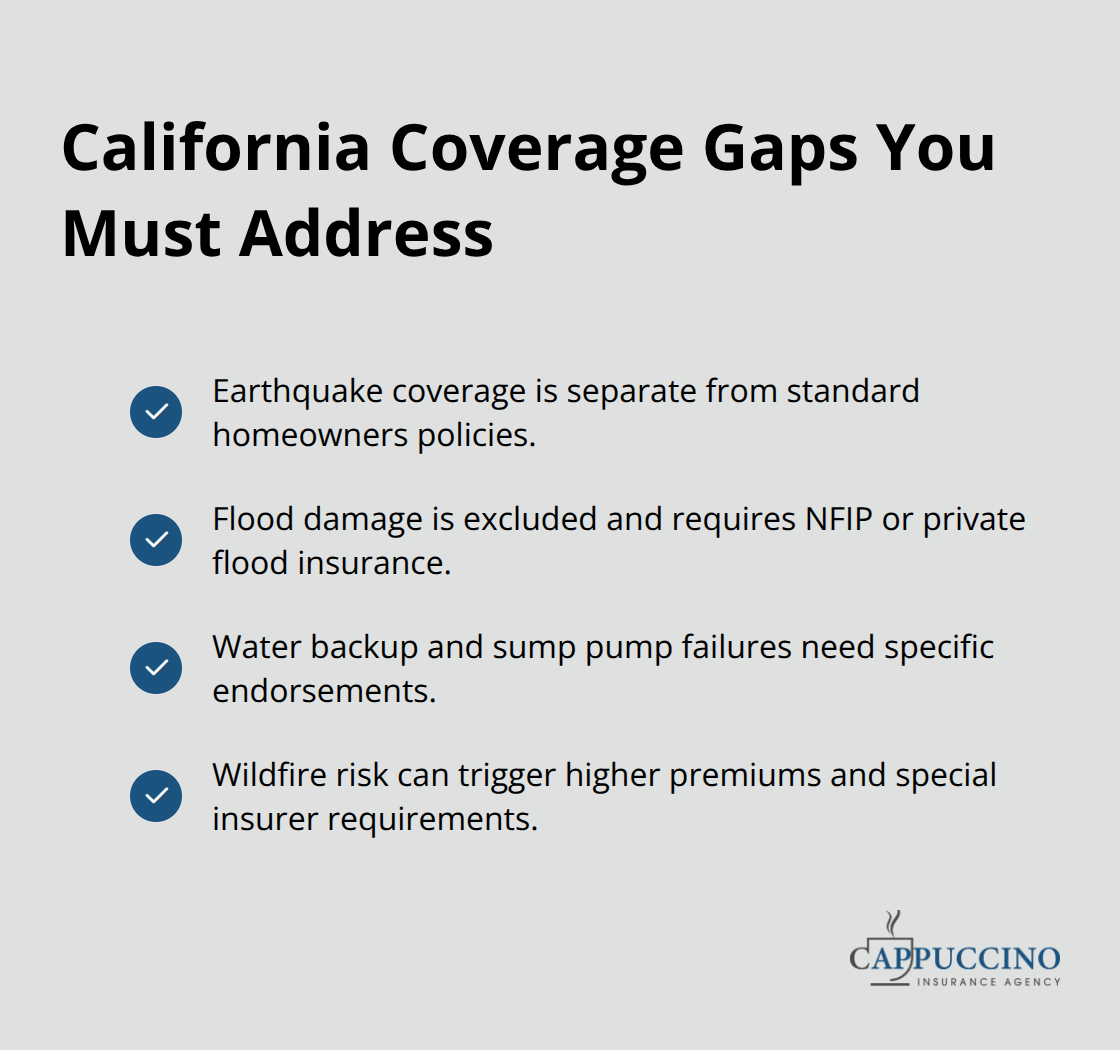
Water backup and sump pump failures also fall outside standard coverage and require specific endorsements.
Navigating Coverage Gaps and Availability
The California Department of Insurance offers a Homeowner Coverage Comparison Tool that lets you evaluate what different carriers include and exclude, which matters because availability of add-ons varies significantly by insurer. Wildfire-prone properties may find traditional market coverage unavailable, forcing a choice between the California FAIR Plan as a last resort or Difference in Conditions policies that wrap around FAIR Plan base coverage to fill critical gaps like theft and liability protection that the FAIR Plan explicitly excludes. We at Cappuccino Insurance Agency specialize in these hard-to-place situations, partnering with 20+ carriers to help wildfire-risk homeowners secure tailored solutions including FAIR Plan and DIC wraps. Understanding which perils your current policy covers and which ones require separate protection sets the foundation for building adequate protection.
Beyond Standard Coverage: Wildfire, Earthquake, and Flood Protection
Wildfire Protection in High-Risk California Zones
Wildfire protection in California demands more than standard fire coverage. About 1.3 million California homes face extreme wildfire risk according to Cal Fire data, yet many homeowners discover their policies exclude or severely limit coverage for wildfire-specific perils like ember intrusion and smoke damage. Standard HO-3 policies cover fire itself, but the real gaps emerge with extended wildfire-related losses. If your property sits in a high-risk zone and insurers reject your application, the California FAIR Plan provides base coverage for fire, lightning, internal explosion, and smoke. However, the FAIR Plan explicitly excludes theft and liability protection, forcing you to purchase a Difference in Conditions policy separately to fill those critical gaps. This layered approach costs more upfront but prevents catastrophic underinsurance.
Earthquake Coverage Through Multiple Channels
Earthquake coverage operates on completely different terms in California. The California Earthquake Authority offers earthquake insurance as a separate policy, not an endorsement to your homeowners coverage, with dwelling coverage typically starting at lower limits than fire protection. Private insurers also write earthquake coverage, sometimes at competitive rates compared to CEA, so you should compare quotes across both sources before committing. Shopping between CEA and private carriers can reveal significant price differences for the same protection level.
Flood Insurance and Water Damage Solutions
Flood damage and earthquake damage are excluded from standard homeowners policies, leaving two major California risks unprotected. Flood insurance through the National Flood Insurance Program covers up to $250,000 for dwelling and $100,000 for contents on single-family homes, with a 30-day waiting period before coverage begins on new policies. Private flood insurers now compete with NFIP in many California flood zones, sometimes offering better rates or higher limits.
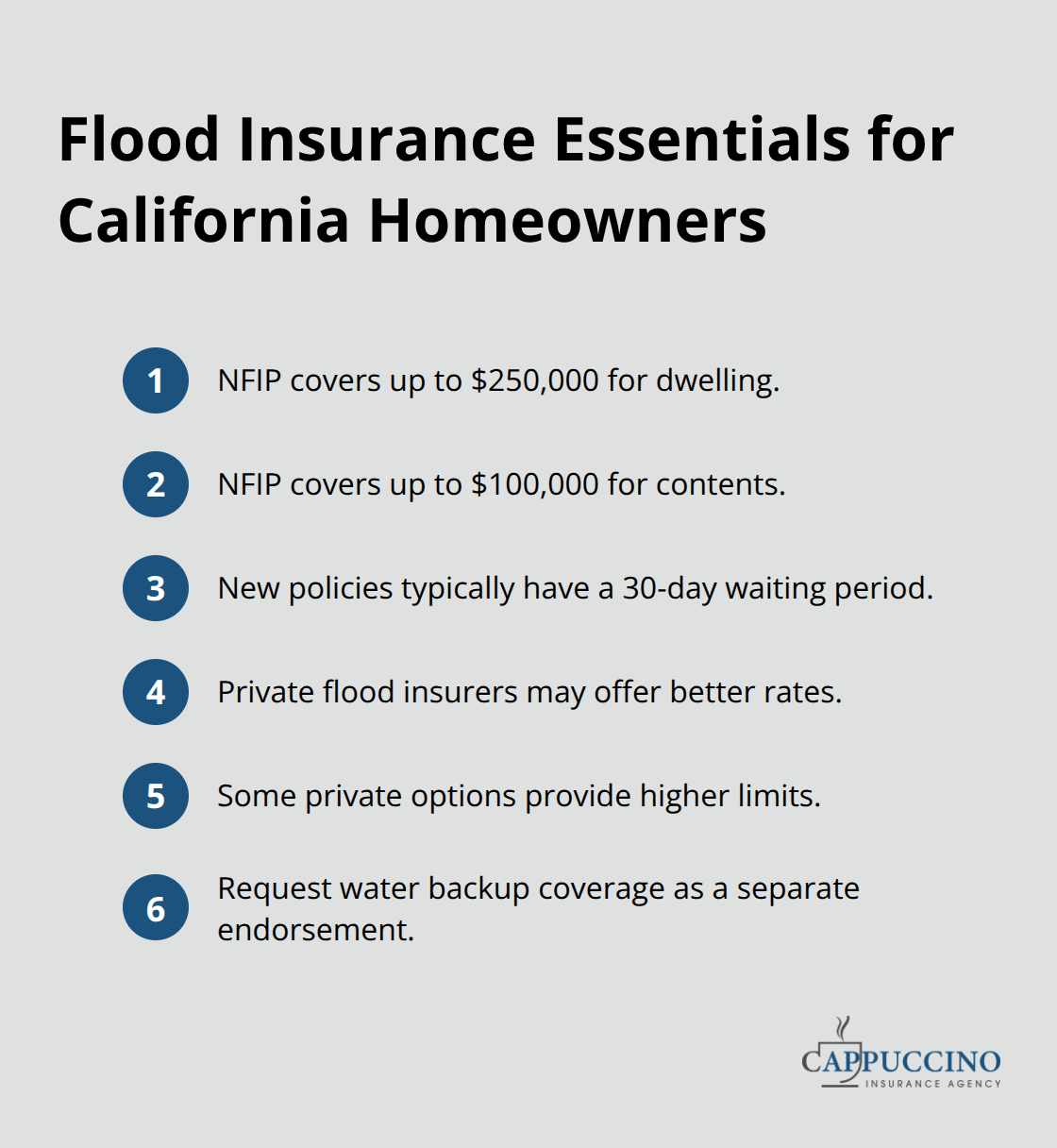
Water backup coverage, which protects against sewer backups and sump pump failures, requires a specific endorsement and isn’t included in any standard policy. These specialized coverages won’t appear on your standard homeowners quote, so you must request them explicitly and verify your insurer offers them before binding coverage.
Structuring Your Specialized Coverage Strategy
The California Department of Insurance offers a Homeowner Coverage Comparison Tool that lets you evaluate what different carriers include and exclude, which matters because availability of add-ons varies significantly by insurer. Wildfire-prone properties may find traditional market coverage unavailable, forcing a choice between the California FAIR Plan as a last resort or Difference in Conditions policies that wrap around FAIR Plan base coverage to fill critical gaps like theft and liability protection that the FAIR Plan explicitly excludes. Understanding which perils your current policy covers and which ones require separate protection sets the foundation for building adequate protection-and determines whether you need to layer multiple policies or consolidate coverage through a single carrier that offers comprehensive options.
Sizing Your Coverage to Match California Risks
Calculate Your True Dwelling Limit
Start with your home’s actual rebuild cost, not what you paid for it or what it would sell for today. The California Department of Insurance emphasizes that dwelling limits must reflect current construction expenses since labor and materials costs in California continue climbing. Request a formal replacement cost estimate from your insurer in writing, then add 10-15% as a buffer for code upgrades and inflation since California’s building codes tighten after major losses. If your dwelling limit sits below $500,000 and your home is in an urban or coastal area, you’re almost certainly underinsured given current rebuild economics.
Protect High-Value Possessions With Scheduled Coverage
Contents coverage at 50% of your dwelling limit works for average homes, but California homeowners with high-value possessions should schedule jewelry, art, and collectibles separately rather than relying on sublimits that cap individual items at $1,500 to $2,500. Scheduling these items guarantees full reimbursement at their actual value instead of accepting the standard policy’s restricted protection. This targeted approach costs less than raising your overall contents limit and provides certainty that your most valuable belongings receive adequate coverage.
Set Liability and Deductible Levels That Match Your Situation
Personal liability starting at $300,000 leaves significant exposure in California’s litigation-heavy environment, so bump this to at least $500,000 unless your net worth sits below $250,000. An umbrella policy adding $1 million in liability costs roughly $150-300 annually and should be your next move if you own substantial assets or entertain regularly. Your deductible choice directly impacts your monthly premium, but many California homeowners choose wrong here. Raising your deductible from $500 to $1,000 typically saves 15-25% on annual premiums, which sounds appealing until a wildfire smoke event or minor water damage hits and you’re stuck paying $1,000 out of pocket. Match your deductible to your emergency fund capacity rather than chasing the lowest premium. For wildfire-prone properties, separate deductibles apply to fire losses on some policies, and the California FAIR Plan charges a 5% deductible (minimum $250) on all claims, which compounds if you layer a Difference in Conditions policy on top.
Compare Bundled Quotes Across Multiple Carriers
Bundling your auto, home, and life insurance through a single carrier typically unlocks 10-20% discounts that dwarf any premium savings from raising deductibles, so compare bundled quotes across carriers before optimizing individual policy details. Progressive’s California quotes average $153.49 monthly, but your actual cost depends entirely on location, home type, and coverage selections, making comparison shopping across multiple insurers non-negotiable. The California Department of Insurance’s Homeowner Premium Comparison Tool lets you evaluate quotes side-by-side, and taking 30 minutes to compare three carriers could save $400-600 annually on coverage you’ll hold for decades.
Final Thoughts
Choosing the right homeowner coverage options in California requires matching your protection to actual risks, not guessing based on what neighbors carry or what sounds cheapest. Your dwelling limit must reflect rebuild costs in today’s market, your liability coverage should align with your assets and lifestyle, and specialized protections for wildfire, earthquake, and flood damage aren’t optional extras but essential layers that standard policies simply don’t provide. The California Department of Insurance’s comparison tools help you evaluate what different carriers offer, but the real work happens when you honestly assess your home’s exposure to the state’s unique threats and decide which gaps matter most to your financial security.
Annual policy reviews catch the gaps that emerge over time. Construction costs climb faster than inflation in California, meaning a dwelling limit that felt adequate three years ago probably leaves you underinsured today. Major renovations, new outbuildings, or significant purchases of jewelry and art shift your coverage needs immediately, and life changes like retirement or starting a home-based business alter your liability exposure and loss of use requirements.
We at Cappuccino Insurance Agency partner with 20+ carriers to deliver homeowner coverage options across California, including specialty solutions for wildfire-risk properties that traditional insurers reject. Our team provides free coverage assessments to identify gaps in your current protection and offers 24/7 support when questions arise. Contact us today to secure coverage that actually protects your home and your financial future.
The information provided in this blog is for general informational purposes only and does not constitute legal, financial, or insurance advice. Coverage options, terms, and availability may vary. Please consult with a licensed professional for advice specific to your situation. Artificial intelligence may have been used to generate text and images in some blog articles and may contain inaccuracies.


