

Safest car insurance options: Strategies for Smart California Drivers
California drivers face a constant challenge: balancing affordable premiums with genuine protection on the road. The safest car insurance options combine smart coverage choices, vehicle safety features, and competitive rate shopping.
We at Cappuccino Insurance Agency help drivers cut through the confusion. This guide walks you through the specific strategies that lower your costs while keeping you protected.
Coverage Types That Actually Protect California Drivers
California’s minimum liability insurance requirement is 15/30/5, meaning $15,000 for injury per person, $30,000 per accident, and $60,000 for injury to more than one person, plus $15,000 for property damage. This baseline is dangerously low. The average car accident in California costs around $50,000 when accounting for vehicle repairs, medical expenses, and lost wages. If you cause an accident and lack sufficient liability coverage, you’ll pay the difference from your own pocket.
We recommend carrying at least 100/300/100 coverage, which costs only marginally more but protects your assets significantly. Most California drivers underestimate their liability exposure because they focus on their vehicle’s value rather than their total financial vulnerability. A single serious injury claim can exceed $500,000, and a jury judgment can reach into the millions. Your liability limits should reflect what you own and earn, not just your car’s worth.
When Collision and Comprehensive Actually Matter
Collision coverage pays for damage your vehicle sustains in accidents, while comprehensive covers theft, weather, vandalism, and animal strikes. If you financed or leased your vehicle, your lender requires both. If you own the car outright, the math shifts. A 2015 Honda Civic has a market value around $12,000, so carrying $1,000 deductibles on collision and comprehensive means you’ll absorb smaller claims yourself.
California experiences significant weather-related losses, particularly during wildfire seasons and winter storms. Weather conditions contribute to accidents across the United States. Comprehensive coverage in California is inexpensive because fewer people file claims compared to collision. If your vehicle is worth less than $5,000, dropping collision makes financial sense, but keeping comprehensive protects against the unpredictable events that frequently affect California residents.
Uninsured Drivers Create Real Risk
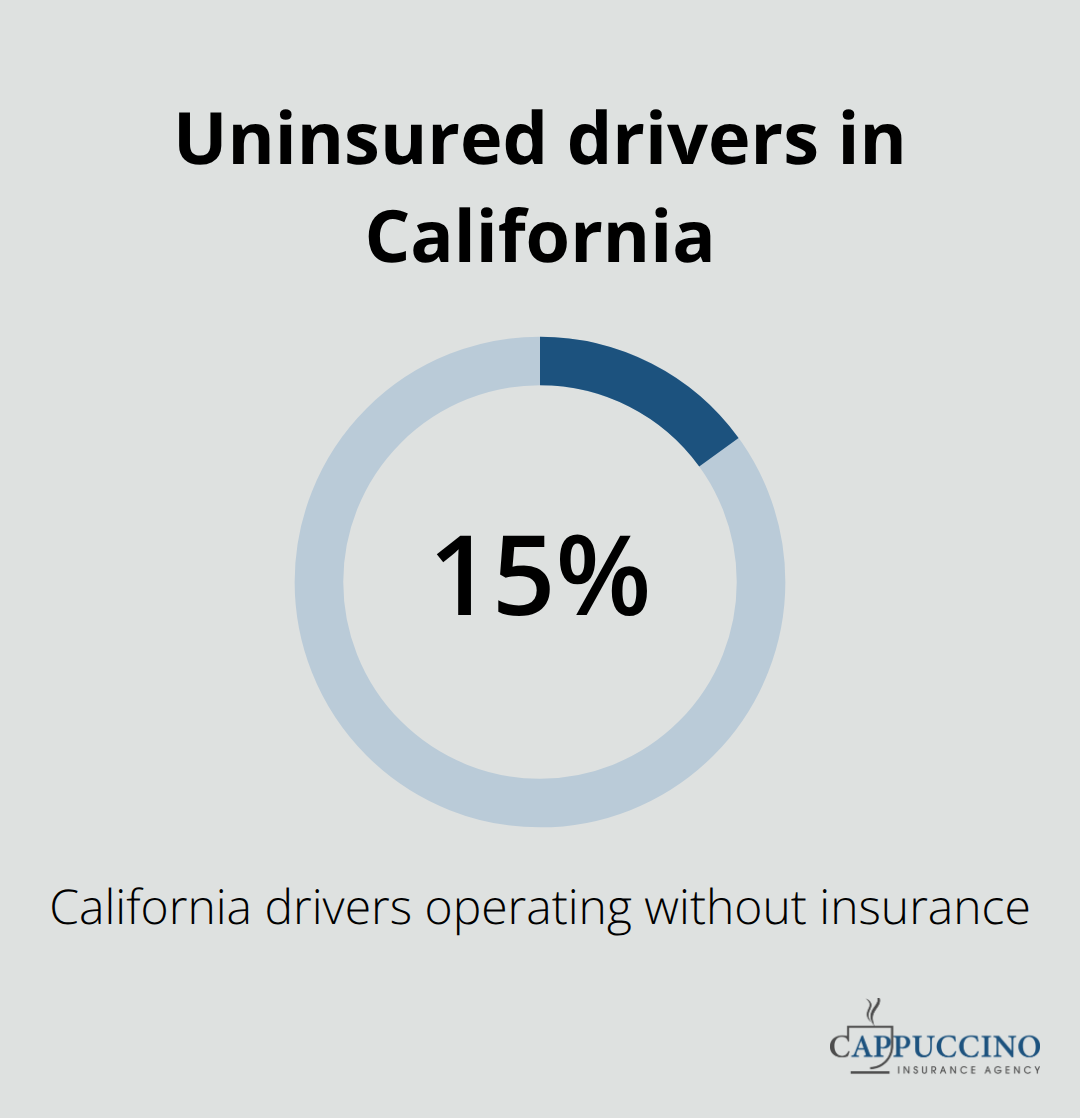
California has approximately 15 percent of drivers operating without insurance, according to the California Department of Insurance. This means roughly 1 in 7 vehicles on the road lacks coverage. If an uninsured driver causes an accident, your liability coverage protects them, but uninsured motorist protection covers your medical expenses and vehicle damage.
California requires a minimum of 15/30 in uninsured motorist bodily injury coverage, but this matches the state’s inadequate liability minimum. You should carry the same uninsured motorist limits as your liability coverage. Underinsured motorist coverage handles situations where the at-fault driver has insurance but insufficient limits. A driver with 15/30 liability who causes $100,000 in damages leaves you responsible for the gap. Many California drivers ignore this coverage entirely, treating it as optional when it functions as your safety net against the reality of the road.
How Your Coverage Choices Stack Together
The coverage types you select work in combination, not isolation. Your liability limits protect others; your collision and comprehensive protect your vehicle; your uninsured and underinsured motorist coverage protects you when others fail to carry adequate protection. These decisions determine whether an accident becomes a financial catastrophe or a manageable event.
The next step involves examining which vehicle safety features and driver behaviors actually lower your premiums while improving your protection on California roads.
How Your Car’s Safety Features Cut Insurance Costs
Anti-Theft Devices Lower Premiums Quickly
A steering wheel lock, GPS tracker, or factory alarm system signals to insurers that your vehicle faces lower theft risk, and they reward this with discounts ranging from 5 to 15 percent depending on the device and your insurer. California experiences approximately 258,000 vehicle thefts annually according to the National Insurance Crime Bureau, making theft a genuine concern for insurers pricing your policy. A steering wheel lock costs $20 to $50, while a GPS tracker costs $100 to $300, meaning your device pays for itself within months through premium reductions.
Contact your insurer before purchasing any device to confirm which systems qualify for discounts, since not all aftermarket equipment meets their specifications. Your insurer will tell you exactly which devices they recognize and what discount percentage applies to your policy.
Telematics Programs Reward Safe Driving Habits
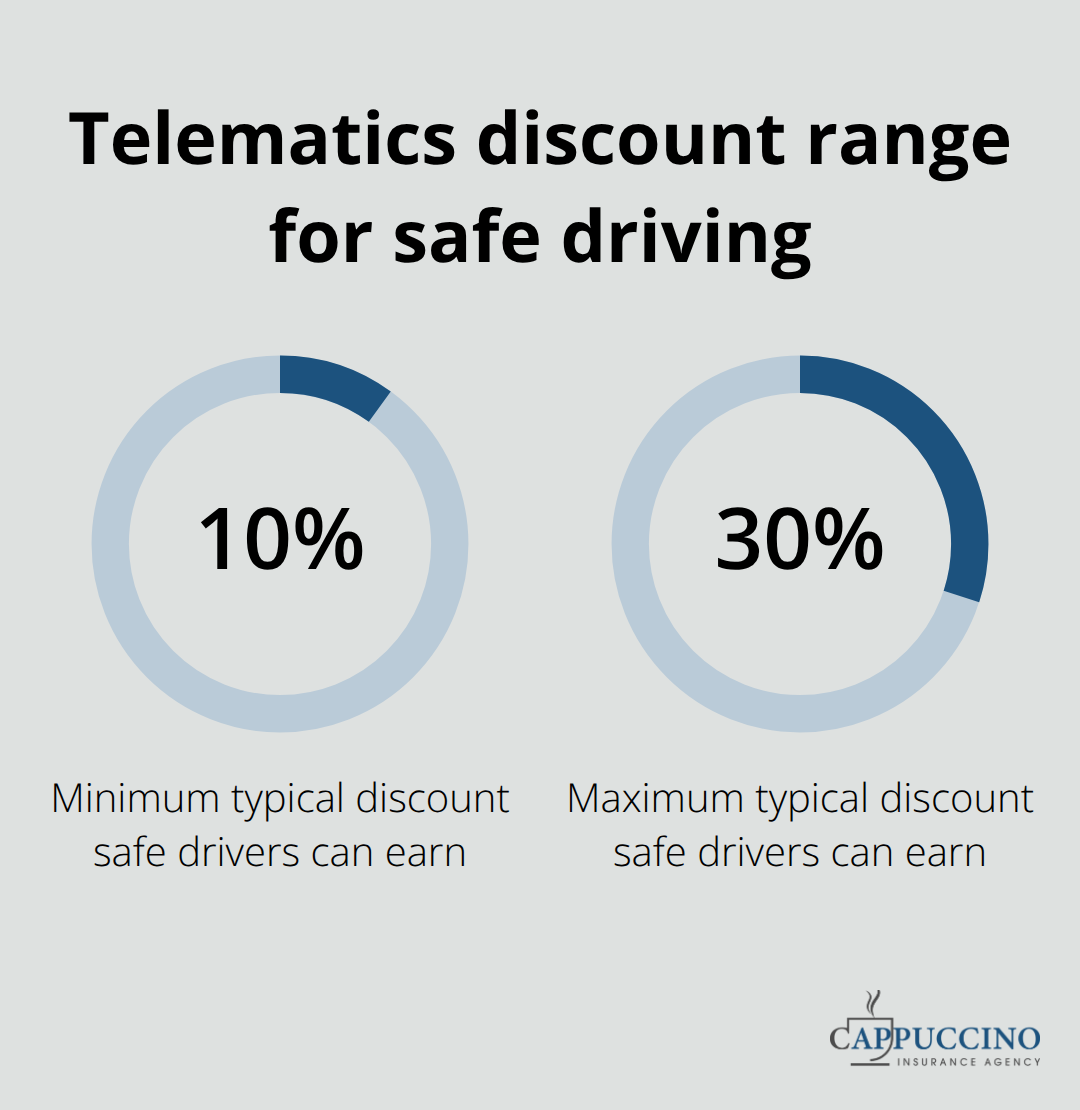
Telematics programs represent a major avenue for premium reduction, though they demand honesty about your driving habits. Progressive’s Snapshot and State Farm’s Drive Safe & Save programs monitor your actual driving through a mobile app or plug-in device, tracking acceleration, braking, speed, and time of day you drive. Safe drivers typically see discounts of 10 to 30 percent after a monitoring period of 30 to 60 days.
The data these programs collect is objective and verifiable, meaning aggressive drivers cannot game the system. If you consistently drive during peak accident hours, speed frequently, or brake hard, these programs will expose those habits and either deny you discounts or charge higher premiums. California drivers who maintain steady speeds, avoid nighttime driving, and demonstrate smooth acceleration patterns benefit substantially. The trade-off involves accepting that your insurer monitors your behavior, which creates genuine privacy concerns that many drivers find uncomfortable.
Vehicle Safety Ratings Impact Your Insurance Costs
Vehicle safety ratings directly influence your insurance costs because vehicles with higher crash test scores from the National Highway Traffic Safety Administration or Insurance Institute for Highway Safety experience fewer claims. A 2024 Honda Accord earns top safety ratings and typically qualifies for discounts of 5 to 10 percent compared to vehicles with poor ratings. Conversely, a vehicle with marginal safety scores receives no discount and sometimes higher premiums.
If you purchase a new or used vehicle, prioritizing models with excellent safety ratings delivers dual benefits: lower insurance costs and genuine protection during accidents. Compare safety ratings before purchasing any vehicle, since the difference between a top-rated sedan and a poorly-rated competitor might mean $200 to $400 in annual insurance savings.
Modern Safety Technology Prevents Accidents
Older vehicles lack modern safety features like automatic emergency braking and lane departure warning systems, which newer models use to prevent accidents entirely. These systems reduce claims frequency, allowing insurers to charge lower premiums for vehicles equipped with them. California drivers who own vehicles manufactured before 2015 face higher insurance costs partly because those older models lack the active safety technology that prevents collisions.
The vehicle you drive matters more than most drivers realize when calculating your total insurance expense. Your next decision involves comparing which insurance providers actually deliver the rates and service that match your coverage needs.
Finding the Right Insurance Company for Your Needs
Complaint Ratios Reveal True Service Quality
Shopping for car insurance means evaluating companies based on actual performance metrics, not marketing claims. California has over 200 licensed insurers, but most drivers cycle through only two or three before settling on whoever quoted lowest that month. This approach leaves thousands of dollars on the table over time.
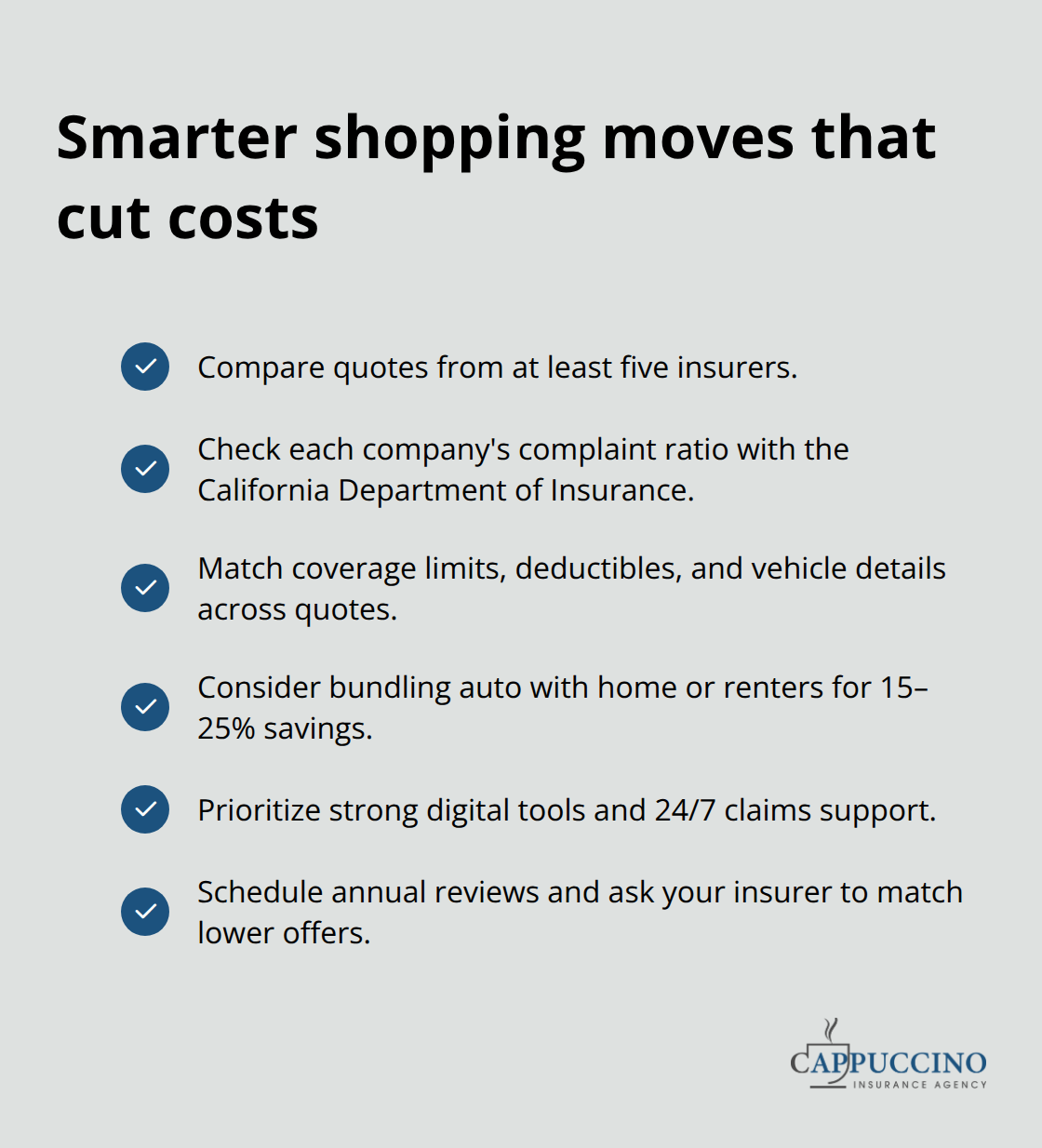
When selecting an insurance provider, examine their complaint ratio through the California Department of Insurance, which publishes how many complaints each company receives per 100,000 earned exposures. This metric reflects customer service quality, claims handling speed, and billing accuracy.
Request quotes from at least five companies, but don’t compare prices alone-verify that each quote includes identical coverage limits, deductibles, and vehicle details. Many drivers accept the first quote without realizing a competitor offers the same coverage for $400 less annually. California drivers switching insurers save an average of $450 per year, yet most people stay with their current provider out of inertia.
Verify Digital Tools and Claims Support
Confirm whether each company offers online policy management and 24/7 claims reporting, since you’ll interact with these systems when accidents happen, not when you’re shopping calmly at your computer. A company with excellent rates but poor digital tools creates frustration when you need to file a claim at midnight or adjust your coverage on short notice.
Bundle Policies Strategically
Bundling multiple policies with a single insurer typically yields 15 to 25 percent discounts on your car insurance premium when you also carry homeowners or renters coverage with them. An insurer charging $1,200 annually for car insurance might reduce that to $900 when you bundle home coverage. However, this discount only matters if the bundled rate beats what you’d pay for separate policies at different companies.
We at Cappuccino Insurance Agency work with 20+ carriers to find the combination that delivers genuine savings rather than bundling you into a mediocre deal just to keep your business.
Annual Reviews Beat One-Time Shopping
Annual policy reviews matter far more than most drivers realize because insurance rates shift constantly-your current provider may have raised rates 8 to 12 percent since you last reviewed your policy, while competitors now offer better pricing. Schedule a formal review each year around your policy renewal date, bringing quotes from at least three competitors to your current insurer.
Tell them you have competing offers at lower prices and request they match or beat those rates to retain your business. Insurers retain customers more cheaply than acquiring new ones, so they’ll often adjust your premium when faced with genuine competition. This single action-performing an annual rate comparison-saves California drivers an average of $200 to $350 annually without reducing coverage or switching companies.
Final Thoughts
The safest car insurance options combine three concrete actions: selecting adequate coverage limits that match your financial exposure, choosing vehicles with proven safety features, and shopping annually for better rates. California drivers who implement these strategies reduce their accident risk while protecting their assets from catastrophic losses. Your immediate steps are straightforward-review your current liability limits, verify your vehicle qualifies for anti-theft or telematics discounts, and request quotes from at least five competitors this month.
The annual review habit matters most because insurance rates shift constantly and your current provider may have raised rates 8 to 12 percent since you last reviewed your policy. Set a calendar reminder for your policy renewal date each year, gather three competing quotes, and present them to your current insurer. They’ll frequently reduce your premium rather than lose your business, saving you $200 to $350 yearly without sacrificing coverage.
Working with a local agency transforms this process from frustrating to manageable. Contact Cappuccino Insurance Agency for a free coverage assessment and let our team handle annual reviews, identify discounts you’d miss alone, and manage claims support when accidents happen.
The information provided in this blog is for general informational purposes only and does not constitute legal, financial, or insurance advice. Coverage options, terms, and availability may vary. Please consult with a licensed professional for advice specific to your situation. Artificial intelligence may have been used to generate text and images in some blog articles and may contain inaccuracies.


