

Rental Property Insurance: Protecting Your Investment With Confidence
Rental property insurance is one of the most overlooked protections landlords can buy. Many property owners assume their standard homeowners policy covers tenants and rental income, which leaves them exposed to serious financial risk.
At Cappuccino Insurance Agency, we’ve seen landlords lose tens of thousands of dollars because they didn’t understand what their policies actually covered. This guide walks you through the coverage types you need, the mistakes to avoid, and how to protect your investment.
What Rental Property Insurance Actually Covers
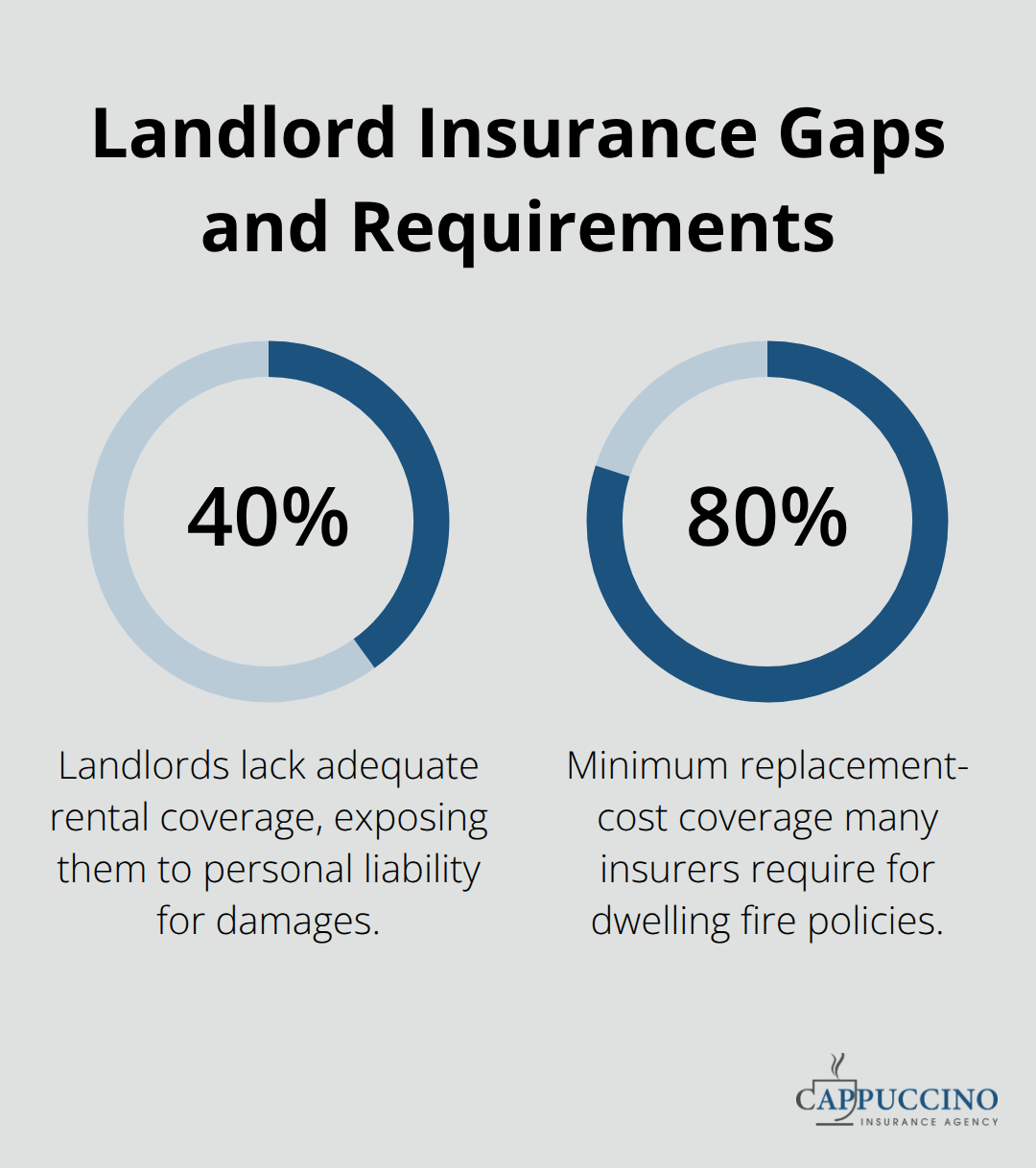
Rental property insurance operates completely differently from homeowners insurance, and this distinction matters more than most landlords realize. Standard homeowners policies are designed to protect owner-occupied homes, which means they exclude rental units entirely. If you rent out a property while holding a homeowners policy, your insurer can deny claims related to that rental activity. Landlords who discover this gap too late face tens of thousands of dollars in unprotected losses. Rental property insurance addresses this problem by covering the building structure, liability from tenant injuries or guest accidents, and lost rental income when the property becomes uninhabitable. The National Association of Insurance Commissioners reports that approximately 40% of landlords lack adequate coverage for their rental units, leaving them personally liable for damages that insurance should have covered.
Building Protection and Physical Damage
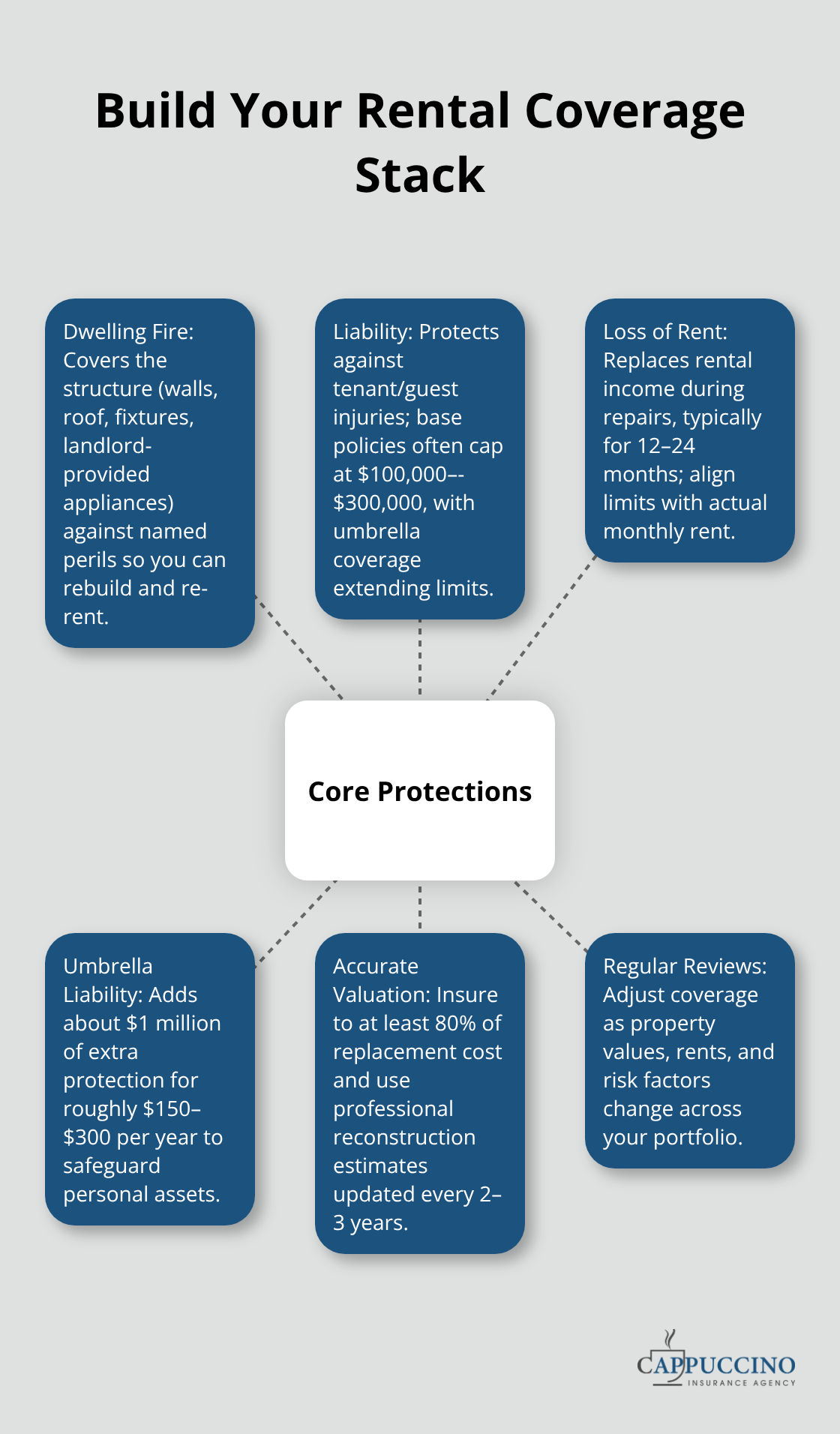
Dwelling fire insurance covers the structure of your rental property, including walls, roof, permanent fixtures, and appliances you provide. This coverage pays for damage from fire, theft, windstorms, and other perils listed in your policy, but it does not cover tenant belongings or business property. If a fire destroys your rental unit, this coverage rebuilds the structure so you can rent it again. Most policies require you to insure the property for at least 80% of its replacement cost, not its market value, because reconstruction expenses differ significantly from what you could sell the property for. Underinsuring below this threshold triggers a penalty clause where the insurer pays only a proportional amount of any claim, meaning a $100,000 fire might result in a $60,000 payout if you insured for only 60% of replacement cost. You need a professional property valuation, not an estimate, to establish accurate coverage limits that match current construction costs in your area.
Liability and Loss of Rent Coverage
Liability coverage protects you when a tenant, guest, or visitor suffers an injury on your property and sues you for medical expenses or damages. A slip on icy stairs, a dog bite, or a structural defect that causes injury can result in lawsuits exceeding $250,000, which standard liability coverage typically maxes out at $100,000 or $300,000 (depending on your policy). Loss of rent coverage reimburses your monthly rental income if the property becomes unlivable from a covered peril, whether that means fire damage, a roof collapse, or water damage from a burst pipe. This coverage typically runs for 12 to 24 months depending on your policy, giving you time to repair and re-rent the property without losing income during the reconstruction period. Many landlords skip this coverage thinking they can absorb a few months without rent, but a major renovation can easily extend beyond six months, creating substantial financial strain.
Why Coverage Gaps Create Real Financial Exposure
The mistakes landlords make with their rental policies often stem from misunderstanding what their coverage actually includes. You cannot assume that a policy designed for your primary residence protects a property you lease to tenants. Each rental property presents unique liability risks that standard homeowners policies explicitly exclude. The next section walks you through the specific coverage options available and how to identify which ones your rental property actually needs.
Building the Right Coverage Stack for Your Rental
Dwelling fire insurance forms the foundation of rental property protection, but it only covers the building structure itself. This means walls, roof, permanent fixtures, and appliances you provide as the landlord receive protection from fire, theft, windstorms, and other named perils, but tenant belongings remain their responsibility. The critical mistake landlords make is confusing replacement cost value with market value. Your rental property might sell for $500,000, but reconstruction after a total loss could cost $650,000 due to current labor and material prices. Insurance companies require you to carry coverage at least equal to 80% of replacement cost, which means you need a professional reconstruction estimate, not a real estate appraisal. Underinsurance triggers a coinsurance penalty where the insurer calculates payouts proportionally-if you insure for only $400,000 when you should carry $520,000, a $100,000 fire claim pays out at roughly $77,000 instead.
You should request updated valuations every two to three years as construction costs fluctuate.
Liability Protection Against Tenant and Guest Injuries
Liability coverage addresses the reality that someone on your property can suffer an injury and hold you financially responsible. A guest slips on stairs, a tenant’s friend gets bitten by a dog on the premises, or a structural defect causes injury-these situations generate lawsuits regularly, and medical expenses plus damages awards frequently exceed $250,000. Standard rental liability policies typically cap coverage at $100,000 to $300,000, which sounds substantial until you face a serious injury case. Umbrella liability policies extend protection beyond your base policy limits at relatively low cost, often adding $1 million in coverage for $150 to $300 annually. This additional layer protects personal assets if someone wins a judgment that exceeds your primary liability limit, making it essential for landlords managing multiple properties or properties in high-traffic areas.
Income Protection During Property Damage
Loss of rent coverage reimburses your monthly rental income when a covered peril makes the property unlivable, whether that means fire damage, roof collapse, or water damage from burst pipes. Standard policies cover 12 to 24 months of lost rent, and this protection matters far more than most landlords recognize. A significant renovation typically requires four to eight months, and major structural damage can extend timelines to twelve months or longer. If your rental unit generates $2,000 monthly, losing eight months of income equals $16,000 in unrecovered revenue on top of repair costs. Landlords who skip this coverage often absorb these losses themselves, straining cash flow and forcing them to delay other maintenance or property improvements. The coverage amount should match your actual monthly rent plus any predictable tenant-related income, and you should verify the policy covers the full reconstruction timeline rather than stopping coverage at an arbitrary date.
Identifying Coverage Gaps That Expose Your Assets
Most landlords discover their coverage shortfalls only after a loss occurs, which means they face financial consequences that insurance should have prevented. Tenant injuries, property damage, and lost income represent the three largest financial threats to rental property owners, yet many policies fail to address all three adequately. The next section walks you through the specific mistakes landlords make when selecting coverage and how to avoid them.
Common Mistakes Landlords Make With Insurance
Underinsuring Property Replacement Costs
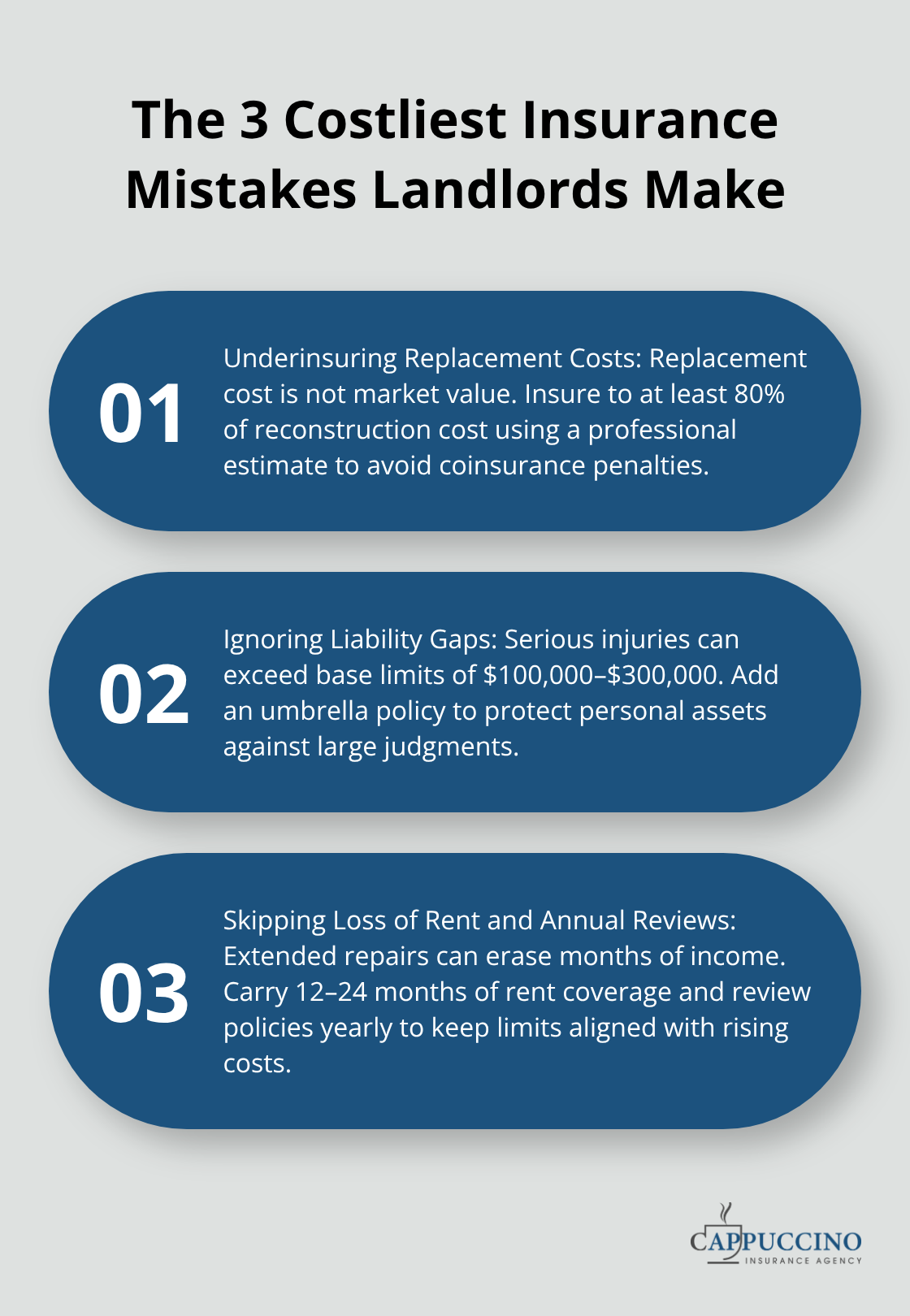
Your rental property might appraise at $500,000, but reconstruction after total loss could require $650,000 or more due to current labor and material inflation. Insurance companies enforce an 80% coinsurance requirement, meaning you must carry coverage equal to at least 80% of replacement cost. Many landlords estimate their own replacement cost incorrectly or fail to update valuations as construction prices rise.
If you should carry $520,000 in coverage but only insure for $400,000, a $100,000 fire claim pays approximately $77,000 instead of the full amount due to coinsurance penalties. This proportional payout formula means underinsurance doesn’t just leave you slightly exposed-it creates massive financial gaps on every claim. Professional reconstruction estimates cost $300 to $500 but save thousands in claim disputes.
Construction costs have risen significantly in recent years, so policies from 2023 already undervalue your replacement needs. You need updated valuations every two to three years as material and labor expenses fluctuate. Standard homeowners appraisals won’t work here-you need a professional reconstruction estimate that accounts for current building codes and local labor rates.
Ignoring Liability Gaps and Guest Accidents
A visitor slips on your property or a tenant’s guest suffers injury, and suddenly you face a lawsuit demanding $200,000 in medical expenses and damages while your policy maxes out at $100,000. Liability gaps represent the second critical failure, yet landlords routinely ignore this exposure because no claim has happened yet. Umbrella liability policies cost only $150 to $300 annually for $1 million in additional coverage, yet many landlords lack this protection despite managing properties where strangers constantly move through.
Properties with pools, trampoline equipment, or high foot traffic warrant higher liability limits than standard policies provide. Annual policy reviews catch these gaps before losses occur, yet most landlords review their coverage only when renewing, missing opportunities to adjust limits or add protections as their portfolio grows. You should review coverage whenever you add a property, increase rent significantly, or notice changes in tenant demographics or property use.
Failing to Review Policies Annually
The third mistake-skipping loss of rent coverage-costs landlords tens of thousands during reconstruction periods. If your unit generates $2,000 monthly rent and reconstruction takes eight months after a major loss, you absorb $16,000 in unrecovered income plus repair costs unless loss of rent coverage reimburses you. Most landlords who skip this coverage overestimate their financial resilience, discovering too late that extended vacancies drain cash reserves faster than anticipated.
Standard policies cover 12 to 24 months of lost rent, and this protection matters far more than most landlords recognize. A significant renovation typically requires four to eight months, and major structural damage can extend timelines to twelve months or longer. You should verify the policy covers the full reconstruction timeline rather than stopping coverage at an arbitrary date.
Annual reviews also catch coverage changes you missed during policy renewals. Carriers sometimes reduce limits or modify exclusions without clear notification, leaving you with less protection than you thought you had. Reviewing your policy each year keeps your coverage aligned with your actual property value and liability exposure.
Final Thoughts
Rental property insurance protects your investment from the three financial threats that destroy landlord finances: property damage, liability lawsuits, and lost rental income during reconstruction. Without adequate coverage, a single fire or tenant injury wipes out years of profit and forces you to cover tens of thousands in unprotected losses. The landlords who avoid financial disaster share one common practice: they review their policies annually and adjust coverage as property values and liability exposure change.
Your coverage needs shift over time as construction costs rise, your portfolio grows, or your properties attract different tenant demographics. A policy that protected you adequately in 2023 likely underinsures your replacement costs today given material and labor inflation. Loss of rent coverage becomes more valuable as you accumulate properties because extended vacancies drain cash reserves faster when you depend on multiple income streams.
Contact Cappuccino Insurance Agency to assess your rental property insurance coverage and identify gaps before losses occur. We’ll review your current policies and recommend the specific protections your investment needs.
The information provided in this blog is for general informational purposes only and does not constitute legal, financial, or insurance advice. Coverage options, terms, and availability may vary. Please consult with a licensed professional for advice specific to your situation. Artificial intelligence may have been used to generate text and images in some blog articles and may contain inaccuracies.


